New Year Medicine Cabinet Reset: 10 Steps to a Safe, Tidy Cabinet
By January most medicine cabinets hold a mix of useful medicines and things that should have left years ago. Expired tablets sit beside half empty bottles, old prescriptions pile up, and the plaster box is empty when you actually need one. A new year medicine cabinet reset pulls everything out, checks every date, and puts back only what is safe and useful, so the cabinet is ready when someone in the house needs it.
The ten steps below work in order, from emptying the cabinet to a small habit that keeps it safe all year. None of them need new storage or a big budget. Start with a bin bag, a damp cloth, and a pen, because the reset moves faster when expired medicines leave the bathroom the same day they are found.
1. Pull Everything Out of the Cabinet
Take every bottle, box, and tube out of the medicine cabinet, and lay them on a clean towel on the bathroom counter. Wipe the shelves and the inside of the cabinet door clean once they are empty, and check the back of the cabinet and the shelf below it, because small bottles and loose tablets hide in both places. A cabinet with everything out in the open is the only way to see what you really own, and it usually shows far more half used bottles than anyone remembers buying. If you want the whole bathroom reset first, a new year bathroom reset covers the rest of the room the same way.
2. Toss Every Expired Medicine Straight Away
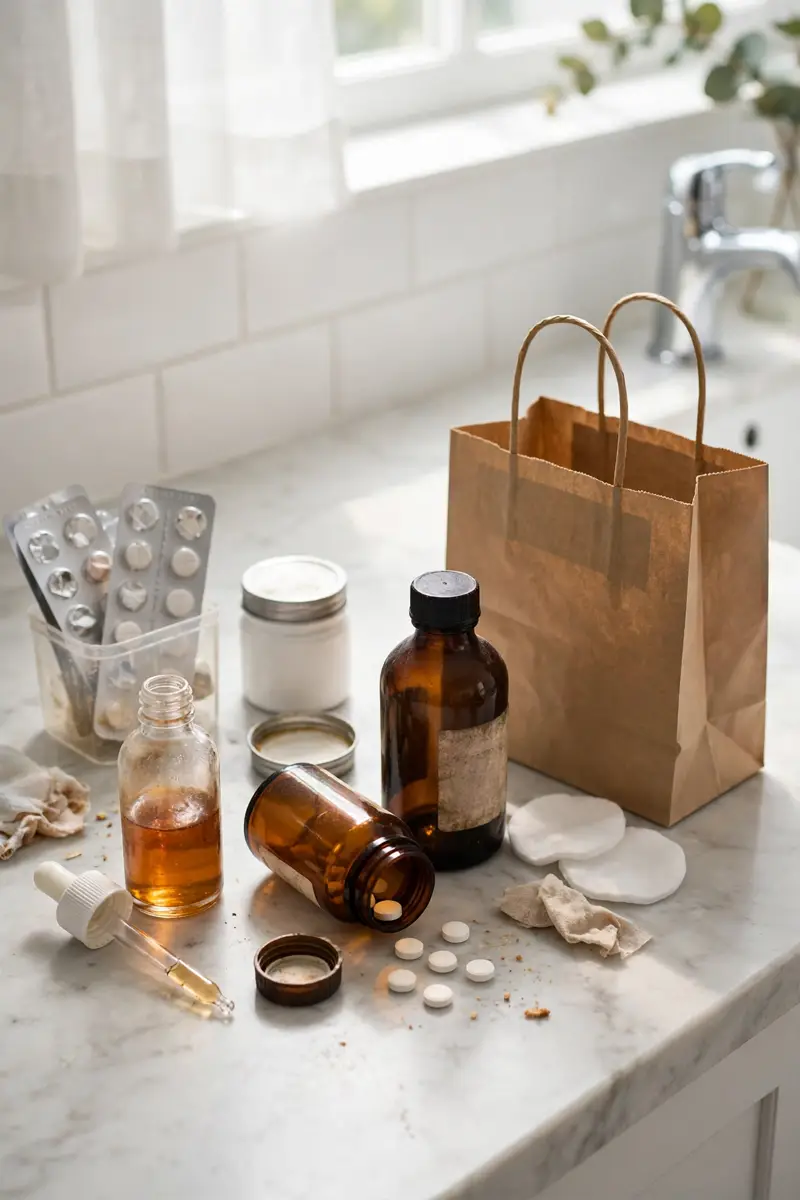
Safety comes first, so check the date on every single item. Toss the medicines that are past their expiry date, the ones with no date at all, and the bottles with cracked lids or damaged seals. Put expired medicines in a bag to return to a pharmacy take back scheme, and never flush them or pour them down the sink. Bag the rubbish and take it out right away, so the cabinet never holds a medicine nobody should take. A cabinet with only in date medicines is the only safe kind of cabinet.
3. Throw Out the Half Used and Unlabelled Bottles
Expiry dates are not the only problem. Throw out the half used bottles from an illness months ago, the creams with no label, and the loose tablets in unmarked containers that nobody can identify. If you cannot say what it is, what it is for, and when it expires, it does not belong in the cabinet. Keep only medicines with a clear label and a clear purpose, so nobody in the house ever guesses. A cabinet without mystery bottles is a cabinet you can trust in a hurry.
4. Sort What Is Left Into Clear Groups
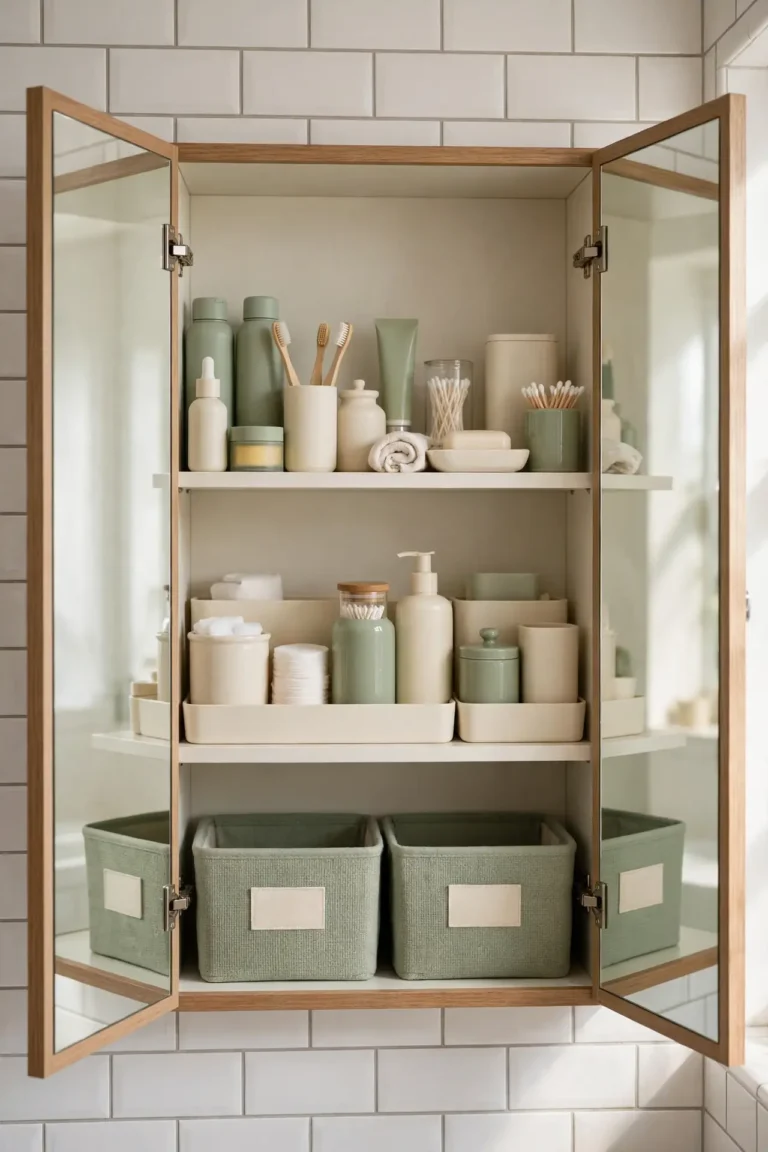
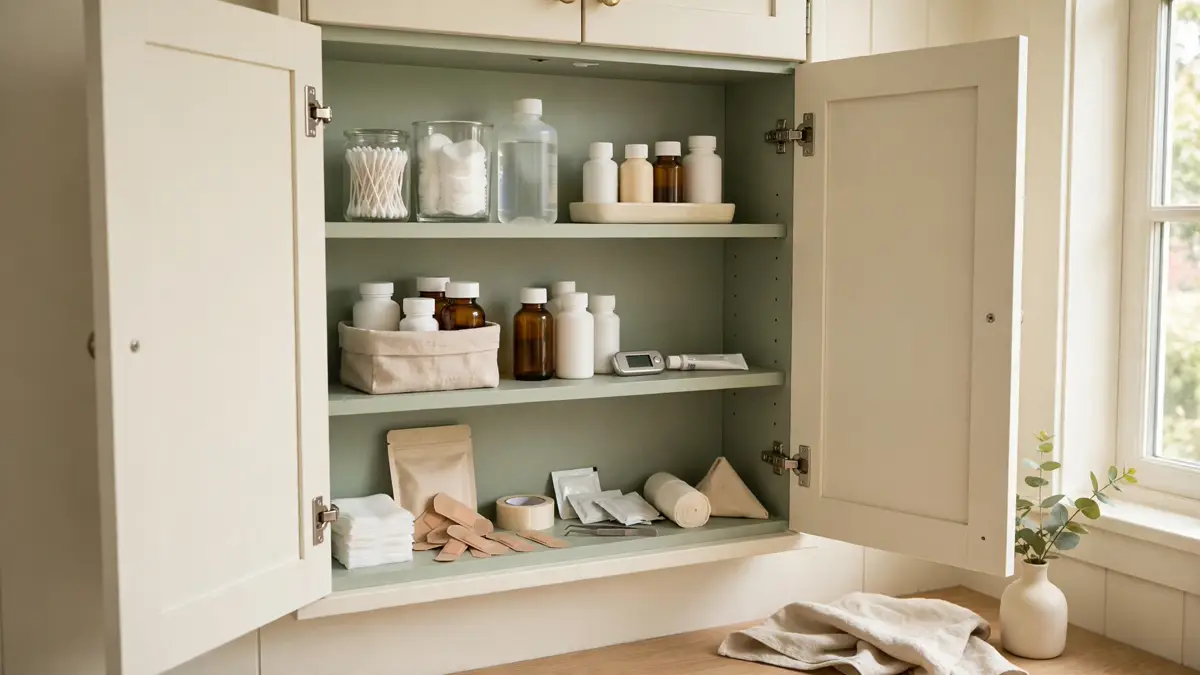
A medicine cabinet only works when the contents are grouped with a plan. Sort what is left into clear groups: pain relief together, cold and flu remedies together, first aid together, and daily medicines in their own group. Keep the groups simple and put the most used group at eye level, so the right bottle is easy to reach. Grouping by use means you can find what you need in seconds, even when someone is unwell and you are in a rush. For more bathroom storage ideas, a winter bathroom reset sorts the rest of the bathroom the same way.
5. Keep First Aid at the Front and Easy to Reach
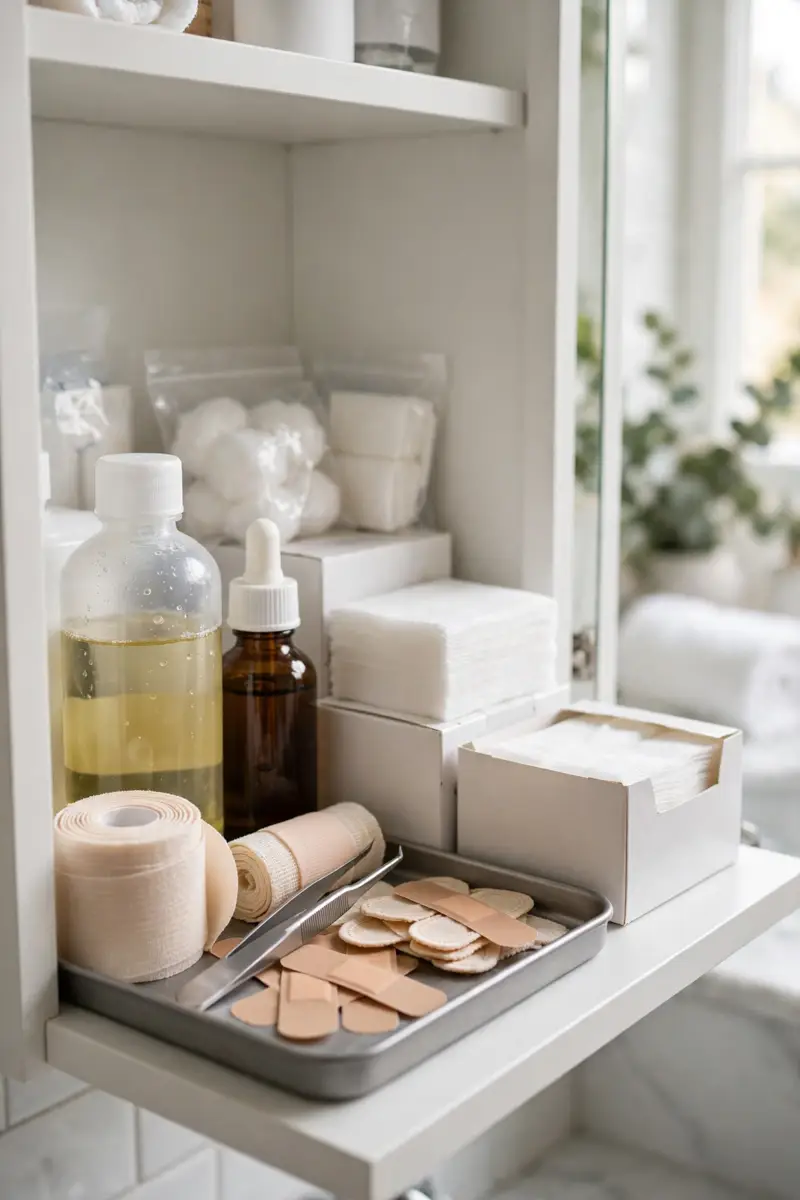
First aid is the group that matters most in an emergency, so give it the best spot. Keep plasters, antiseptic, bandages, and tweezers together at the front of the cabinet, at eye level, where anyone can grab them fast. Check that the plaster box is full, the antiseptic is in date, and the bandages are clean and dry. A first aid group that is easy to reach turns a small cut into a two minute job, and it stops a minor accident from becoming a search through the whole cabinet.
6. Store Daily Medicines Where You Will See Them
Daily medicines only work if you remember to take them. Keep them in a small labeled box or tray at the front of the cabinet, at eye level, where you see them every morning. Keep them separate from the rest of the cabinet, so nobody mistakes a daily tablet for a painkiller. Write the dose and the time on the box in big letters, and keep a spare supply behind it so you never run out. A daily medicine spot that is easy to see makes the routine hard to forget.
7. Lock Away Anything Children Must Not Reach
Some medicines are dangerous for children, and the cabinet must protect them. Move strong painkillers, prescription medicines, and anything with a warning label to the highest shelf, or into a small lockable box inside the cabinet. Check that every bottle has a child resistant cap that clicks shut, and replace any cap that is broken or loose. Keep the cabinet door closed and latched, and teach children that the cabinet is not a place to explore. A cabinet that keeps dangerous medicines out of small hands is a cabinet that keeps the whole family safe.
8. Label Every Shelf and Write the Dates Down
Labels make a medicine cabinet easy for everyone in the house to use. Label each shelf with its group name in big readable letters, and write the expiry date on the front of every box with a pen, so it can be seen without opening it. Keep a small card inside the door listing what is in the cabinet and when the earliest expiry date falls. Clear labels stop anyone from taking the wrong bottle, and they make the next reset far quicker.
9. Restock the Basics You Actually Use
A safe cabinet is a stocked cabinet, but only with the basics you use. Restock the essentials: pain relief, plasters, antiseptic, a thermometer, and any allergy medicine your family needs, and buy small packs so they stay in date. Check what is missing before you shop, and skip the extras you never reach for. A cabinet stocked with only the basics you use is ready for the everyday bumps and colds, and it never holds a shelf of medicines nobody needs. For more cabinet storage ideas, a medicine cabinet organization ideas guide covers shelves, baskets, and labels in more detail.
10. Do a Quick Monthly Cabinet Check
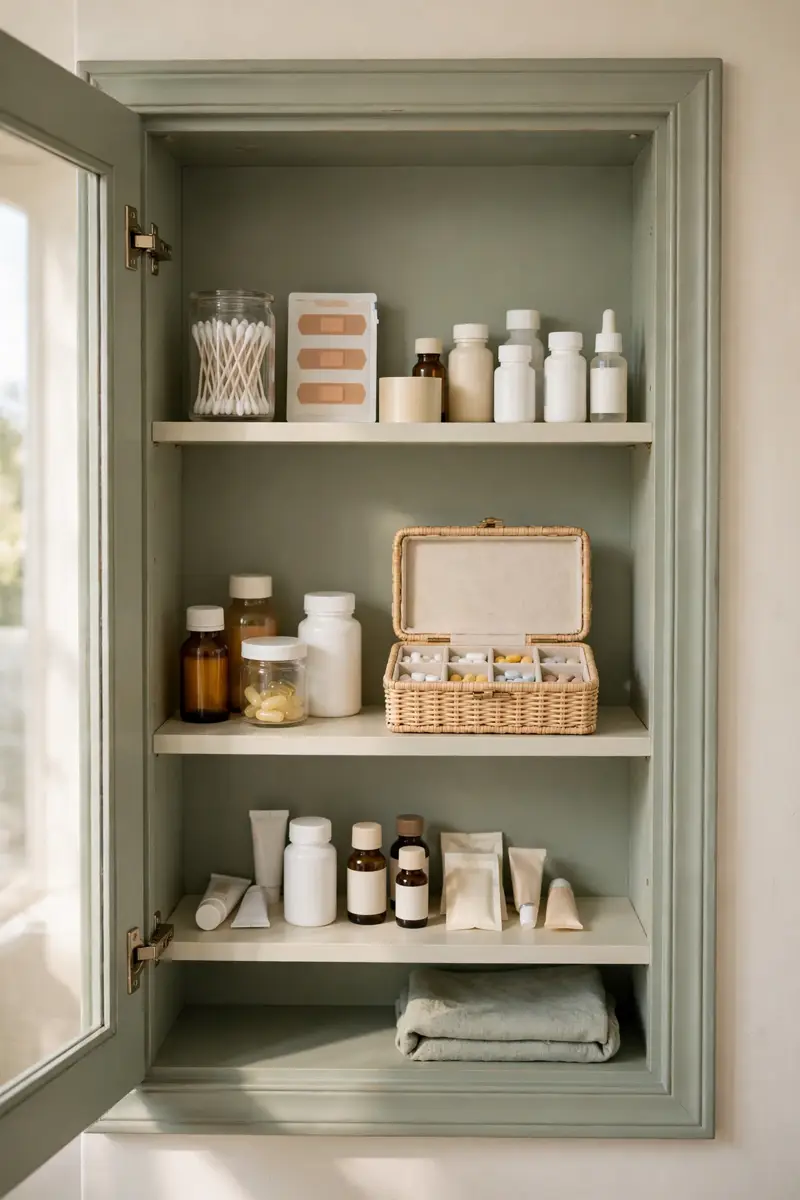
A medicine cabinet reset only lasts with a small routine behind it. Set a quick monthly cabinet check: look at the dates, pull out anything expired or half used, and check that the first aid box is still full. Do it on the first weekend of the month, at the same time as another bathroom job, so it becomes part of an existing habit. Keep the check short enough to actually do, and write the date on any bottle you replace. With this habit, the medicine cabinet stays safe all year, and every bottle in it is one you trust.
A Safe, Tidy Cabinet All Year
A new year medicine cabinet reset is not about throwing everything away, it is about keeping only what is safe and useful, grouping it so it is easy to find, and keeping dangerous medicines out of small hands. Labeled shelves, a first aid group at the front, and a quick monthly check turn a crowded cabinet into one that works every day. With only in date medicines inside, that tidy cabinet lasts all year, and it is ready whenever someone in the house needs it.