
Winter Entryway Reset: 10 Ideas for Boots, Coats, and Wet Winter Gear
Winter turns the entryway into the hardest working spot in the house. Wet boots, heavy coats, scarves, gloves, and school bags all land in the same small space, and without a system the pile spreads into the hallway within a week. A winter entryway reset fixes that by giving every cold weather item a clear home, so coming in from the cold feels calm instead of chaotic.
The ten ideas below work in a single weekend afternoon, or one small change at a time across a few evenings. You will clear the clutter first, set up zones for boots and coats, and add simple controls for salt, mud, and wet gear. Work through the ideas in order, because each one makes the next one easier to keep up.
1. Clear Everything Out Before You Organize
Start with an empty entryway, not with new baskets. Take every shoe, coat, bag, and stray item out of the space, including the things that migrated there from other rooms. Sort as you go into keep, relocate, and donate piles, and be honest about coats nobody wore last winter and shoes that pinch or leak. Wipe the floor and hooks while the space is clear, and check for salt stains or scuffs that need attention now. An empty starting point shows you how much room you really have, and it stops you from buying storage for clutter you were about to remove anyway.
2. Put a Boot Tray by the Door
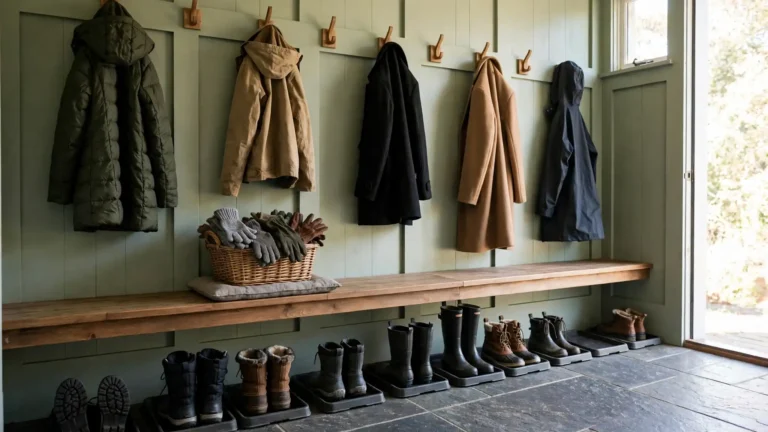
A boot tray is the single most useful winter entryway item. Choose a tray with a raised edge that catches melting snow and slush, and place it right inside the door where boots come off naturally. Keep one pair of everyday boots per person on the tray and move spare pairs to a closet, so the tray never overflows. Empty and rinse the tray once a week, because standing water leaves marks and smells. This one habit protects your floors more than any other change in this reset.

3. Give Every Person One Strong Hook
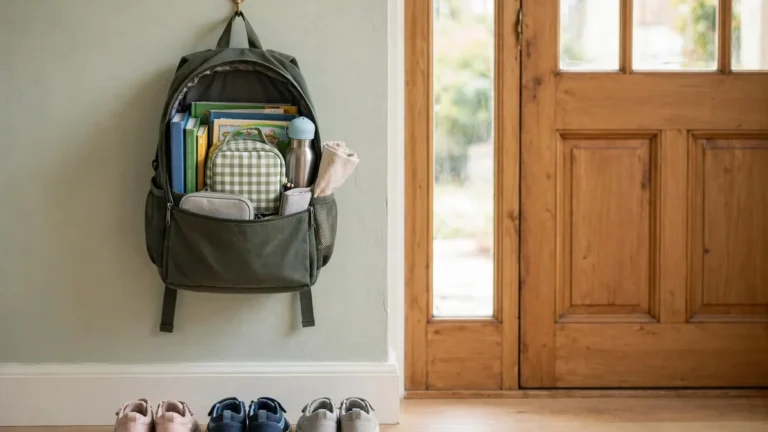
Coats stay off the floor when every person has one hook they can actually reach. Use sturdy wall hooks or a solid coat rack, spaced far enough apart that bulky winter coats do not squash each other. Assign hooks by person rather than by garment, so children learn exactly where their coat goes. Keep the hook count realistic: one hook per person plus one for a guest is plenty, and extra hooks just invite extra coats. If your hallway needs the same treatment, a winter mudroom organization guide shows how to extend this system into a full mudroom.
4. Add a Basket for Hats, Gloves, and Scarves
Small winter accessories cause the most entryway mess because they have no obvious home. Give each person a small basket or a labeled bin near their hook for hats, gloves, and scarves, and keep a spare pair of gloves in each basket for the morning someone cannot find theirs. At the end of the day, accessories go straight back into the basket, not onto a bench or a stair. Empty the baskets once a month and remove single gloves, outgrown hats, and scarves nobody wears, so the baskets stay useful instead of becoming junk drawers.
5. Control Salt and Mud at the Threshold
Road salt and mud do the most damage in the first few steps inside the door, so stop them there. Lay a tough, washable doormat outside and a second absorbent mat inside, and shake both out weekly. Keep a small brush and dustpan nearby for quick sweeps of salt grit before it spreads across the floor. Wipe boot soles on the mat as a household rule, and mop the entryway floor once a week in winter to stop salt from dulling the finish. A few minutes of threshold care saves hours of floor cleaning later in the season.

6. Set Up a Drying Spot for Wet Gear
Wet gloves, scarves, and hats need a place to dry that is not draped over a radiator or a chair back. Hang a small drying rail or a row of clips near the entryway, or place a ventilated basket beside the boot tray for damp items. Stuff wet gloves with newspaper overnight so they hold their shape and dry faster, and rotate items so nothing stays damp for days. Dry gear smells better, lasts longer, and is ready to grab on the next cold morning instead of still being soggy from yesterday.
7. Keep a Small Winter Essentials Station
Winter mornings run smoother when the small essentials live by the door. Set a shallow tray or a wall pocket for keys, sunglasses, lip balm, hand warmers, and a spare umbrella, and add a small mirror for a last check before leaving. Keep the station tiny on purpose, because a large surface fills up with mail and clutter within days. Clear it every Sunday night so Monday starts from an empty tray rather than last week’s pile.
8. Store Out of Season Shoes Out of the Way
Summer shoes and sandals do not belong in a winter entryway. Box them, label the box, and store it on a high shelf or in a closet until spring, freeing the entryway for the boots and shoes you actually wear now. Do the same in reverse for winter boots at the end of the season. A seasonal swap twice a year keeps the entryway sized to real life, and it stops the shoe pile from growing with every season that passes.
9. Make the Entryway Guest Ready in Minutes
Winter brings visitors, and a reset entryway should welcome them without a panic clean. Keep one free hook, one spare pair of house slippers, and a small basket for guest coats ready at all times. A quick sweep of the boot tray and a shake of the mats is all it takes before guests arrive, because the system already holds the everyday clutter. If you are preparing for a full house of holiday guests, a holiday entryway reset for guests guide covers seating, coat space, and guest comfort in more detail.

10. Keep It Going With a Weekly Two Minute Tidy
The reset sticks when you give it a tiny weekly habit. Once a week, spend two minutes in the entryway: return stray items to their hooks and baskets, empty the boot tray, shake the mats, and toss anything that does not belong. Do it on the same day you take out the trash or plan the week, so it becomes part of a routine you already have. This small tidy stops the slow slide back to a coat pile by the door, and it is far easier than another full clear out in February. For busy households juggling school runs and work bags, an entryway organization for busy families plan adds routines that keep this system working on hectic mornings.
An Entryway That Handles Winter Calmly
A winter entryway reset is not about a perfect hallway, it is about a hallway that works every time someone walks in from the cold. Clear it out first, put a boot tray by the door, give every person one hook, and control salt and mud at the threshold. With a drying spot for wet gear, baskets for small accessories, and a two minute weekly tidy, your entryway will stay calm all winter, and coming home will start with order instead of a pile.