Entryway Organization for Busy Families: 12 Ideas That Keep the Chaos Out
Your entryway is the first thing guests see and the last thing you deal with before walking out the door. For busy families, it’s where shoes multiply, backpacks land, mail piles up, and keys vanish into the void.
Here’s the truth: you don’t need a big foyer or an expensive mudroom renovation. You need systems — one landing spot for every category of “coming and going” stuff, sized for real family life.
These 12 entryway organization ideas work in hallways, apartment corners, and actual mudrooms alike. Start with the ones that fix your biggest pain point, then add the rest over time.
1. Give Every Person a “Launch Zone”
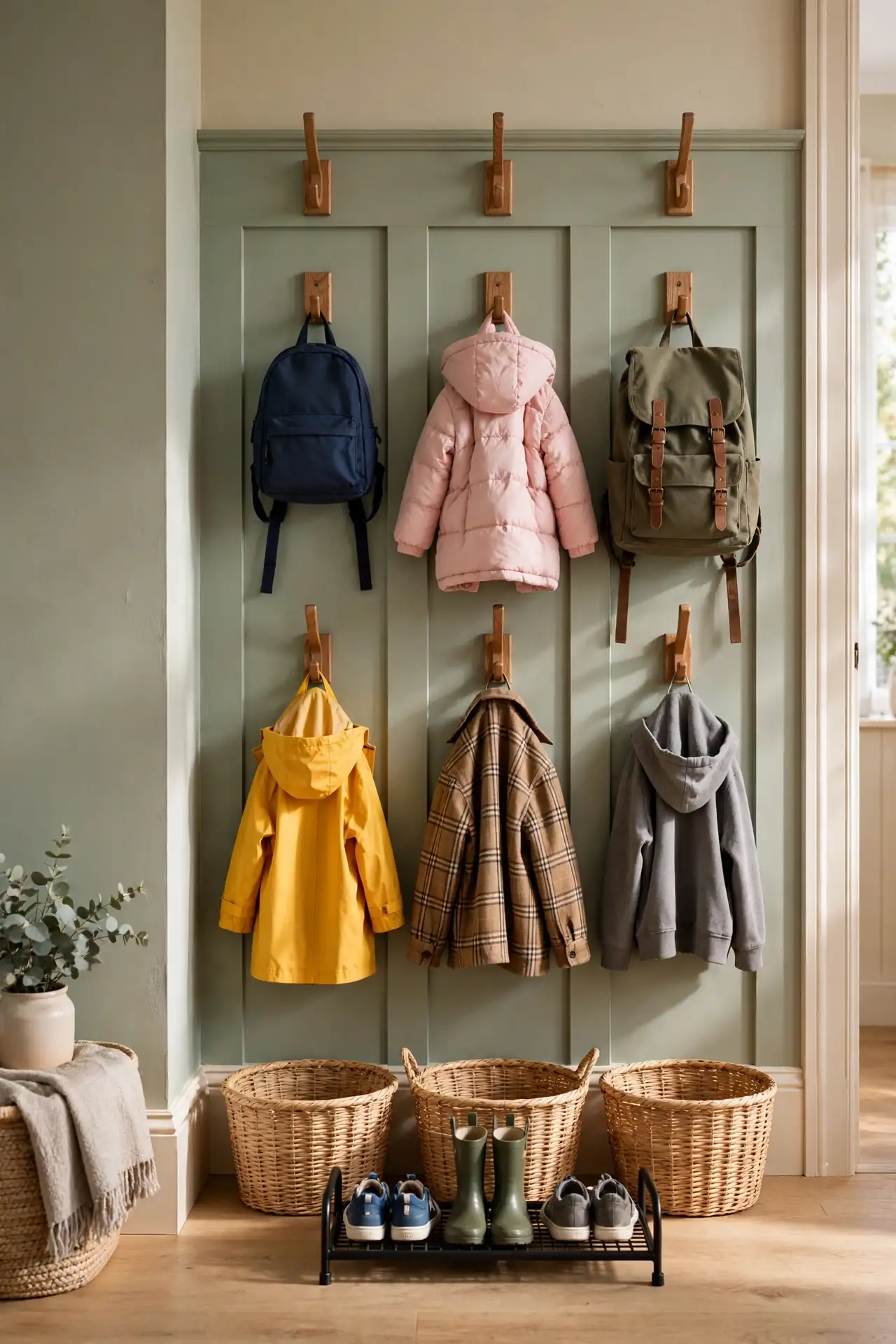
The single most effective entryway system: one hook + one bin per family member.
- Assign each person a hook at their height (low for kids, higher for adults)
- Place a small bin or basket under each hook for shoes
- Label each spot — names, colors, or photos for little kids
- Keep a “grab list” card on the door: keys, wallet, phone, water, lunch
When everyone has a home base, nothing migrates to the living room floor. If you want a weekly rhythm to maintain it, add a 5-minute entryway check to your Weekly Reset Routine — it’s the same habit that keeps the rest of the house calm.
2. Create a Shoe System (Not a Shoe Pile)
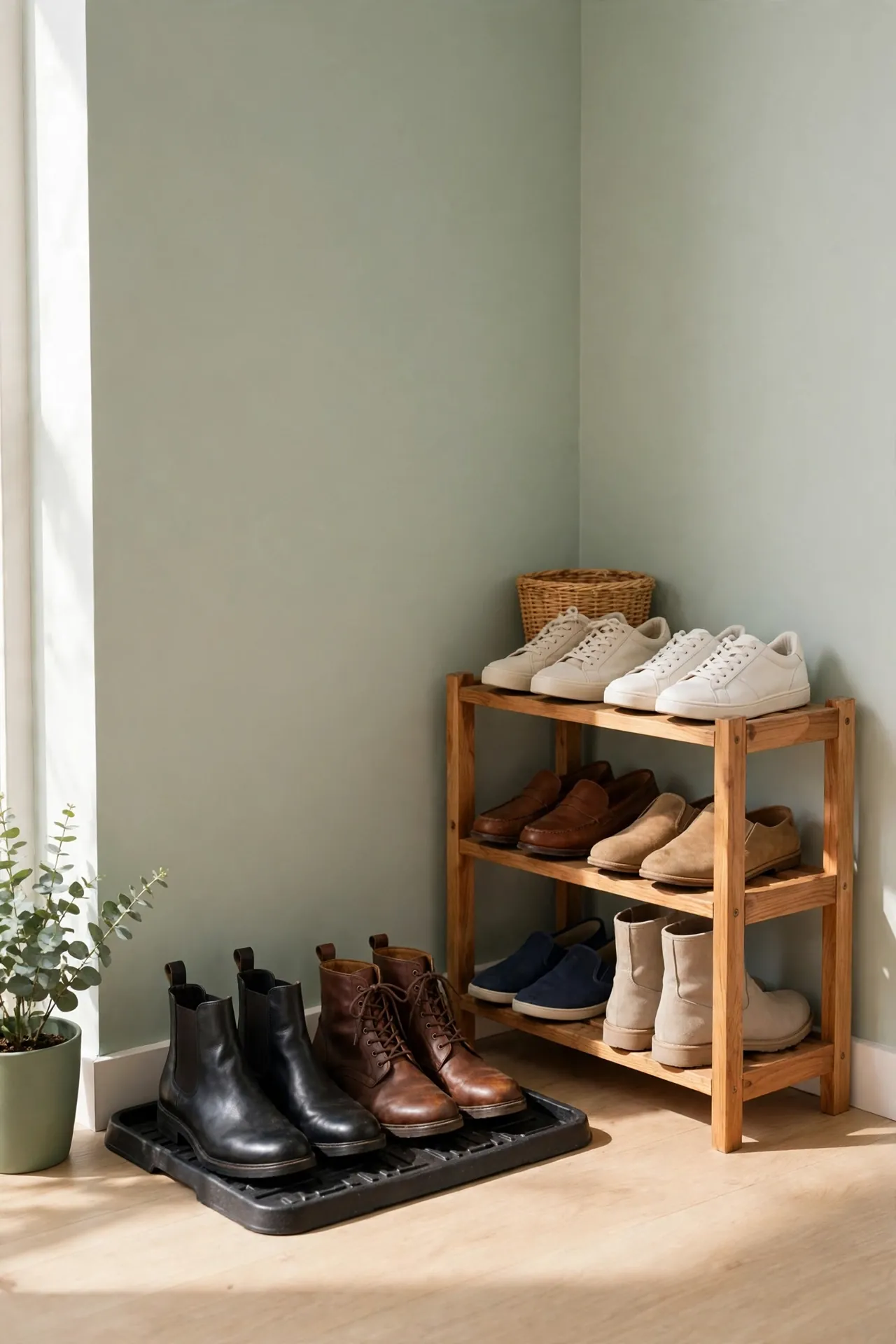
Shoes are entryway clutter’s biggest source. The rule: two pairs per person by the door, the rest stored away.
- One pair for daily wear, one pair for weather (rain boots, snow boots)
- Everything else lives in closets or under beds
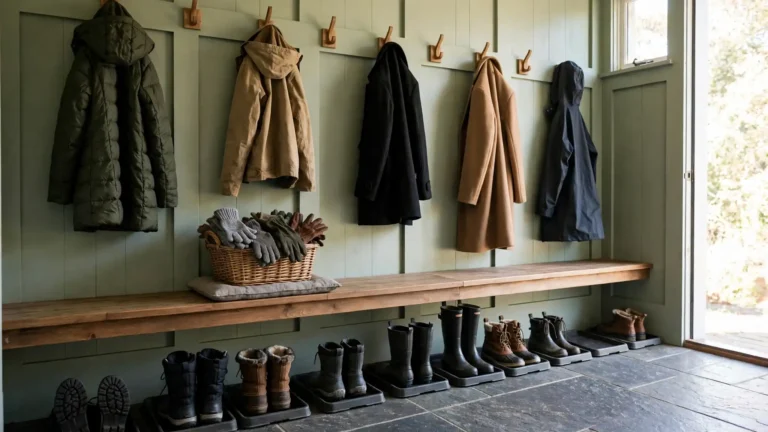
- Use a boot tray or low rack — it contains the mess and catches dirt
- One-in-one-out: new pair comes in, an outgrown or worn pair leaves
The shoe rule: If there are more than two pairs per person at the door, it’s storage — not an entryway.
3. Build a Drop Zone for Bags & Backpacks
Backpacks dumped in the hallway are a tripping hazard and a morning-panic machine.
- Wall hooks or a bench with cubbies — one slot per kid
- Backpacks get emptied every evening (not Sunday — daily)
- Papers come out: sign what’s needed, file the rest, recycle the rest
- Pack lunches and bags the night before, right at the drop zone
4. Contain the Mail & Paper Avalanche
Paper multiplies on every flat surface. Stop it at the door.
- One small tray or wall file labeled “In” — all mail goes here, nowhere else
- Sort it once a week: recycle junk immediately, act on the rest within 48 hours
- Keep a shred bin nearby for sensitive mail
- School papers: photograph or file, then let the original go (you’ll never re-read it)
5. Make Keys Unlosable
- One key bowl, one key hook, or one small tray — pick one and commit
- Every person hangs their keys the moment they walk in. No exceptions
- Spare keys on a labeled ring in the same spot
- Going out of town? Keys go in a drawer — habits break when the spot “doesn’t count”
6. Add a Catch-All Tray (and Empty It Weekly)
Small things — sunglasses, headphones, loose change, hair ties — need somewhere to land.
- One small tray or dish near the door
- Sort it every Sunday: keepers get homes elsewhere, trash gets tossed
- If the tray overflows before Sunday, you need fewer categories, not a bigger tray
7. Use Vertical Space Aggressively
Small entryways can’t afford wasted wall space.
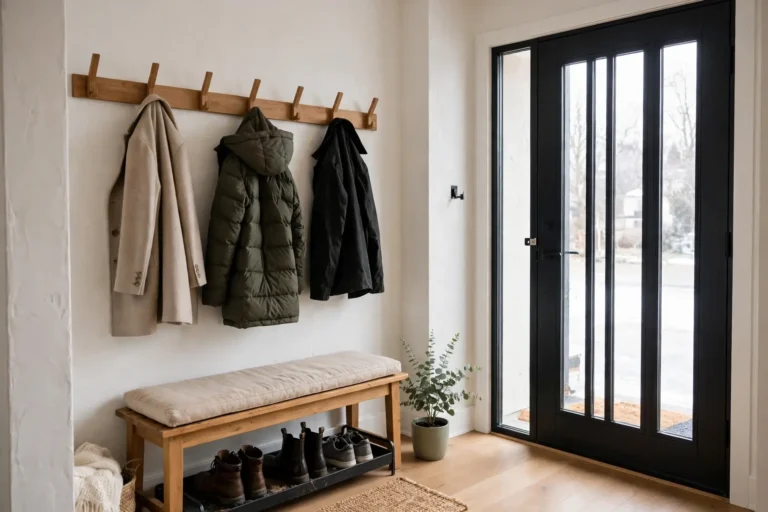
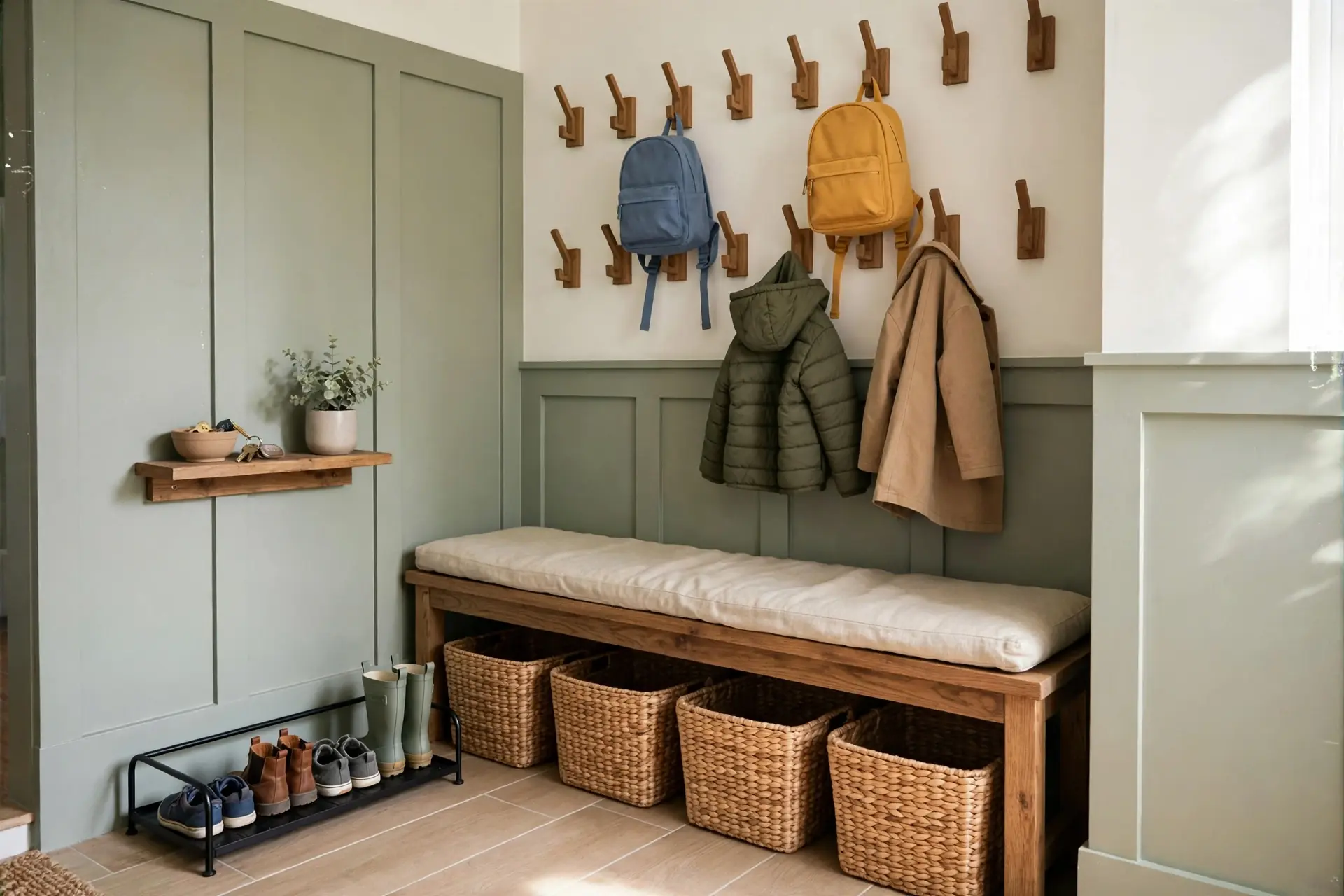
- Hooks above, bench below, baskets underneath
- A wall-mounted shelf for sunscreen, dog treats, and going-out essentials
- Over-the-door organizers for hats, gloves, and scarves
- Floating shelves with labeled bins up high for out-of-season gear
8. Seat It: A Bench Changes Everything
A bench gives people somewhere to sit while putting on shoes — which means shoes actually get put away instead of kicked off.
- A small storage bench doubles as seating and shoe storage
- Under-bench baskets: one per person for daily shoes
- Add a cushion for comfort — people use what feels inviting
- No room for a bench? A sturdy stool works in a corner
9. Seasonal Swap System
The entryway shouldn’t hold all four seasons at once.
- Keep only the current season’s coats, shoes, and accessories at the door
- Store off-season gear in labeled bins elsewhere (closet top shelf, garage, under bed)
- Swap when the weather turns — it’s a 20-minute job twice a year
- Donate what no longer fits while you swap (this is where your closet declutter method pays off again)
10. Kid-Proof the Zones
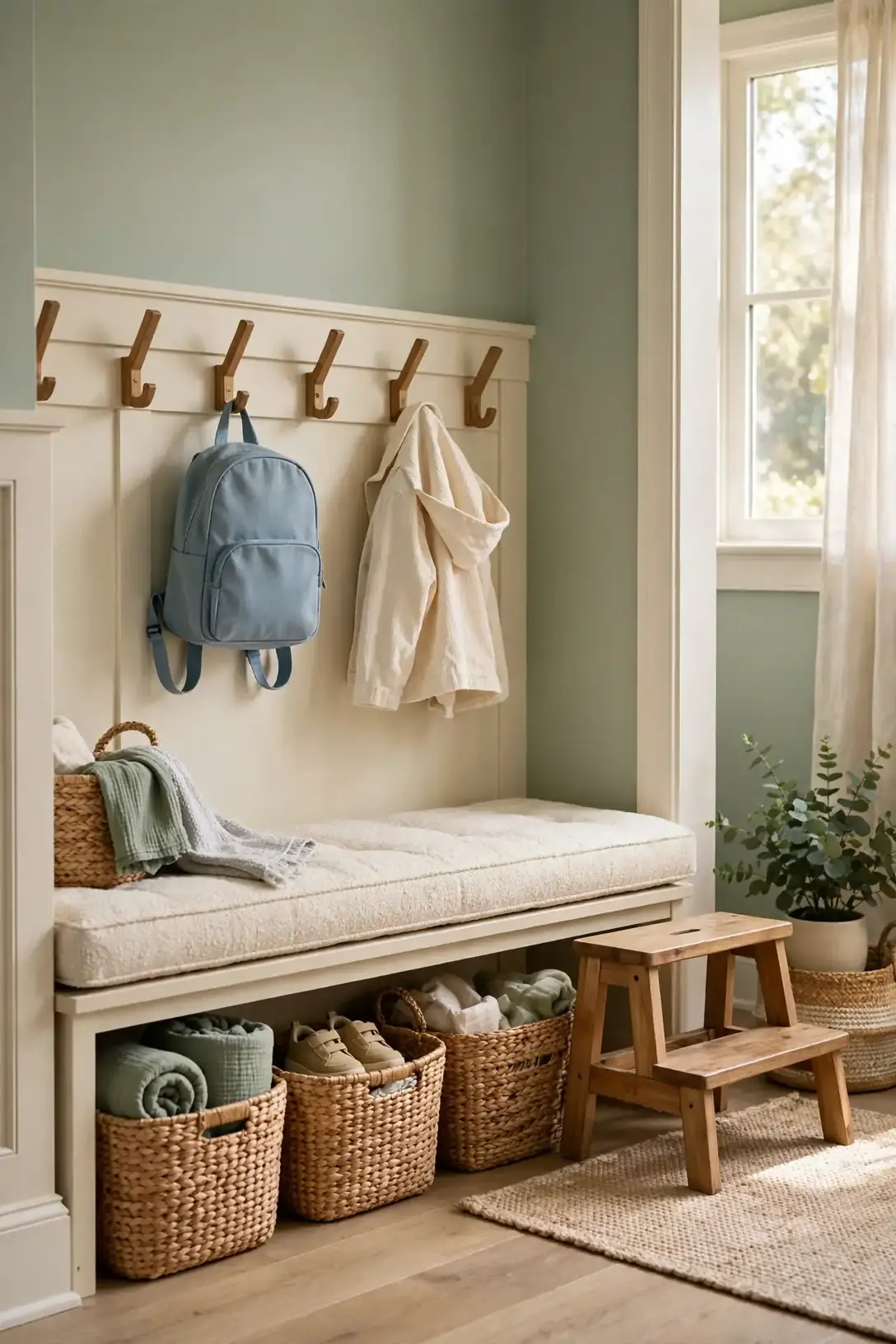
If kids can’t reach it, they won’t use it — and the system fails.
- Hooks at kid height (they can move up as kids grow)
- Picture labels for pre-readers: shoe photo on the shoe bin, backpack photo on the cubby
- A step stool nearby for reaching their own shelf
- Keep the system to three rules max for kids: hook, bin, done
11. Light It Well
A dark entryway feels chaotic no matter how organized it is.
- A bright bulb or a small lamp on the console table
- Motion-sensor night light if the entry is a hallway
- A mirror — it bounces light and doubles as a last-look check before leaving
12. The 2-Minute Evening Reset
Every evening, before you sit down:
- Shoes back in the rack (60 sec)
- Backpacks hung, papers pulled (30 sec)
- Mail in the tray, keys in the bowl (30 sec)
- Scan: anything that doesn’t live here? Walk it home now
Two minutes at night saves ten minutes of morning chaos.
Entryway Organization Shopping List (Optional)
- Wall hooks (1 per family member) — command hooks work in rentals
- Storage bench or sturdy stool
- Boot tray or low shoe rack
- Baskets or bins (1 per person, labeled)
- Mail tray or wall file
- Key bowl or hook rail
- Small catch-all tray
Total: $30-60 — or $0 if you repurpose bins and hooks you already own.
Frequently Asked Questions
How do I organize an entryway with no closet?
Use the walls: hooks for coats and bags, a floating shelf for keys and mail, a boot tray for shoes, and a storage bench for everything else. You don’t need a closet — you need assigned spots.
How do I keep kids’ stuff from taking over the entryway?
One hook + one bin per child at their height, picture labels for little kids, and a daily 2-minute reset. The system works only if it’s easier than dumping — so keep it dead simple.
What’s the best way to store shoes in a small entryway?
Two pairs per person max at the door — daily shoes and weather shoes — on a boot tray or low rack. Rotate the rest into closets. One-in-one-out keeps it from growing.
How often should I declutter the entryway?
A 2-minute nightly reset, a weekly mail/paper sort, and a seasonal swap twice a year. The entryway is a high-traffic zone — small daily habits beat big monthly cleanouts.
The entryway sets the tone for the whole house. Get the systems right here, and every room behind that door feels a little calmer.