
Coat Closet Organization: 11 Ideas for Small Hallway Closets
Coat Closet Organization: 11 Ideas for Small Hallway Closets
Here’s the thing about hallway closets: they fail in slow motion. One extra jacket draped on the hook, a pair of shoes that didn’t make it back to the rack, last season’s coat you swore you’d store “later” — and six months later, the door barely closes.
That’s not a discipline problem. That’s a space problem. A small hallway closet holds maybe eight square feet of storage, and it’s expected to serve every person who walks through the front door. The fix isn’t willpower — it’s a system designed for tiny space: purge what doesn’t live there, use every vertical inch, and stop storing all four seasons at once.
These 11 ideas run in order. Do them once, and the closet runs itself.
The One-Weekend Purge Method

Start by emptying the closet completely. Every coat, every shoe, every bag, every mystery object on the floor. You need to see the empty shell before you can assign everything a home. Vacuum it while it’s bare — this takes an hour on a Saturday, and it’s the only step that actually matters.
1. The “right now” test. As you put things back, hold up each item and ask: “Do I wear this right now, this month?” If the answer is no, it doesn’t go back in. Off-season items go to long-term storage; the coat you never wear goes to donation. This one rule cuts most coat closets by a third — link it to the method in our Closet Declutter: The Simple Room-by-Room Method if you want the full declutter routine.
2. One hook per person, one coat per hook. Assign each household member exactly one hook. That’s their coat slot. If a second coat arrives, one has to leave — that’s the rule, not a suggestion. Shared closets fail because nobody owns the space; one hook per person fixes ownership in sixty seconds.
3. The floor is not storage. Anything sitting on the closet floor that isn’t in a shoe rack or bin is clutter, not storage. Pull it all out now. What’s left on the floor after this step should fit in one row: shoes on a rack, plus one bin. Nothing else.
Go Vertical: The Hook Wall

A small hallway closet’s best feature is wall space nobody’s using. Hooks are cheaper than renovations and hold an absurd amount.
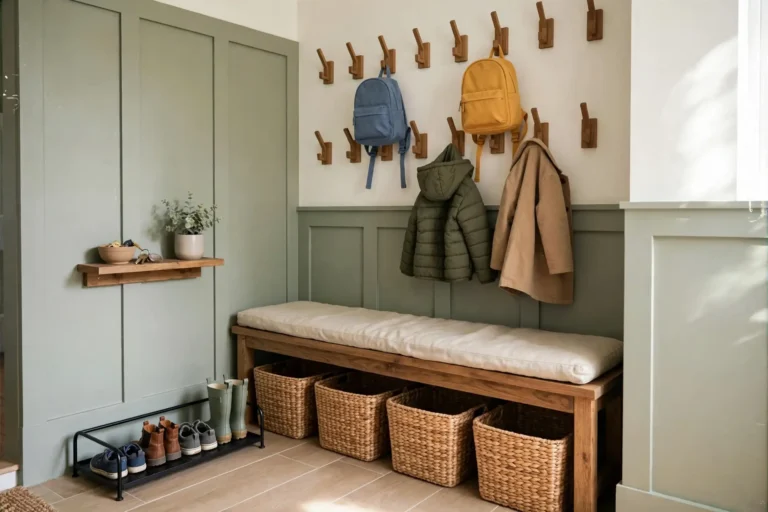
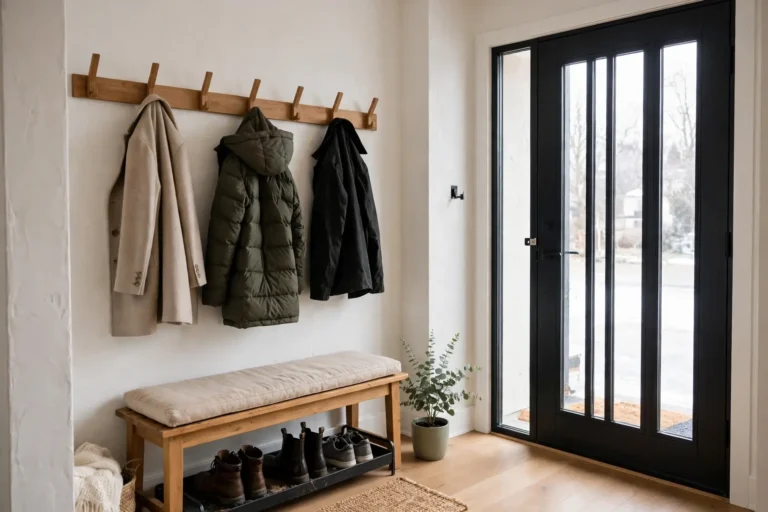
4. Double up the hook rows. Most closets have one row of hooks at adult height. Add a second row — one at 60 inches for coats, one at 42 inches for kids’ jackets, bags, and leashes. The second row doubles capacity for the price of a $10 hook rail. Use sturdy individual hooks rather than a cheap over-door rack; they’ll hold real weight.
5. Use the inside of the door. The door interior is the most underused square footage in the house. A slim over-the-door hook rail or a strip of adhesive hooks holds dog leashes, reusable shopping bags, umbrellas, and the kids’ backpacks — everything that’s not a coat but still wants to live near the front door. For the full entryway approach, pair this with our Entryway Organization for Busy Families guide.
Shelves That Work Overtime
The shelf above the rod (or the top shelf in closets without one) is prime real estate — but only if it isn’t a pile.
6. Bin the shelf by person or by type. One bin per person for hats, gloves, and scarves — labeled if you have kids — or one bin per type (all gloves together, all hats together). Open piles migrate; bins stay. Slim fabric bins fit better than rigid boxes in shallow hallway closets.
7. Add a half-shelf if you don’t have one. No top shelf? A tension-mounted half-shelf or a stackable shelf insert creates a second level in minutes, no drilling required in rentals. The new upper level holds off-season bins; the lower level stays for daily-access stuff.
8. Corral the small stuff. Sunglasses, keys, the spare umbrella — they all need a home or they become floor clutter. One small basket on the shelf, or a magnetic strip on the wall for keys, catches everything. The basket rule: if it doesn’t fit in the basket, it doesn’t live in the closet.
The Floor Zone: Shoes Without the Pile
Shoes are where hallway closets go to die. They’re bulky, dirty, and everyone owns too many.
9. The “worn this week” rule. The closet floor holds only shoes worn this week — on a low, wipeable shoe rack or tray, max. Everything else lives in bedrooms. A boot tray under the rack catches winter salt and mud, and it’s the difference between a closet floor you can vacuum in a minute and a closet floor you avoid. When a pair hasn’t been worn in two weeks, it moves out. This pairs well with the Weekly Reset Routine: The 30-Minute Sunday Checklist — do the shoe check during your Sunday pass.
The Seasonal Swap System
A small closet cannot hold four seasons. This is the idea that makes the whole system sustainable.
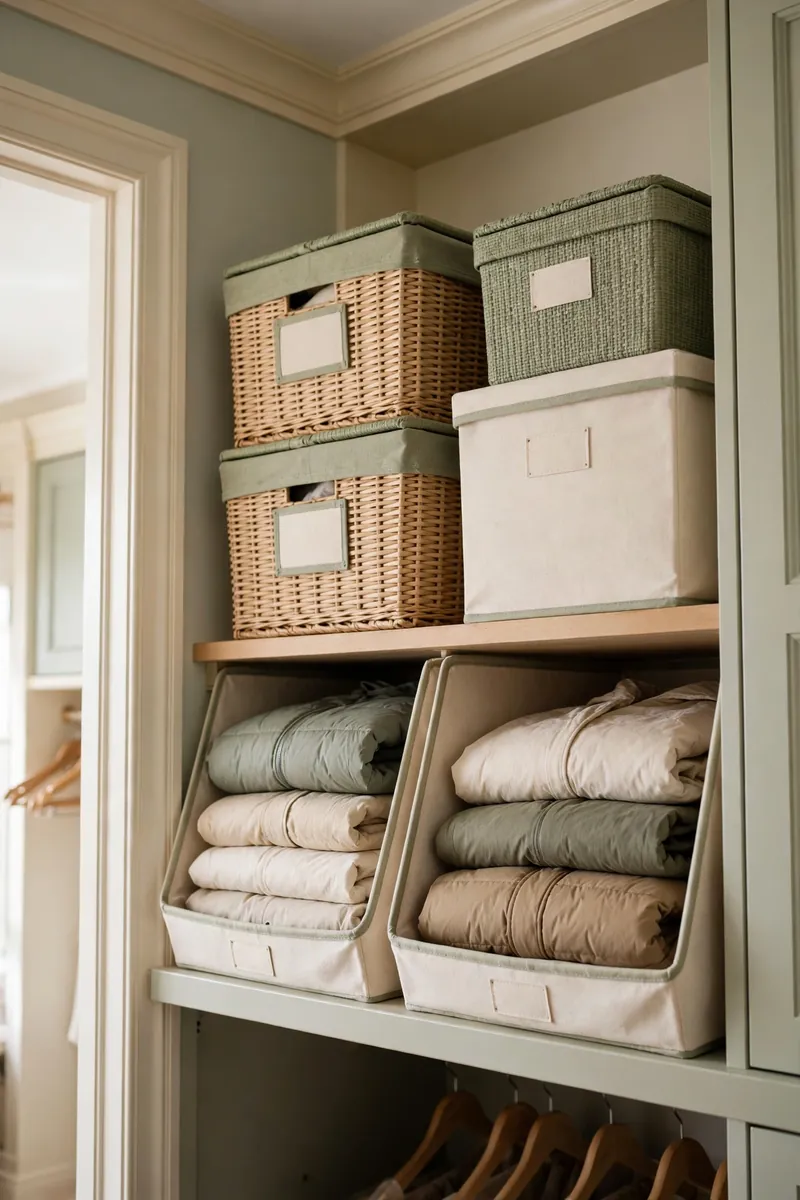
10. Store off-season elsewhere, once per season. Winter coats move to a guest-room closet or storage bins in October; summer layers rotate back in. Schedule two swaps a year — October and April — and put them on the calendar. Label the off-season bins by season so the swap takes twenty minutes, not an afternoon.
11. The two-bin rule. Only two storage bins are allowed on the top shelf: “current season extras” and “next swap out.” When the swap bin is full, something has to leave before anything new goes in. Two bins is the capacity ceiling — the closet literally cannot overflow if the ceiling is physical.
FAQ
How do I organize a very small coat closet with no shelves?
Go vertical. A single tension rod plus a column of hooks covers coats and bags; a stackable shelf insert creates shelf space without drilling; the floor holds one shoe tray. The one-hook-per-person rule matters most in tiny closets — capacity limits are the whole system.
How often should I declutter the coat closet?
Twice a year, timed with the seasonal swap in October and April. Empty it, run the “right now” test, swap the seasons, done. A weekly glance (during the Sunday reset) catches stray items before they become piles.
What should I keep in a hallway coat closet?
Only what the household uses this season: one coat and one bag per person, this week’s shoes, hats/gloves/scarves, leashes, umbrellas, and two seasonal bins. Everything else — off-season coats, seldom-worn shoes, random gear — lives elsewhere. If you can’t close the door without forcing it, something in there doesn’t belong.