Medicine Cabinet Organization: 10 Ideas for a Tidy Bathroom Cabinet
Open your medicine cabinet right now. Go ahead — I’ll wait. Was that a small avalanche of half-empty bottles, three identical tubes of toothpaste, and something expired in 2022?
You’re not messy. Medicine cabinets are just badly designed for real life: shallow shelves, no dividers, and everything shoved to the back where it goes to die. The average cabinet holds twice what it should, and half of it shouldn’t be there at all.
These 10 ideas fix it in one sitting — purge first, then zone, then add the small upgrades that keep it tidy.
The Great Purge

Nothing organizes a cabinet full of expired junk. Purge before you buy a single organizer.
1. Toss everything expired — no exceptions. Pull it all out onto the counter and check dates. Medications lose potency past expiry, and old sunscreen stops protecting. Bag the expired stuff for a pharmacy take-back or trash it per local rules. Most people throw away a third of the cabinet here — instant space.
2. Decant the duplicates. Three half-used bottles of the same shampoo? Combine them into one. Two open tubes of toothpaste? Finish one before opening the next. Duplicates are the #1 space thief in small cabinets — merging them often frees an entire shelf.
3. One-in, one-out from today. Every new bottle that enters means one old one leaves. This single rule prevents the slow re-clutter that undoes every organization project. Tape a tiny reminder inside the cabinet door until it’s habit.
Zone It Like a Pro
A cabinet works when everything has a neighborhood. Group by how you actually use things, not by category.
4. Daily-use items live at eye level, front and center. Toothbrush, toothpaste, deodorant, daily meds — the things you grab half-asleep go on the middle shelf, front row. Everything else moves up, down, or back. If you reach past something daily, that something is in the wrong spot.
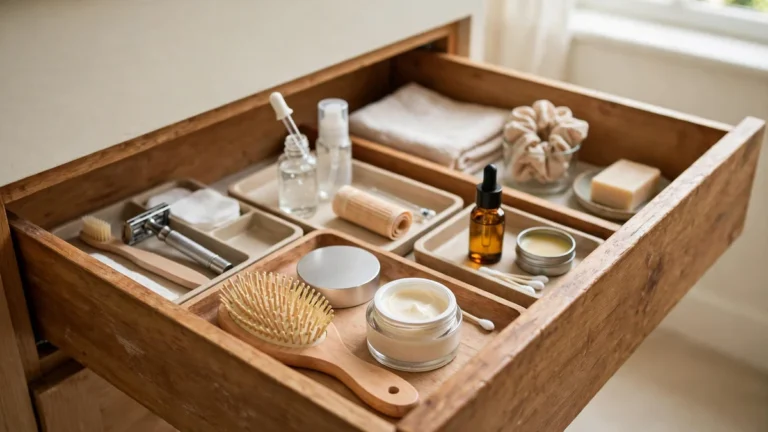
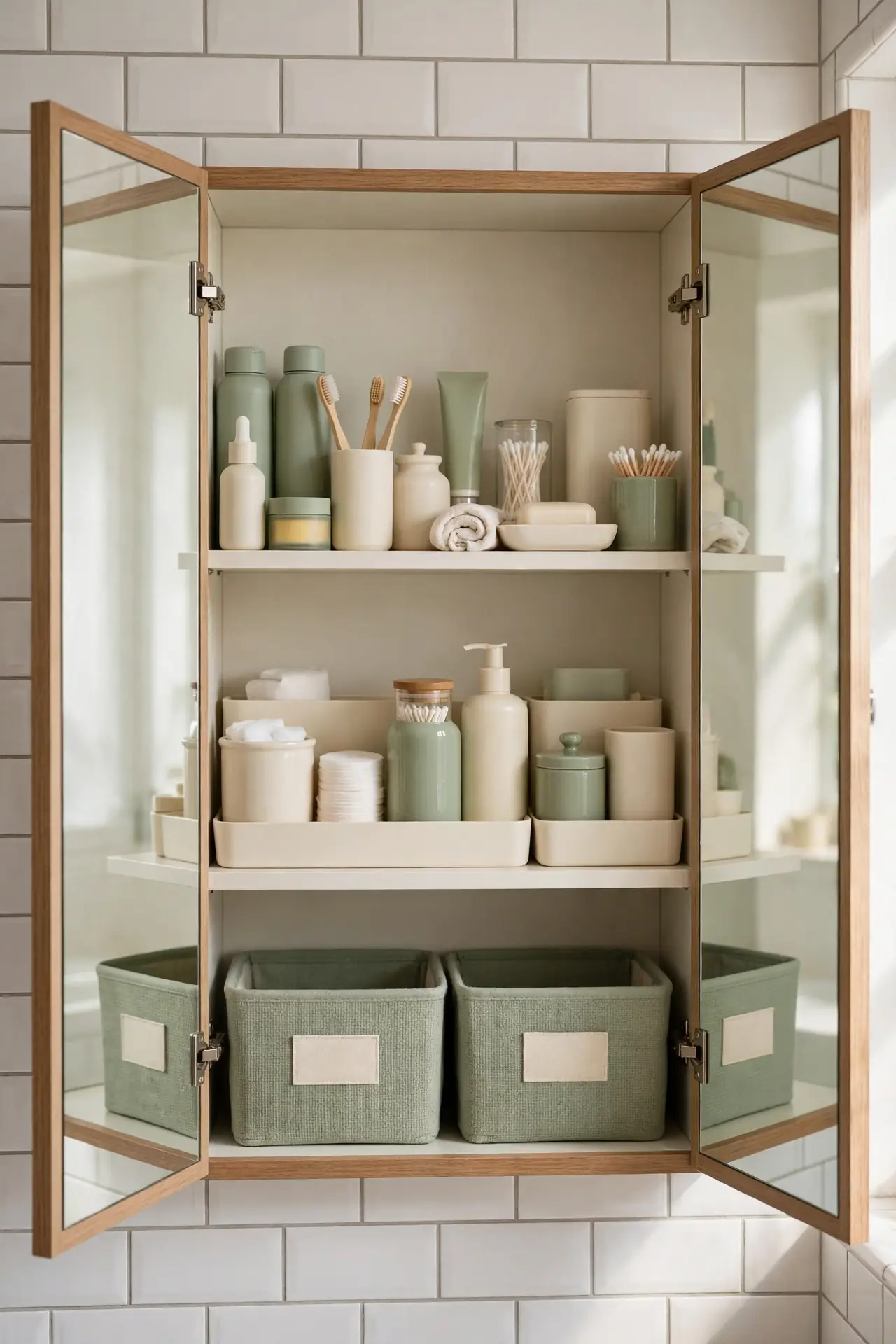
5. Corral categories into small bins. One bin for first aid, one for skincare, one for hair stuff, one for “spares.” Bins turn a shelf of loose bottles into pull-out drawers — you grab the bin, not twelve individual items. Clear or light-colored bins keep it airy; this pairs well with the small-space thinking in Small Bathroom Storage: 12 Ideas for Tiny Bathrooms.
6. Label the bins — future you says thanks. A label maker or a strip of masking tape and a marker. “First Aid,” “Spares,” “Travel.” Labels are what stop other household members from destroying your system in a week.
Vertical Tricks for Tiny Cabinets
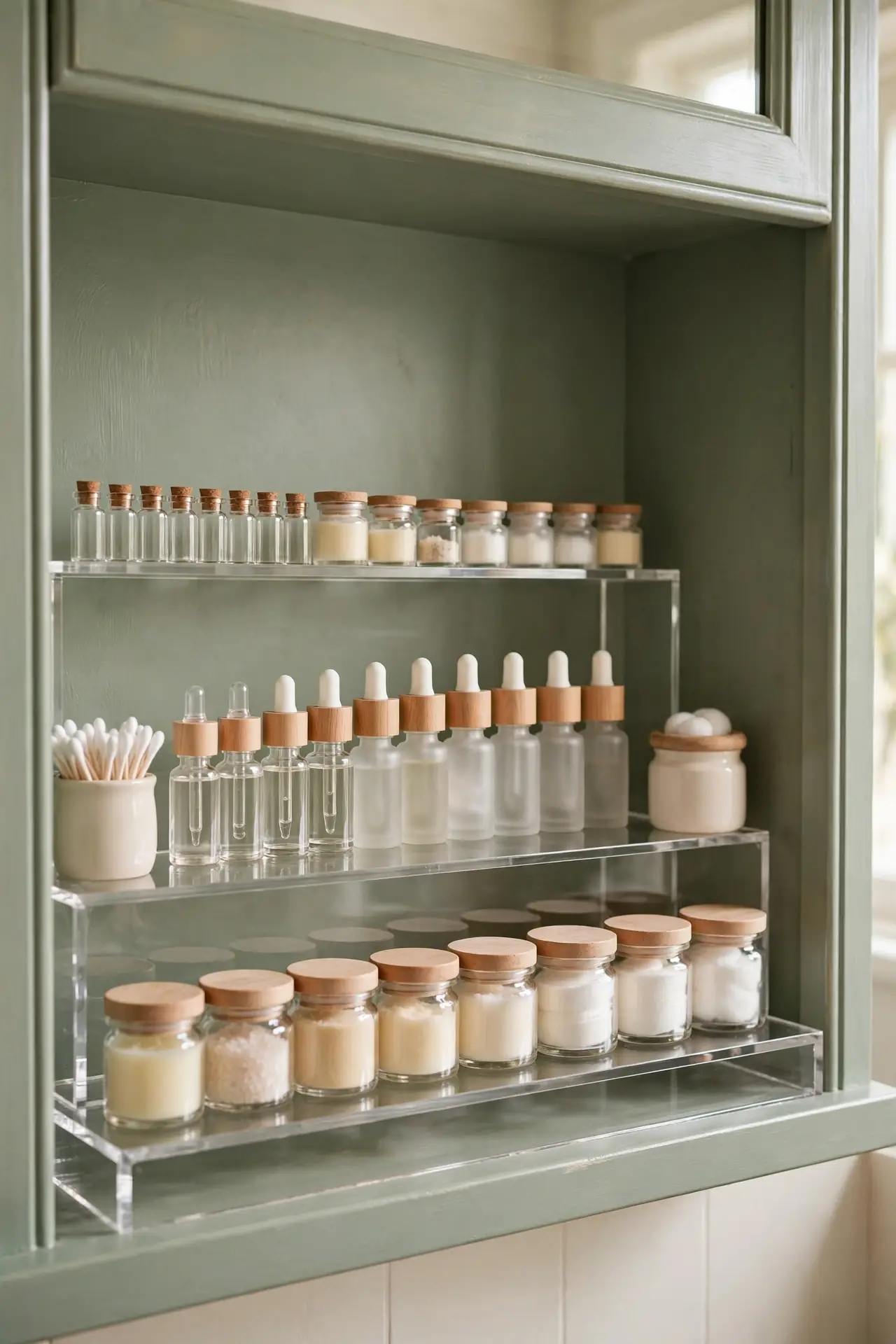
Medicine cabinets are shallow, which means the back half of every shelf is a black hole. Go vertical instead of deep.
7. Add a tiered riser on each shelf. A two- or three-step acrylic riser turns one shelf into stadium seating — every bottle visible, nothing hiding behind anything. This one $10 upgrade does more than any other gadget. Measure shelf height first; most cabinets fit a 4-inch riser.
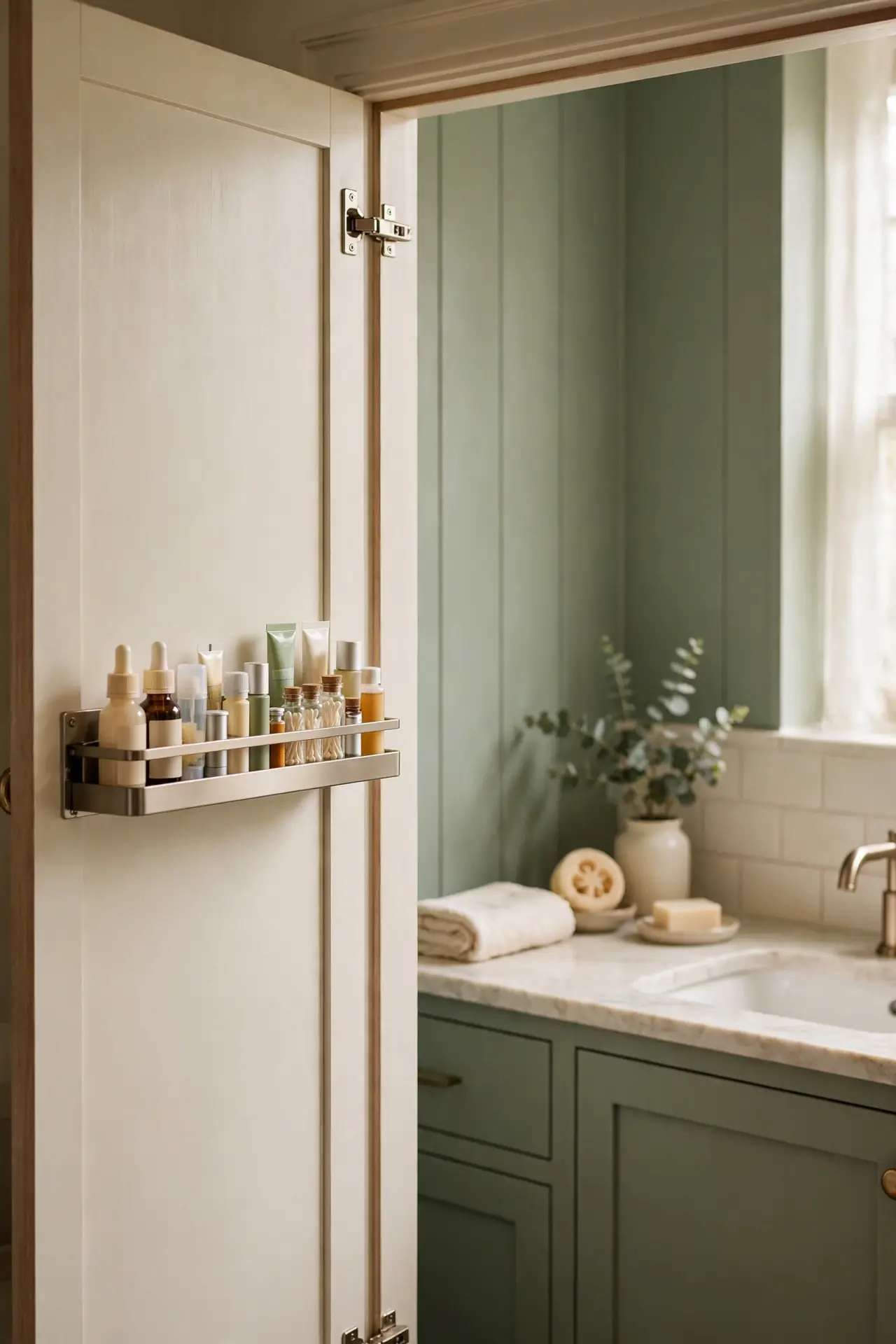
8. Use the door. The inside of the cabinet door is free real estate: slim adhesive racks or magnetic strips hold tweezers, nail clippers, bobby pins, and small tubes. It keeps fiddly items off the shelves entirely. If your cabinet doors are mirrored inside too, use clear racks so it still looks clean.
Keep It Tidy
The system only survives if maintenance takes minutes, not hours.
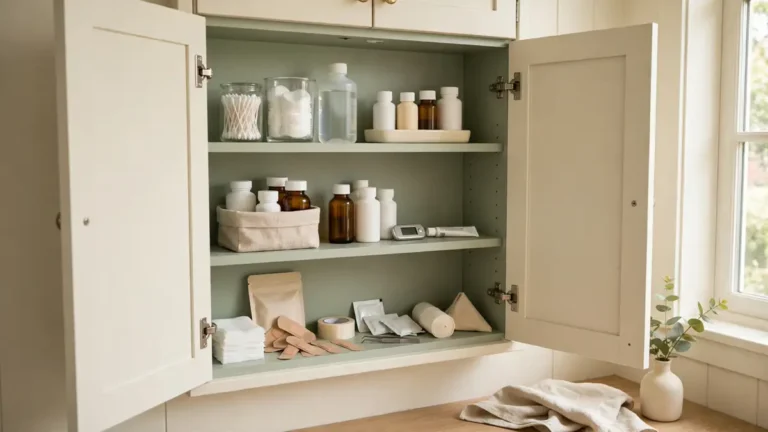
9. Medicines go high, kid-safe. Anything a child shouldn’t reach — prescriptions, vitamins that look like candy, razors — lives on the top shelf, ideally in a small latched box. Safety first, then convenience. This is non-negotiable in family bathrooms.
10. The 5-minute monthly reset. Once a month, pull the bins out, wipe the shelves, toss anything finished or expired, and put it all back. Five minutes. Pair it with your Bathroom Reset: 15-Minute Declutter routine and the cabinet never decays. Cabinets don’t get messy all at once — they decay one “I’ll deal with it later” at a time.
FAQ
How do I organize a small medicine cabinet?
Purge expired items first, then zone by daily use: everyday items at eye level in front, categories corralled in small bins, and a tiered riser on each shelf so nothing hides in back. Use the inside of the door for slim items.
Where should medicines be stored in the bathroom?
On the top shelf, ideally in a latched box — up high and kid-safe. Note that bathrooms are humid, so medications that are moisture-sensitive are actually better stored in a bedroom drawer; check the label.
How often should I clean out my medicine cabinet?
A quick 5-minute reset monthly (toss finished/expired, wipe shelves) plus a full purge twice a year. Expiry dates are the main thing to watch — set a phone reminder if you’ll forget.