
Christmas Morning Cleanup Plan: 9 Steps That Work
Christmas morning is magic. Christmas afternoon is a crime scene: wrapping paper drifts, boxes tower, new toys cover every surface, and the kitchen looks like a catering disaster. Every family hits the moment where the joy curdles into “this mess is going to take all week.”
It does not have to. A Christmas morning cleanup plan is simply a system decided in advance: supplies staged the night before, a sort-as-you-go method during gift opening, and a timed reset in the evening. The families with calm Christmas afternoons are not tidier people. They just planned the cleanup before the chaos instead of during it.
This plan assumes you already made space for the influx with our Toy Declutter Before Christmas guide. If you did, the new gifts have somewhere to go, which makes everything below dramatically easier.
1. Stage Cleanup Supplies the Night Before
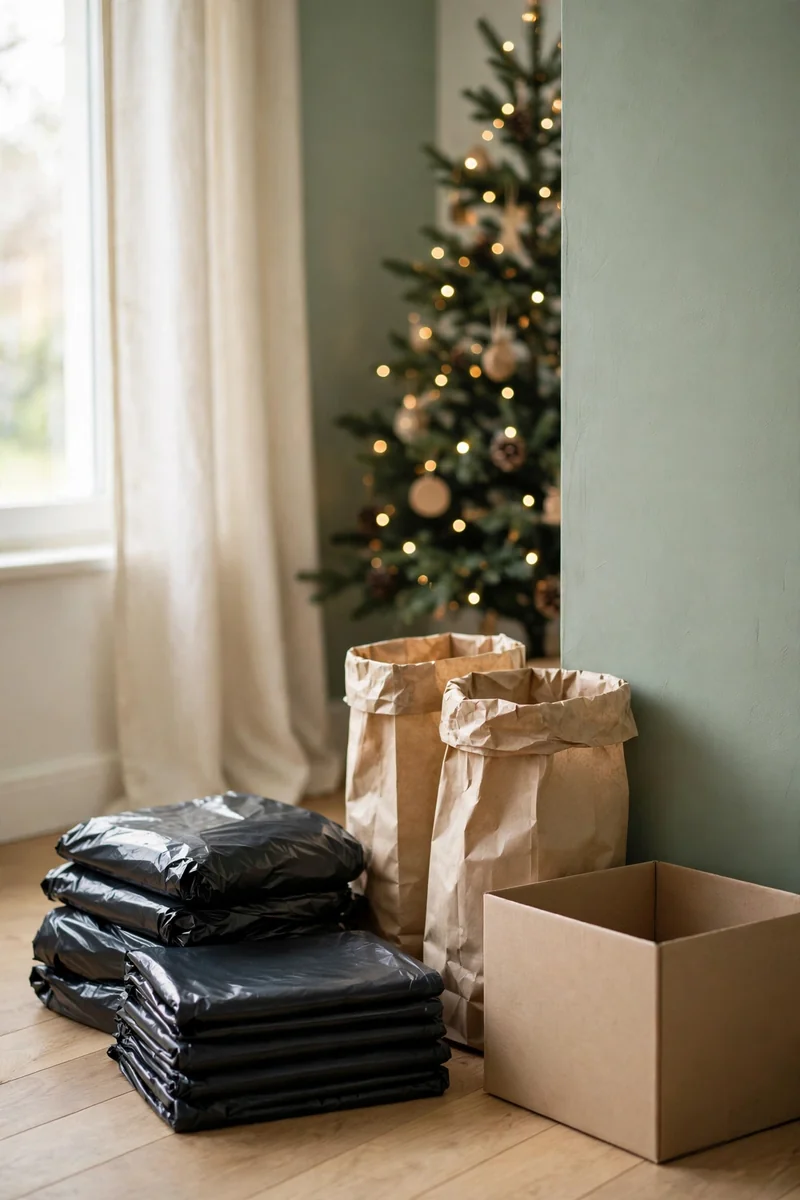
The number one reason Christmas cleanup drags is that nobody can find a trash bag when they need one. On Christmas Eve, put together a cleanup station in the living room corner: a stack of large trash bags, paper recycling bags, one empty box for cardboard, scissors, and tape for breaking boxes down later.
The station list: 4 to 6 large trash bags (you will use more than you think). 2 to 3 paper bags for recycling. 1 flattened spare box to collect cardboard. Scissors for cutting tape and tags. A laundry basket, which becomes the “belongs elsewhere” collector during the evening reset.
Put the station where it is visible but out of photos. Behind the sofa or in the corner by the tree works. Visible enough to grab, hidden enough not to appear in Christmas morning pictures.
2. Use the One-Bag Rule During Gift Opening
As gifts are opened, wrapping paper goes straight into a bag, not onto the floor. Assign one person (a kid old enough to enjoy the job, or a willing adult) as the paper collector with a big bag. Paper never touches the floor, and the room stays navigable.
Make it a game: Kids compete to fill their bag fastest, or everyone “shoots” crumpled paper into the bag basketball-style. The goal is keeping the floor clear enough to walk, find the scissors, and actually see the gifts. A floor buried in paper hides small pieces, gift tags, and batteries.
Keep one bag for trash (ribbons, bows, plastic packaging) and one for recyclable paper. Sorting later from one mixed mountain is miserable; two bags from the start costs nothing.
3. Sort Gifts Into Three Piles as You Go
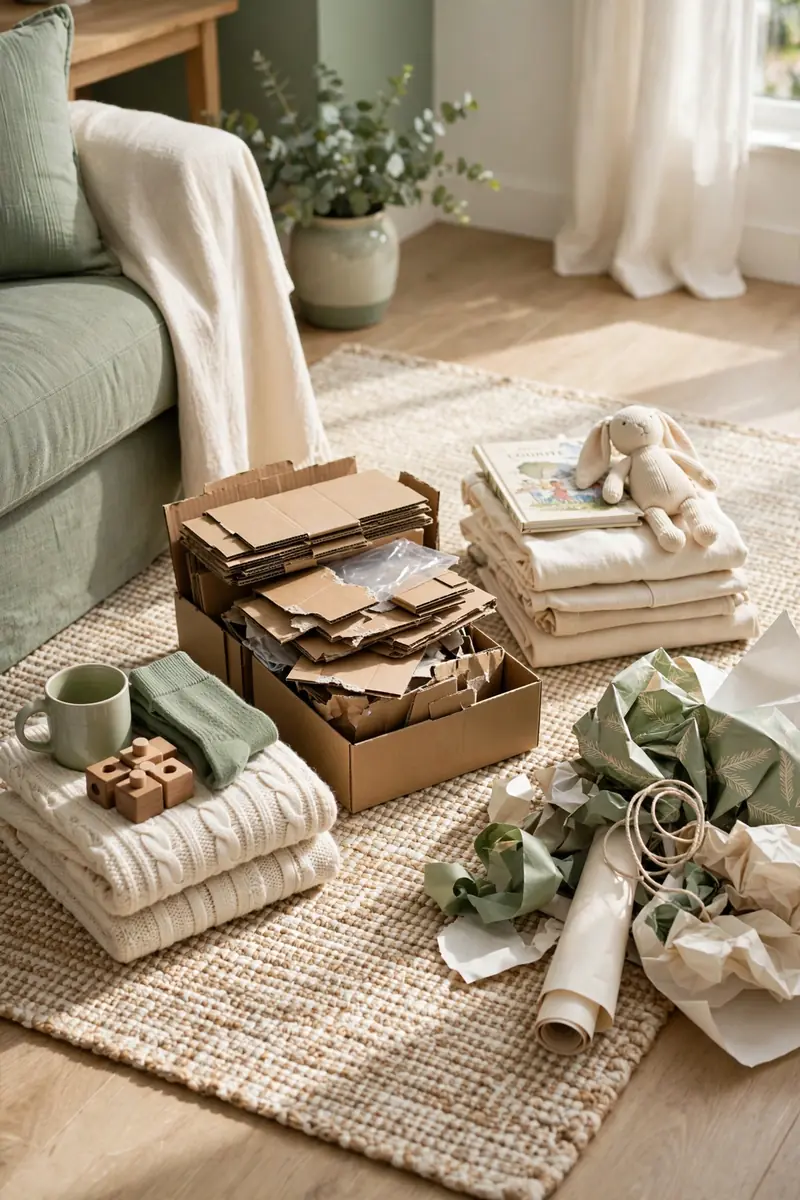
As each gift is opened, it goes into one of three zones: keep and display (things to enjoy today), put away later (clothes, books, boxed sets), and packaging to process (boxes, inserts, twist ties). Do not try to fully put things away during opening; just keep the three zones distinct.
Why zones beat piles: One undifferentiated pile becomes a archaeology dig by afternoon. Three zones mean the evening reset is just moving each zone to its destination. Kids can run the zones themselves once you show them: “toys you want to play with go here, clothes go there.”
Corral small pieces immediately. Open toy packaging over the “packaging” zone so tiny screws, batteries, and instruction booklets stay together. Nothing ruins Christmas afternoon like a missing battery cover screw.
4. Flatten Boxes Immediately
Boxes are the volume problem. An unflattened box takes ten times the space of a flattened one, and a tower of empty boxes will fill a living room by noon. Break boxes down as they are emptied: cut the tape, flatten, and stack them in the cardboard collection box from your staging station.
The box rule: No empty box sits unflattened for more than a few minutes. Keep the scissors in the station for this exact job. Kids actually enjoy box-flattening; it is destruction with permission.
Set flattened cardboard by the front door or in the garage as the stack grows, so it stops competing for living room space. If your recycling pickup is within a few days, check the schedule now and plan the curb run.
5. Wrapping Paper: Recycle Smart, Save Selectively

Not all wrapping paper is recyclable. Paper that is plain, matte, or printed with simple inks usually is. Paper with foil, glitter, metallic coating, or heavy plastic laminate is not; it goes in the trash. When in doubt, do the scrunch test: scrunch it into a ball, and if it stays scrunched, it is likely recyclable paper. If it springs back, it has plastic or foil in it.
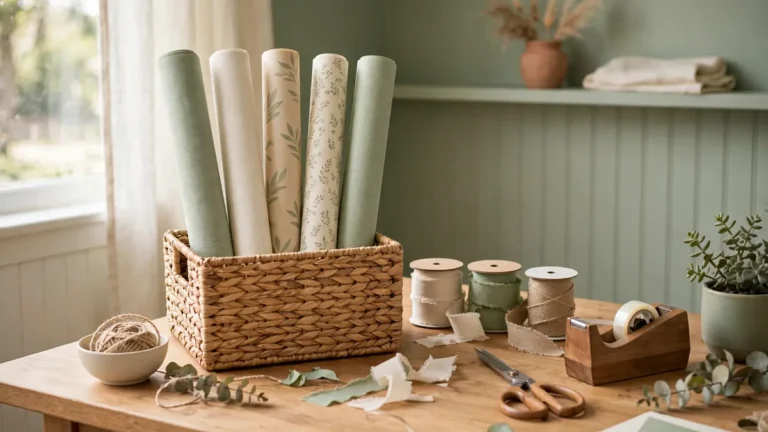
Save the good stuff: If someone in the family saves wrapping paper, designate one bag for “save” paper: large uncreased pieces, beautiful patterns, gift bags in good shape. Fold them once, bag them, done. Everything else goes to recycle or trash without guilt.
Ribbons and bows: save a small handful of the nicest for next year, trash the crumpled rest. A drawer full of crushed bows helps nobody.
6. Triage the New Toys Before Lunch
New toys need homes before they become floor. Between gift opening and lunch, do a 15-minute toy triage: batteries in, packaging removed, and each toy assigned to its zone. This is where the pre-Christmas declutter pays off: the empty shelf space is waiting.
The triage pass: Unbox everything fully (kids cannot play with a toy still zip-tied to cardboard). Install batteries now, not later. Match each toy to a storage zone from your existing system. Anything without a home yet goes into one “new toy” bin to be placed during the evening reset.
Our Kids’ Toy Organization zones give every category a home; run the new arrivals through those nine zones and the playroom absorbs the influx instead of drowning in it.
7. Reset the Kitchen Between Meals
Christmas usually means at least two big meals, and the kitchen cannot serve the second one if it is still buried under the first. Between meals, do a 20-minute kitchen reset: clear the table, load the dishwasher, hand-wash what does not fit, wipe counters and the stove, take out the trash.
The between-meals sprint: Everyone helps for 20 minutes, timer on. One person clears, one loads, one wipes, one takes out trash and recycling. Then the kitchen is done and the afternoon is actually relaxing instead of guiltily avoiding the mess.
Our Holiday Kitchen Prep guide covers the pre-season organization that makes this sprint fast: cleared counters and an empty dishwasher to start the day.
8. Do the 20-Minute Whole-House Evening Sweep
After dinner, before everyone collapses, do one timed whole-house sweep. 20 minutes, everyone participates, each person takes a room or a job. The goal is not perfection; it is getting the house from “disaster” to “lived-in” before bed.
The sweep assignments: Living room: zones to destinations, cushions fluffed, floor clear. Kitchen: final load, counters wiped. Bathrooms: quick wipe, fresh hand towel. Entryway: shoes lined up, coats hung. The laundry basket of “belongs elsewhere” items gets distributed, not just moved.
Set a timer and play music. Twenty focused minutes with the whole family beats two hours of one person resentfully tidying alone. Christmas night sleep is measurably better in a reset house.
9. January-Proof It the Next Morning
On December 26th, finish the job in 30 minutes. Cardboard to the curb. Donation box by the door for the inevitable duplicates and outgrown items the new gifts replaced. Gift bags and saved wrapping stored flat. New toys fully in their zones.
The day-after list: Break down any remaining boxes. Photograph or note gifts that need returning or exchanging while receipts are findable. Store holiday-specific new items (ornaments, decor gifts) with the decorations, not in random closets; our Christmas Decor Storage system keeps them findable next December.
A Christmas morning cleanup plan turns the biggest mess of the year into a series of small, timed, shared jobs. The magic of the morning stays magical, and the afternoon stays enjoyable, because the cleanup was decided in advance.