
Holiday Table Setting Organization: 10 Ideas for a Calm Table
A holiday table should feel welcoming, not frantic. The difference is rarely a bigger budget or fancier dishes. It is organization: linens ready before the guests arrive, enough plates counted before the meal, a seating plan made while you are still calm, and a setup you can repeat without starting over every time. Holiday table setting organization turns that last minute scramble into a calm routine you can use all season.
This guide gives you 10 practical ideas, one for each part of the table. Work through them in order, or pick the three that solve your biggest headache this year. Either way, you will sit down to dinner instead of rushing around it.
1. Do a Trial Table One Week Early
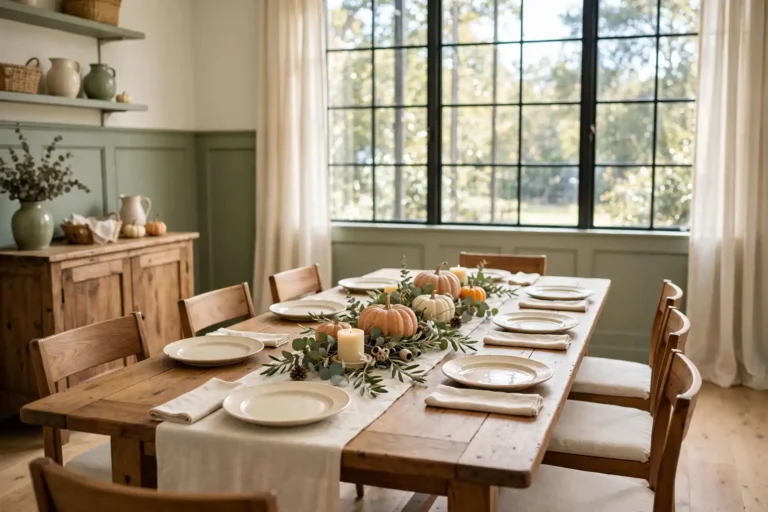
Set the full table seven days before the holiday meal, even if no one is coming yet. Lay out the tablecloth, place the plates, add the glasses and cutlery, and stand back to look at it. A trial run reveals problems while there is still time to fix them: a tablecloth that is too short, a missing serving spoon, a chair that wobbles, or a centerpiece that blocks faces across the table.
Take a photo of the trial table from the head of the table and from the side. That photo becomes your setup guide on the day itself, so you are not guessing where anything went. After the trial, pack the whole setting into one labeled bin or one shelf section, ready to pull out again. If you are resetting the whole dining area too, our Holiday Dining Room Reset walks through the room around the table first.
2. Build a Linen Kit for the Whole Season

Holiday linens cause more last minute stress than almost anything else on the table. The tablecloth is wrinkled, the napkins are in two different drawers, and the placemats are still in a bag from last year. Fix this once by building a single linen kit: one tablecloth, one set of napkins, and one set of placemats, all washed, ironed, and stored together.
Roll the tablecloth instead of folding it, because rolled cloth creases less and unrolls flat. Tuck the napkins inside the roll, and slip a small card into the bundle noting the table size it fits. Store the kit on one shelf, not spread across three closets. When the next holiday arrives, you grab one bundle, not five separate hunts.
3. Count Plates, Glasses, and Cutlery Before You Cook
Count settings before you start cooking, not while guests are at the door. You need one dinner plate, one salad plate or bowl, one glass, and one full cutlery set per guest, plus two spare settings for surprises. Count the serving dishes separately: one large platter for the main dish, two bowls for sides, one gravy boat or small jug, and one bread basket.
Write the count on a sticky note and stick it inside the cabinet door. If you are short, you will know early enough to borrow, buy, or adjust the menu. Washing a spare set mid-meal is the kind of scramble that a two minute count prevents completely.
4. Make the Seating Plan on Paper First
A seating plan sounds formal, but it saves real awkwardness: two guests who argue, a child next to a hot dish, or the host stuck at the far end away from the kitchen. Draw a simple rectangle for the table on paper, write one name per seat, and check three things: every guest can reach food without standing, children sit near a parent, and the cook sits near the kitchen end for easy serving.
Use plain place cards, even handwritten ones, so guests do not hover and wonder where to sit. Place cards also let you reserve the end seat for the person carving or serving. If your guest list changes, adjust the paper plan in seconds. A plan made calmly beats a seating shuffle at the door every time.
5. Keep the Centerpiece Low, Simple, and in One Bin

The best holiday centerpiece is one that guests can see over. Keep it under 30 centimeters tall, or use a long, low runner of greenery, candles, or fruit instead of one tall arrangement. A low centerpiece keeps conversation flowing and leaves room for serving dishes, which is the actual job of the table.
Store the whole centerpiece together in one bin: candles, holders, runner, and any small ornaments. Label the bin with the holiday and the table it fits. Next year, you open one bin and the centerpiece is done in five minutes. If the rest of your holiday storage needs the same treatment, our Christmas Decor Storage Ideas shows how to pack decor so it survives the year.
6. Use a Place Setting Checklist Card
A place setting checklist card is a small card kept with the linens that lists, in order: placemat, dinner plate, salad plate or bowl, fork on the left, knife and spoon on the right, glass above the knife, napkin on the plate or to the left. Anyone in the household can set the table from that card, including a teenager or a visiting relative who offers to help.
Tape a second copy of the card inside the cabinet where the dishes live. That way, the person setting the table does not have to ask you anything.
7. Give Children Their Own Organized Table
A kids table works best when it is planned, not improvised. Use a smaller table or one end of the main table, with unbreakable plates, cups with lids for younger children, and a simple activity: coloring pages, a small puzzle, or plain paper for drawing. Keep the kids table away from hot serving dishes and the carving area.
Set the kids table first, before the adult table, so children have somewhere to go while you finish cooking. Assign one older child or adult to sit at the kids end for the first 15 minutes, until everyone is settled. A calm kids table keeps the adult table calm too, and it gives children a space that feels special rather than sidelined.
8. Set Up a Drinks Station Away From the Table

Drinks on the main table crowd out food and cause spills. Move them to a sideboard, a kitchen counter, or a small cart near the dining room instead. Stock the station with water, one or two other drinks, glasses, a small ice bucket, and a cloth for spills. Guests help themselves without reaching across the table.
Label the drinks station with a simple card if you have more than one option, so guests do not have to ask. Keep a spare set of glasses underneath the station for refills.
9. Label Serving Dishes Before the Food Arrives
Label each serving dish with a small card or a sticky note before cooking starts: main dish, potatoes, vegetables, salad, bread, dessert. This sounds fussy, but it prevents the classic problem of three bowls arriving and no one knowing which dish goes where, or a dish left in the kitchen because its spot was never planned.
Place the labels on the table during your trial run in section 1, so you can see whether the dishes actually fit. If they do not, swap in smaller bowls or move one dish to the drinks station counter as a second serving point. A labeled table also lets guests serve themselves confidently, which takes pressure off the host.
10. Plan a 20 Minute Post Meal Reset
The post meal reset is part of table organization, not an afterthought. Before guests arrive, decide the plan: one person clears plates to the kitchen, one person wraps leftovers into labeled containers, one person wipes the table, and the linens go straight into the laundry basket, not onto a chair. Set a timer for 20 minutes and work together.
Soak serving dishes while you eat dessert, so cleanup is faster later. Pack the reusable setup, the place cards, the centerpiece bin, and the linen kit, back into their labeled spots the same evening. If your laundry is part of the holiday load, our Holiday Laundry Room Reset keeps table linens and guest towels from piling up. And if the whole holiday still feels like a lot, our Holiday Cleaning Countdown spreads the work across 10 days instead of one frantic afternoon.
Holiday Table Wrap-Up
A calm holiday table is not about perfection. It is about a trial run a week early, a linen kit in one place, counted dishes, a paper seating plan, a low centerpiece, a checklist card, a planned kids table, a separate drinks station, labeled serving dishes, and a 20 minute reset after the meal.
Do those 10 things once, and every holiday meal after that gets easier, because the system is already built. Set the table, enjoy the meal, and let the organization do the quiet work in the background.