New Year Playroom Reset: 10 Steps to a Playroom Children Actually Play In
By January most playrooms look like a toy shop after a storm. Building blocks cover the rug, puzzle pieces hide under the sofa, and half the toys on the shelves have not been touched since summer. A new year playroom reset pulls everything out, sorts it with the children, and puts back only what they actually play with, so the room is fun again instead of stressful.
The ten steps below work in order, from emptying the shelves to a small habit that keeps the floor clear all year. None of them need new furniture or a big budget. Start with three big boxes, a bin bag, and a timer, because children reset faster when the job feels like a game and not a chore.
1. Pull Every Toy Out Into the Open
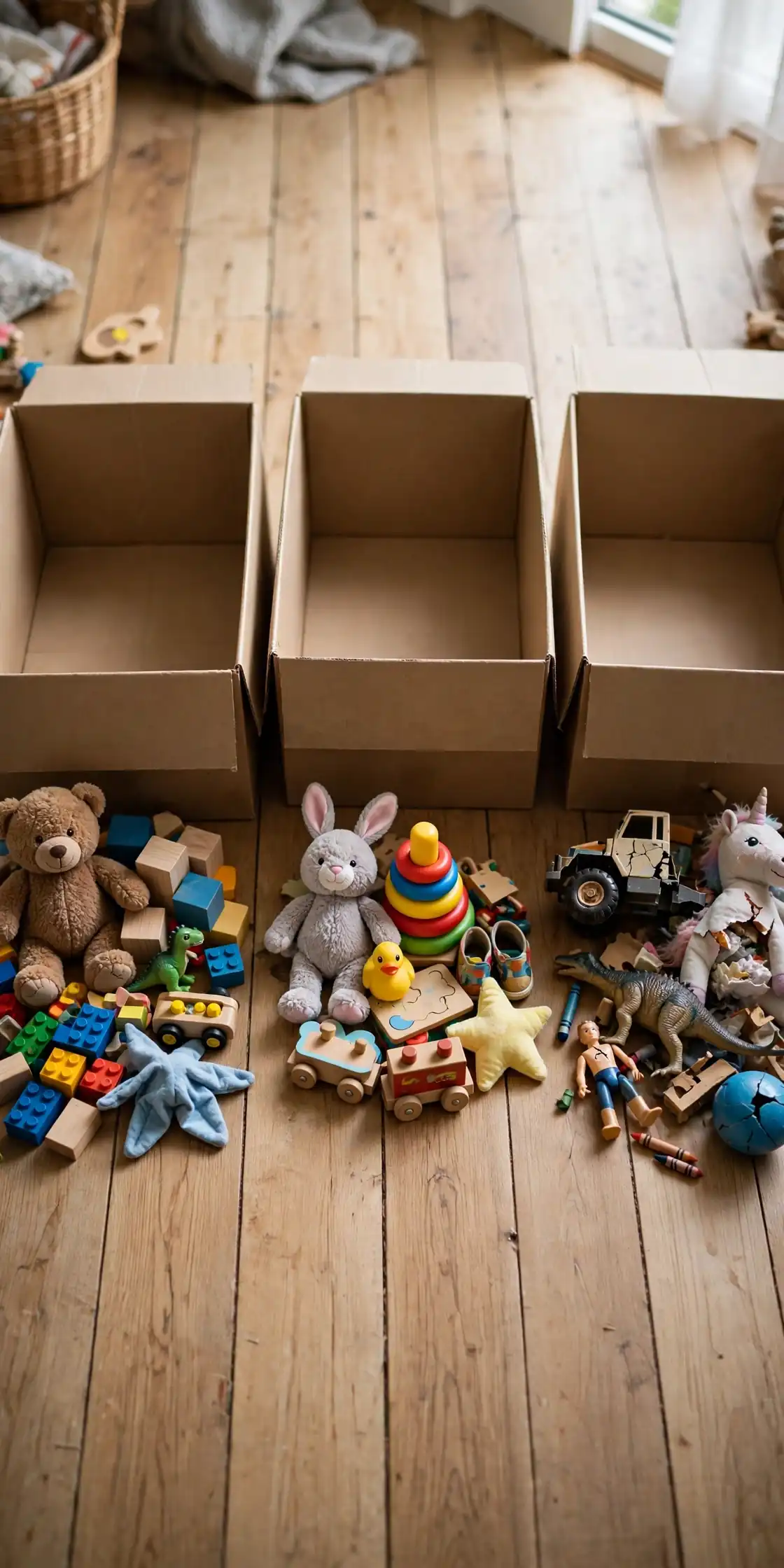
Take every toy, book, and game out of the playroom, and lay them on the floor where you can see them all at once. Wipe the shelves, the toy boxes, and the low table clean once they are empty, and check under the rug and behind the door, because small toys hide in both places. A playroom with everything out in the open is the only way to see what your children really own, and it usually shows far more broken and forgotten toys than anyone remembers buying. If the rest of the kids spaces need the same treatment, a new year kids room reset covers bedrooms the same way.
2. Sort Into Keep, Donate, and Broken Piles
Sorting works best when children help decide. Make three piles with your children: keep, donate, and broken. Keep the toys they play with every week, donate the ones they have outgrown but are still in good shape, and bin the broken toys and the games with missing pieces. Let children choose one or two old favourites to keep even if they rarely play with them, and move the rest on without a long debate. A playroom with only toys that are loved and whole is a playroom children actually use.
3. Set Up Clear Zones for Each Kind of Play
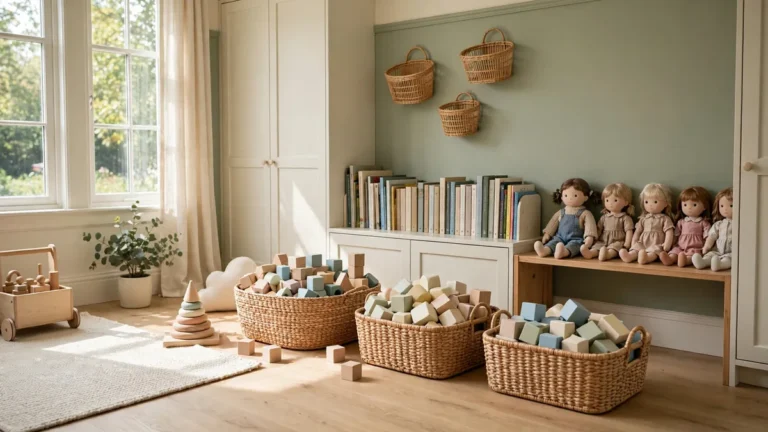
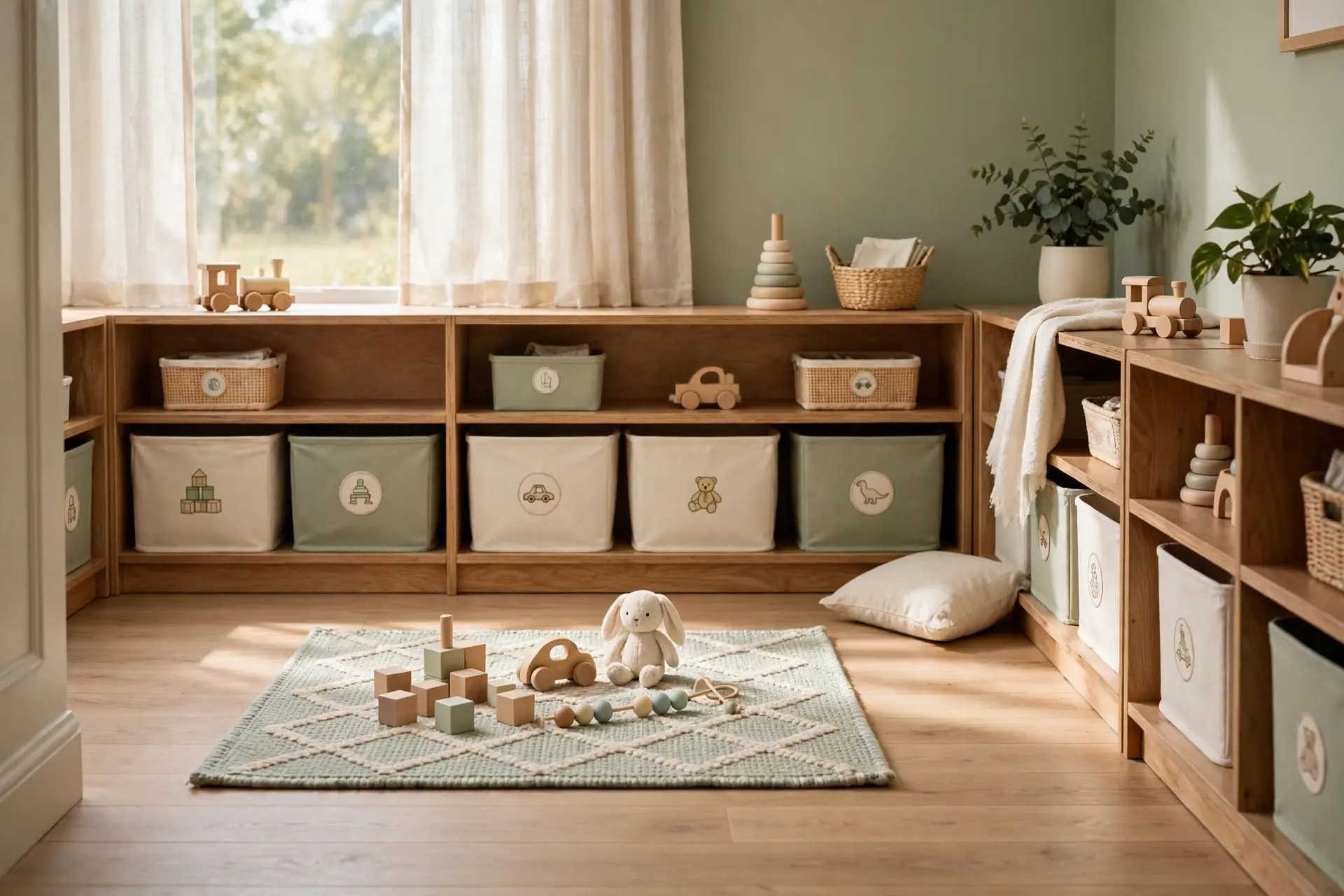
A playroom only stays tidy when every kind of play has its own place. Set up clear zones: building toys in one corner, books on one shelf, art supplies at the table, and dressing up clothes on one hook. Keep the zones simple and put the most used zone where children can reach it without climbing. Zoning by play type means children can find what they want in seconds, and they know exactly where it goes back when they finish. For more ideas on containing toy chaos, a new year toy declutter sorts toys by type the same way.
4. Use One Bin Per Toy Type, With a Picture Label
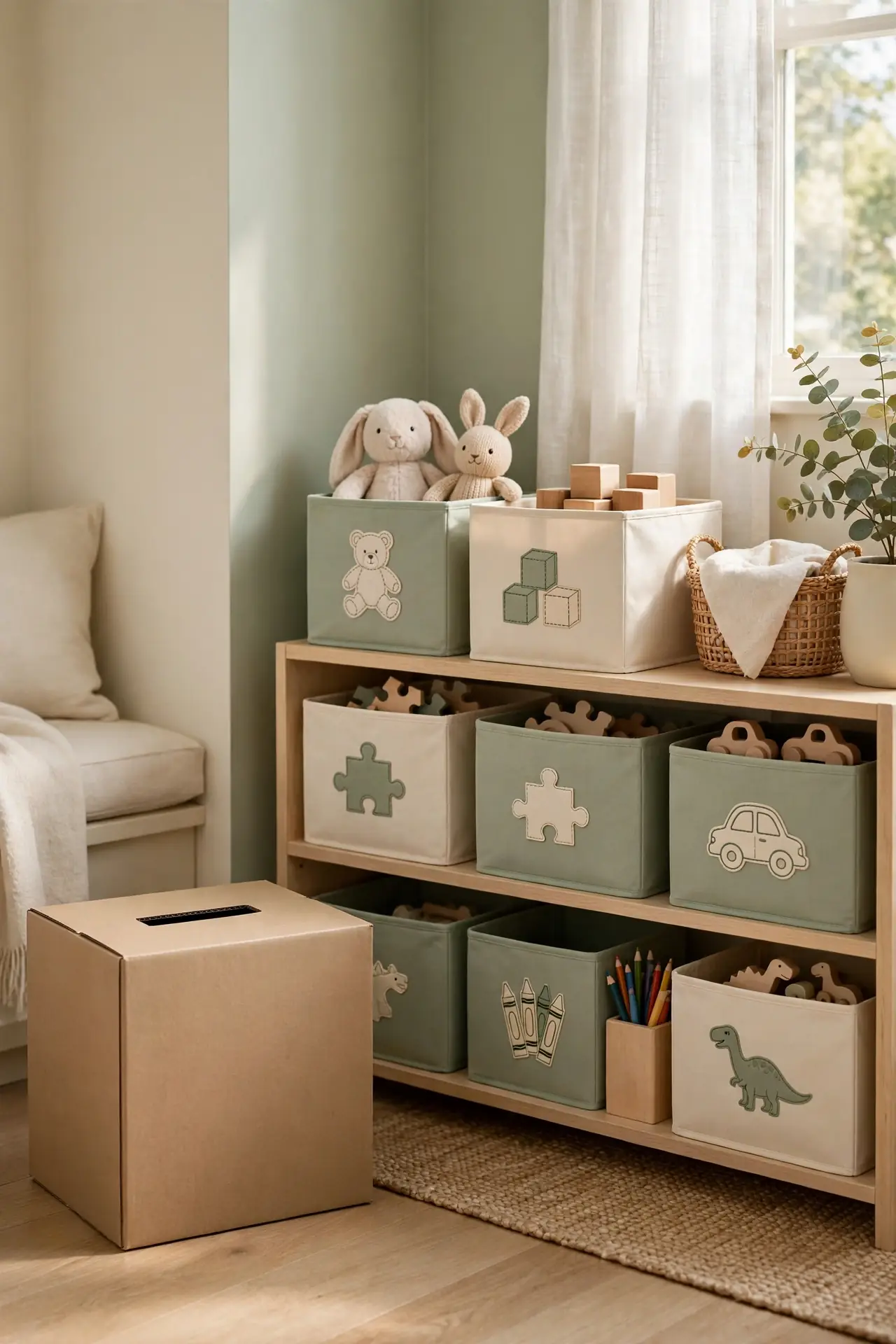
Small children cannot read long labels, so label every bin with a picture. Use one bin per toy type, and stick a photo of what goes inside on the front, so even a three year old can tidy up alone. Keep the bins low, open topped, and light enough for a child to carry. One bin per type stops the mixed up toy box that nobody can find anything in, and picture labels turn tidying into a matching game children enjoy.
5. Keep Only a Few Toys Out at a Time
A playroom with every toy on show is a playroom nobody can play in. Keep only a few toys out at a time, and store the rest in a cupboard or on a high shelf. Rotate the stored toys every few weeks, so old toys feel new again when they come back out. Children play longer and more creatively with five toys than with fifty, and the room stays calm when the floor is not covered. A smaller set of toys out at once makes tidying a five minute job instead of an hour long one.

6. Give Books Their Own Low Shelf
Books get lost when they are mixed in with toys, so give them their own low shelf. Stand the books with their spines facing out, grouped by type, with the favourites at the front where small hands can reach them. Keep a small basket beside the shelf for library books, so they never get mixed in with the ones you own. A book shelf children can reach turns reading into something they choose themselves, and it keeps torn pages and lost books to a minimum.
7. Make Art Supplies Easy to Reach and Easy to Clean
Art supplies only get used when children can reach them and parents can clean them. Keep crayons, paper, and stickers in one shallow tray on the table, and store paints and glue on a higher shelf for supervised use only. Put a washable mat under the art corner, and keep a damp cloth in a small pot on the table for quick wipe ups. An art corner that is easy to reach and easy to clean means children create more, and the table never stays sticky for days.
8. Create a Display Spot for Finished Work
Children love to see their work on show, and a display spot stops finished drawings from piling up on every surface. Hang a simple washing line with pegs on one wall, or put a cork board at child height, and let children choose what goes up. Swap the display every week or two, and keep the old favourites in a flat folder instead of on the floor. A display spot that changes often makes children proud of what they make, and it keeps the walls clear of old paper.
9. Set a One Toy In, One Toy Out Rule
A playroom fills up again fast unless new toys have a rule attached. Set a one toy in, one toy out rule: every time a new toy arrives, an old one leaves to the donate box. Keep the donate box in the cupboard where children can see it, and let them choose which toy goes when a new one comes in. The rule stops the shelves from overflowing after birthdays and holidays, and it teaches children that letting go of old toys makes room for new favourites. For more decluttering ideas that work with children, a kids toy organization ideas guide covers zones, bins, and labels in more detail.
10. End Every Day With a Five Minute Tidy
A playroom reset only lasts with a small routine behind it. End every day with a five minute tidy: set a timer, play a favourite song, and race to put every toy back in its picture labeled bin before the song ends. Do it at the same time every evening, right before bath time, so it becomes part of an existing routine. Keep the tidy short enough to actually do, and praise the effort instead of the result. With this habit, the playroom stays fun all year, and the floor is clear every morning.
A Playroom Children Actually Play In
A new year playroom reset is not about throwing toys away, it is about keeping only what children love and play with, giving every kind of play its own zone, and keeping just a few toys out at a time. Picture labeled bins, a book shelf children can reach, and a five minute evening tidy turn a chaotic room into one that works every day. With only loved toys inside, that calm playroom lasts all year, and children play in it more, not less.