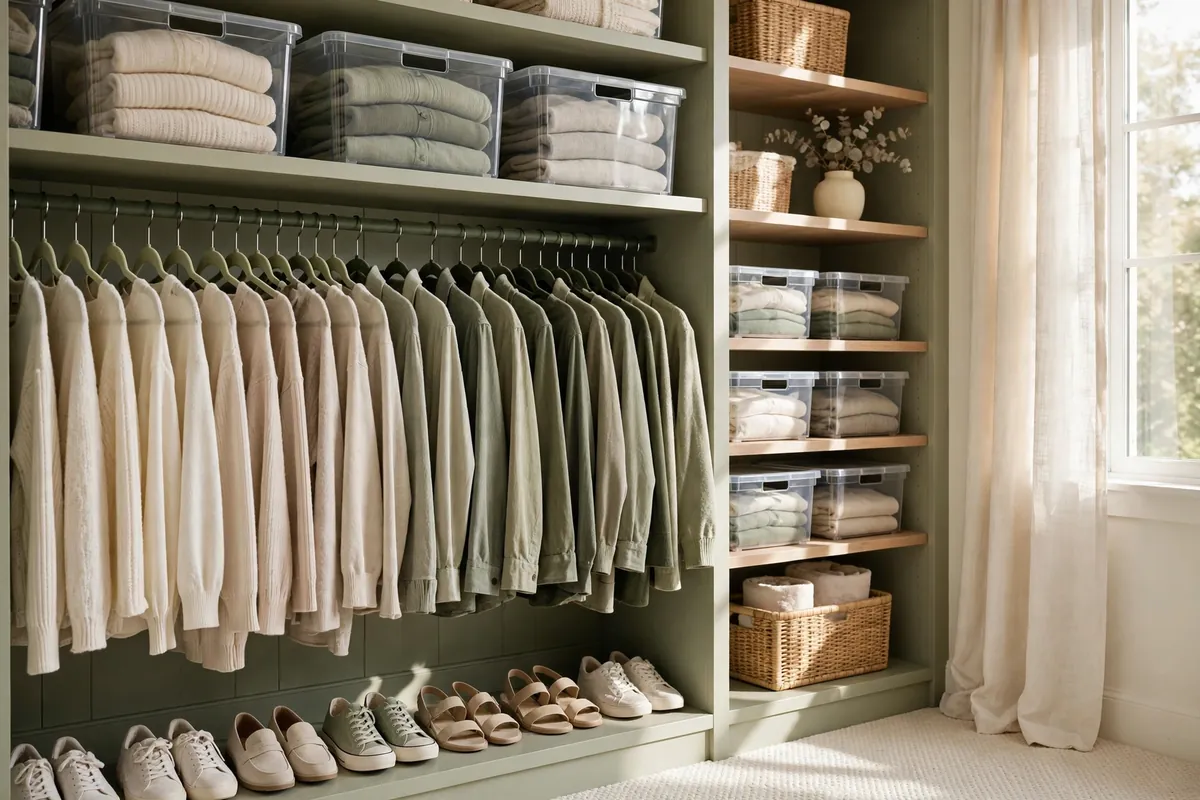
Closet Declutter: The Simple Method That Actually Works
Your closet should make getting dressed easy, not stressful. If opening it feels overwhelming, it’s time for a closet declutter.
This isn’t about minimalism or capsule wardrobes (unless you want that). It’s a practical method to end up with a closet where everything fits, everything’s visible, and getting dressed takes five minutes.
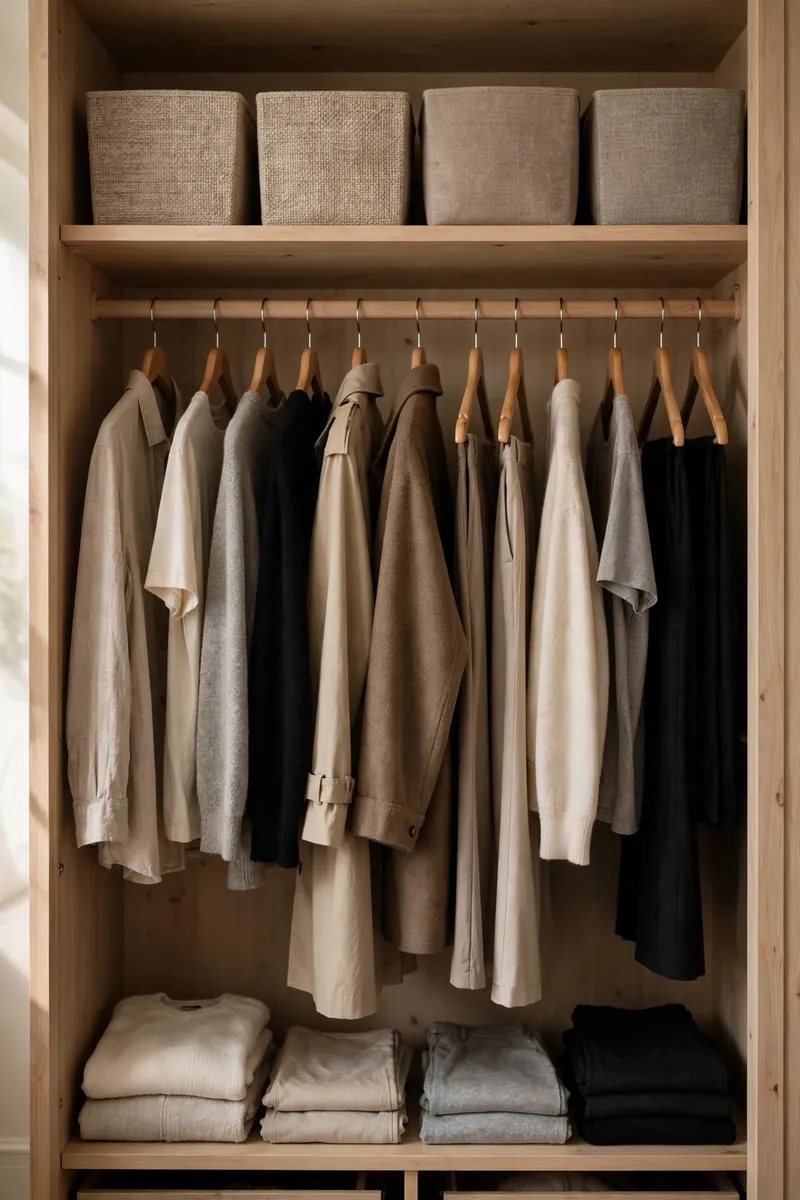
Before You Start: Set Up 4 Bags
Grab four large bags or boxes and label them:
- KEEP — love it, wear it, fits well
- DONATE — good condition, but not for you
- TOSS — stained, broken, worn out
- RELOCATE — belongs in another room
Everything you touch goes in one of these four. No “maybe” pile — maybes are just delayed decisions.
Step 1: Empty It Completely
Take every single item out of your closet. Yes, all of it. Pile it on the bed.
This is non-negotiable. You can’t declutter around things — you need the blank slate.
Wipe down shelves and rods while it’s empty. Future you says thanks.
Step 2: The 3-Second Rule
Pick up each item. You have three seconds to decide:
- Love it + wear it regularly? → KEEP
- Haven’t worn it in 12 months? → DONATE (be honest)
- Doesn’t fit right now? → DONATE (not “someday” — now)
- Damaged beyond repair? → TOSS
- Belongs elsewhere? → RELOCATE
The hard truths:
- “It was expensive” is not a reason to keep it
- “I might wear it someday” means you won’t
- “It’ll fit when I lose weight” — buy something that fits the body you have now
Step 3: Sort Your Keeps by Category
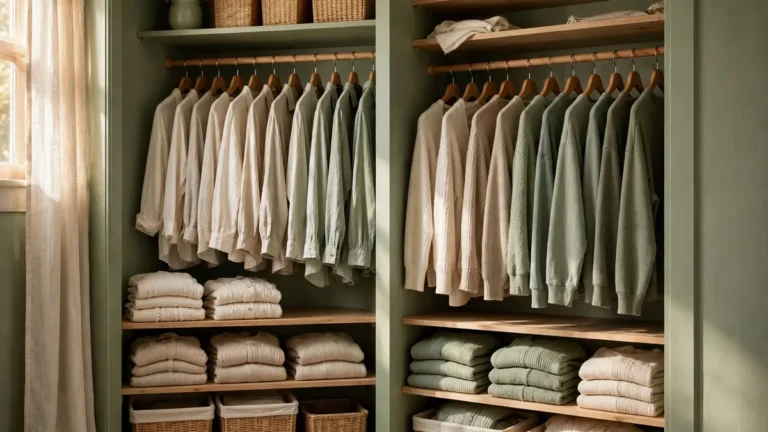
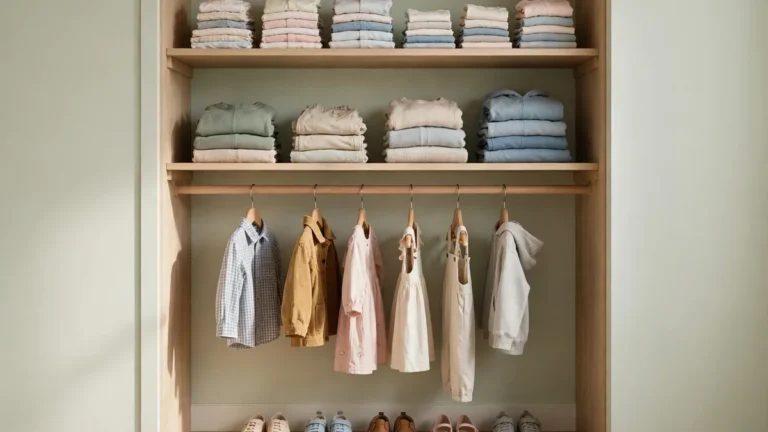
Now organize what survived. Group by category, then by color within each category:
- Tops (then by sleeve length)
- Bottoms (pants, skirts)
- Dresses
- Jackets and outerwear
- Shoes (pairs together, obviously)
Use matching hangers. This one change makes any closet look 10x better instantly. Slim velvet hangers save space too.
Step 4: Maximize Your Space
Small closet? These tricks double your capacity:
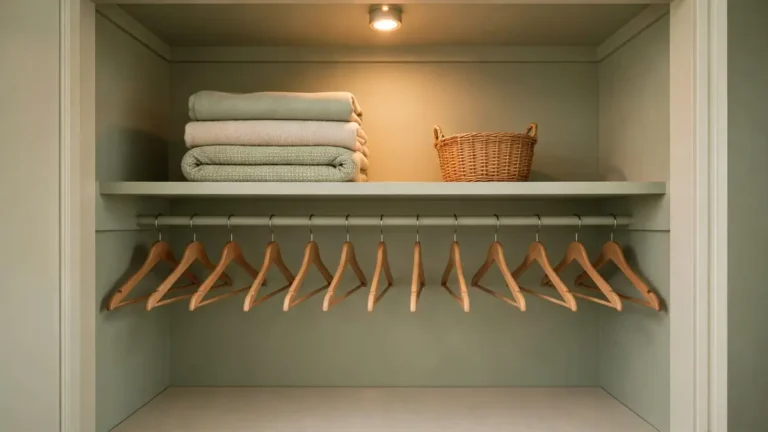
- Double-hang rod: Add a second rod below for shirts and pants
- Shelf dividers: Keep folded stacks from toppling
- Over-door hooks: For tomorrow’s outfit, bags, robes
- Shoe organizer: Clear over-door or under-bed
- Top shelf bins: Labeled bins for seasonal or rarely-worn items
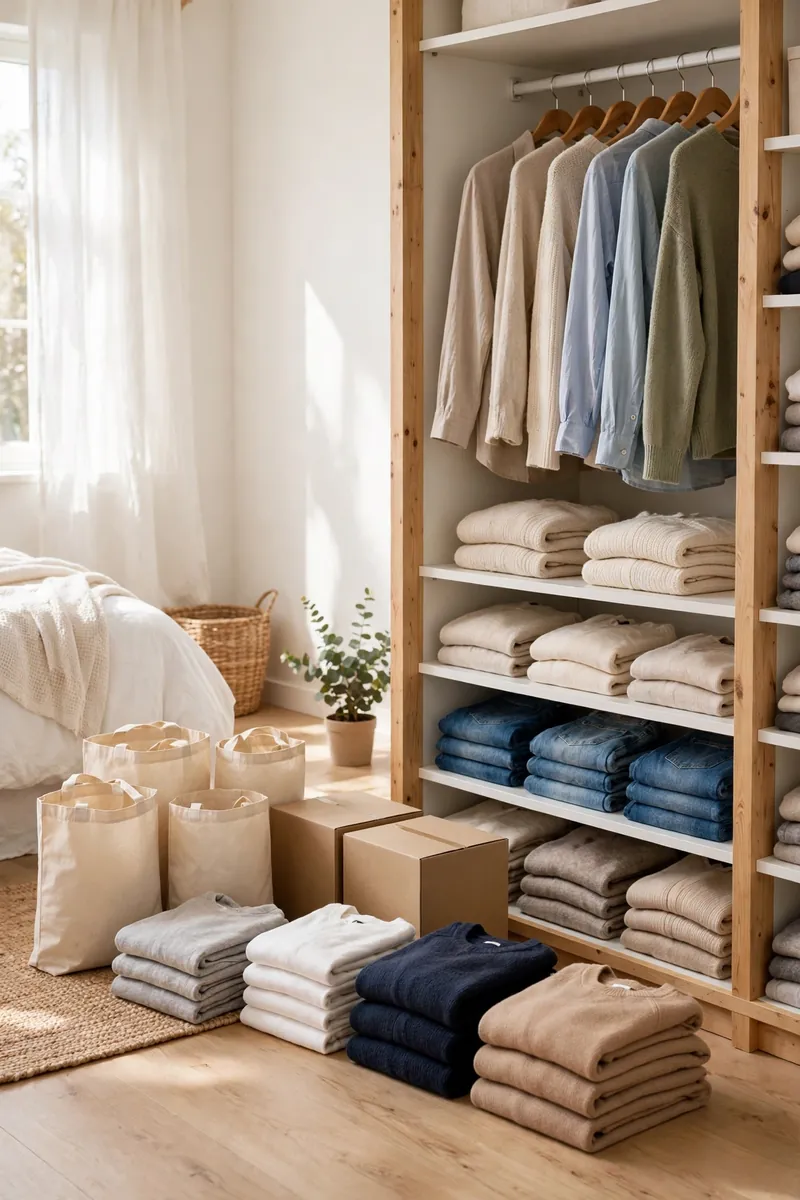
Step 5: Create a “One In, One Out” System
Your closet stays decluttered with one rule: every new item in means one old item out (donate bag). Keep a small donate bag hanging in the closet — when it’s full, drop it off.
The 10-Minute Monthly Maintenance
First Sunday of the month, 10 minutes:
1. Scan for anything you haven’t worn (2 min)
2. Re-hang anything that migrated (3 min)
3. Check the donate bag — full? Drop it off (5 min)
Pair it with a 30-minute weekly reset routine for the whole home.
Closet Declutter Checklist
- ☐ Get 4 bags: Keep, Donate, Toss, Relocate
- ☐ Empty the entire closet
- ☐ Wipe shelves and rods
- ☐ 3-second rule on every item
- ☐ Donate bag out of the house within 48 hours
- ☐ Sort keeps by category, then color
- ☐ Switch to matching slim hangers
- ☐ Add double rod / shelf dividers if needed
- ☐ Hang donate bag for ongoing decluttering
- ☐ Schedule monthly 10-minute maintenance
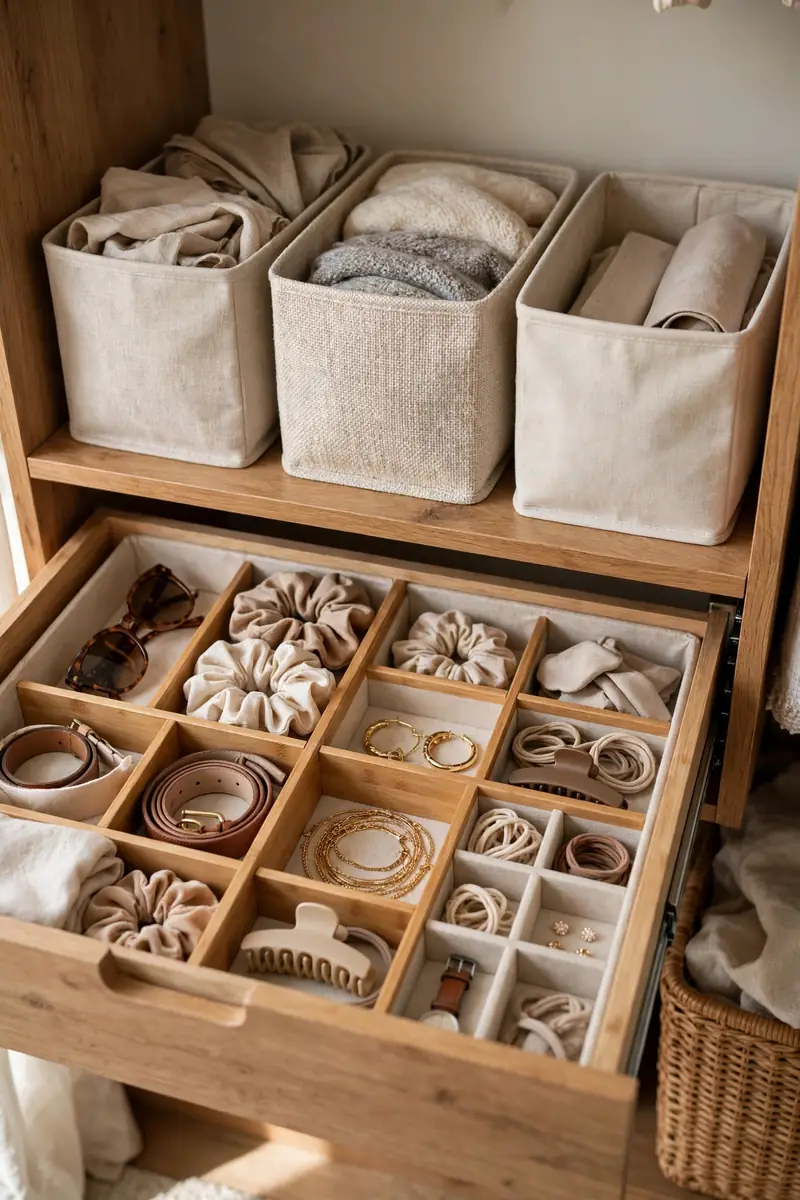
Small Closet Organization: Double Your Space
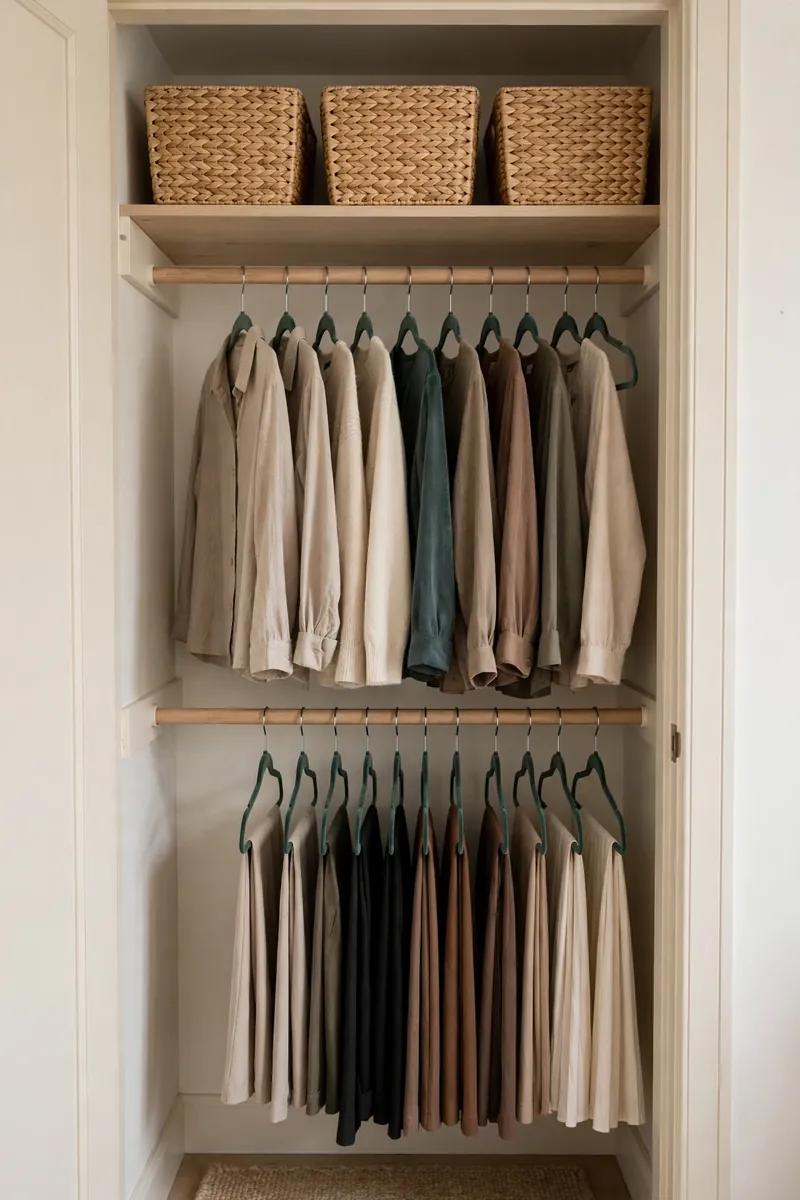
A tiny closet isn’t a curse — it’s a design constraint. These tricks genuinely double usable space:
- Double-hang everything: Two rods (one high, one mid) for shirts, pants, and skirts. Long items get one dedicated narrow section. This alone doubles hanging space.
- Slim hangers, all matching: Velvet slim hangers take half the width of plastic ones. In a small closet, switching hangers can free up 20% more rod space overnight.
- Go up: The shelf above the rod is prime real estate. Labeled bins for off-season, bags, and rarely-worn items. If there’s no shelf, add one — a $10 bracket shelf changes everything.
- Use the floor wisely: A small shoe rack or two stacked bins — not a pile. Piles are where small closets go to die.
- Door = storage: Over-door hooks for tomorrow’s outfit, robes, and bags. Inside of the door: a narrow organizer for accessories.
- Relocate the overflow: Off-season clothes don’t belong in a small closet. Under-bed bins or a top-of-wardrobe box keep them accessible but out of the way.
The Seasonal Closet Swap (Twice a Year)

Twice a year, spend 30 minutes swapping seasons. It’s a mini-declutter that keeps your closet working:
- Pull the out-of-season: Heavy coats in spring, sundresses in fall. If you didn’t wear it this season, it goes in the donate bag — no second chances.
- Wash before storing: Stains set over months in storage. Everything stored must be clean.
- Store smart: Labeled bins, cedar blocks for moths, and a list taped inside the bin lid of what’s in there. Future you will thank present you.
- Inspect as you swap: Check for damage, missing buttons, worn heels. Add repairs to a list — or let the item go.
The seasonal swap is also the perfect moment for the 10-minute monthly maintenance to become a 30-minute seasonal reset. Same habit, bigger payoff.
Frequently Asked Questions
How do I start decluttering my closet when I’m overwhelmed?
Start with one category, not the whole closet — just shoes, or just t-shirts. Small wins build momentum. The 4-bag system keeps decisions simple.
How many clothes should I keep?
There’s no magic number. Keep what you love, what fits, and what you actually wear. If you haven’t worn it in 12 months (excluding special occasion wear), let it go.
What do I do with sentimental clothes?
Keep 3-5 truly meaningful pieces in a memory box — not in your everyday closet. Your closet is for clothes you wear, not a museum.
A decluttered closet isn’t about having less. It’s about seeing what you have and loving getting dressed again. Next up: reset your bathroom in 15 minutes.