
Winter Closet Organization: 10 Ideas for Cold-Weather Clothes
Winter clothes are bulky, heavy, and hard to live with in a closet built for summer. Coats swallow the rail, sweaters slide off hangers, and boots end up in a pile by the door. A winter closet organization reset is not about buying a bigger closet. It is about sorting by warmth, giving every heavy item a real home, and keeping the clothes you reach for every day within easy reach.
Set aside one afternoon for this reset. Pull everything out, sort it honestly, and put it back by a system you can keep up with all season.
1. Pull Everything Out for a Winter Sort
Start by taking every winter item out of the closet. Coats, sweaters, scarves, boots, and the summer clothes still hanging there all come out. Wipe the shelves and the floor, then look at what you actually own. If a coat has not been worn in two winters, it goes to donation. If a sweater is pilled beyond saving, it goes too. A winter closet only works when it holds the clothes you truly wear in cold weather, not every item you have ever owned.
2. Sort by Warmth, Not by Color
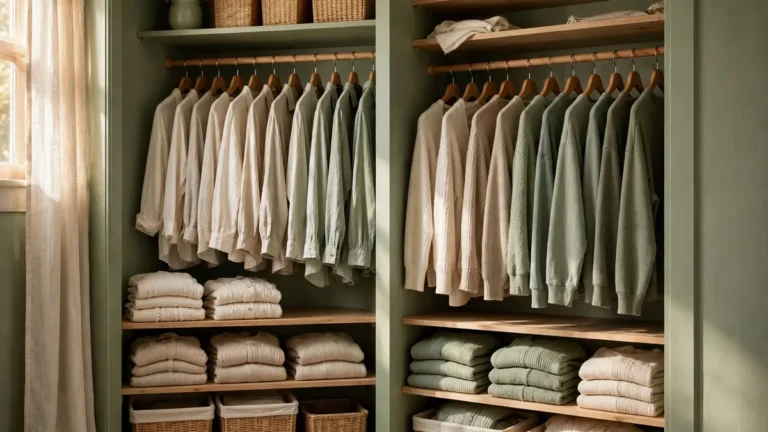
Most closets are organized by color, but winter closets work better organized by warmth. Make three piles: everyday warmth (the coat, sweaters, and jeans you wear weekly), deep cold gear (the heavy parka, snow boots, and thermal layers for the worst days), and occasional wear (dress coats and party outfits). Everyday warmth goes at eye level and arm’s reach. Deep cold gear goes on the top shelf or in a bin, ready but not in the way. Occasional wear goes to one end of the rail. Sorting by warmth means you grab the right layer without digging.

3. Give Coats a Real Home
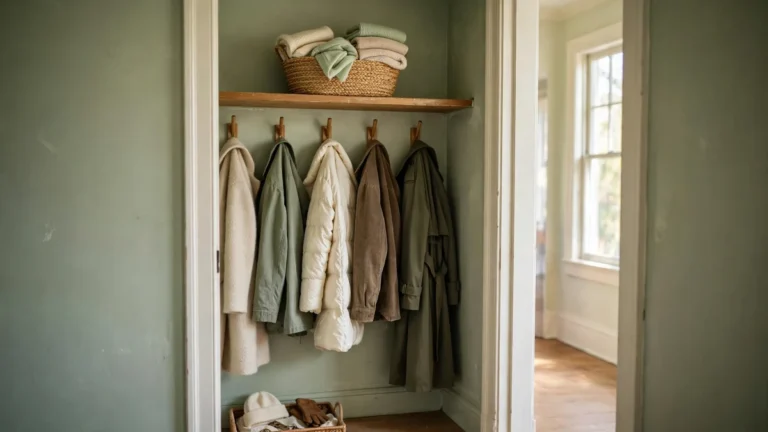
Coats are the biggest winter closet problem because they are heavy and they slide. Use sturdy wooden or velvet hangers, never thin wire ones, and give each coat enough space to hang without being crushed. If the rail is full, move the dress coats to a spare closet or a garment bag on the top shelf. Keep one hook by the door for the coat you wear today, so the everyday coat never has to fight for rail space. For coats guests wear, a guest closet organization spot keeps visitor coats out of your daily rotation.
4. Create a Sweater Zone That Stays Neat
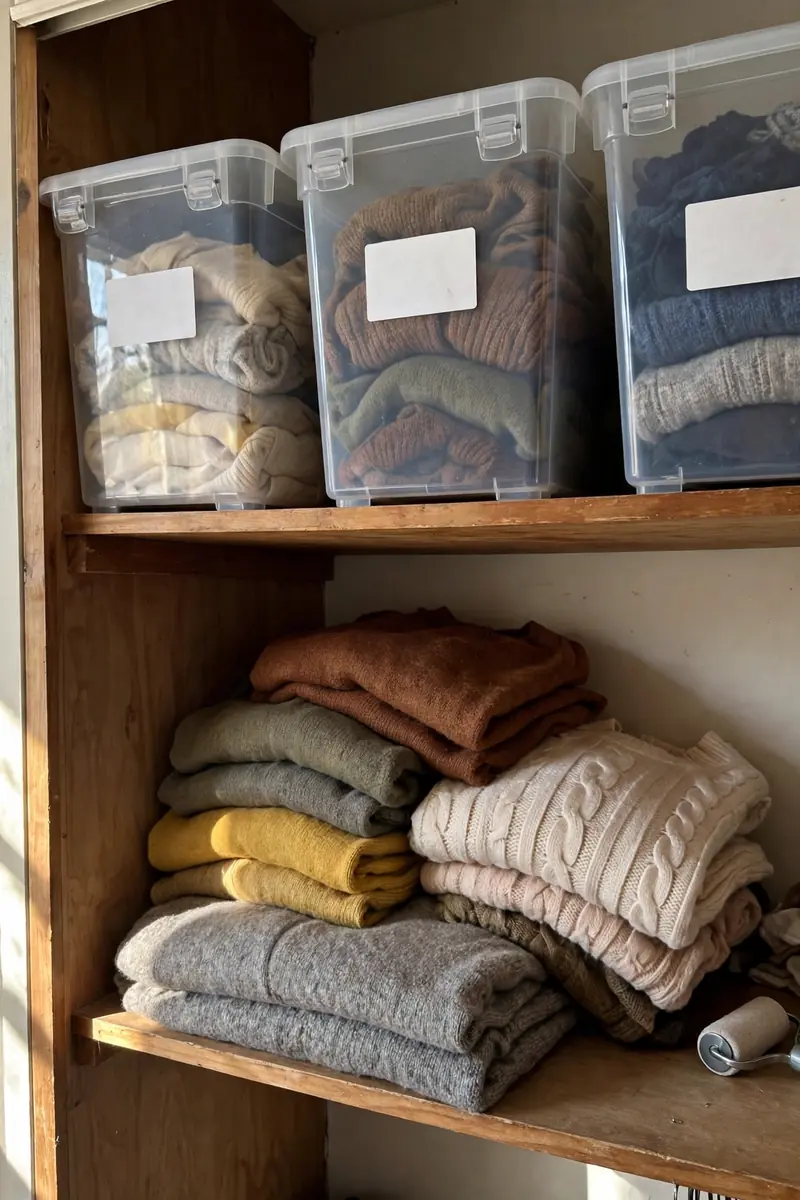
Sweaters should never hang on hangers, they stretch and slide off. Fold them and stack them on a shelf, no more than four or five high, so the bottom one is still easy to pull out. Sort the stack by weight: light knits on top, heavy wool below. If shelf space is tight, use a hanging shelf organizer or a set of shelf dividers to stop stacks from toppling. A sweater zone that stays neat means you stop re-folding the same pile every morning.
5. Store Off-Season Clothes Out of the Way
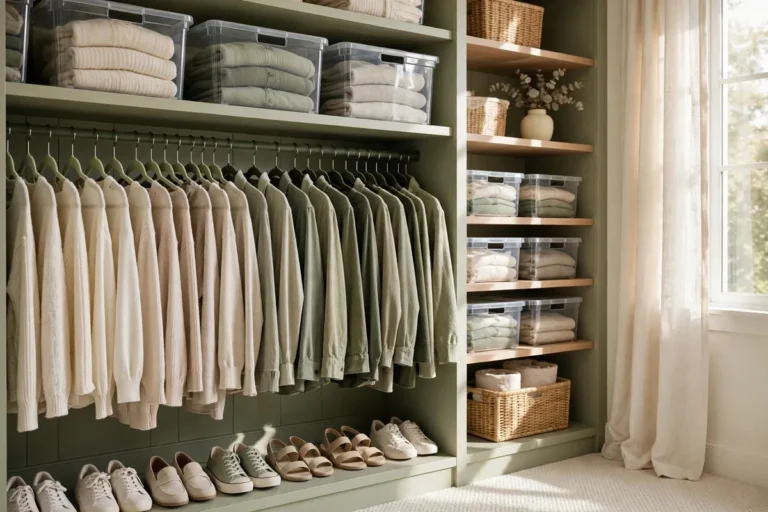
Summer clothes have no business in a winter closet. Pack shorts, linen, sandals, and light dresses into labeled bins and move them to the top shelf, under the bed, or another room. Label each bin with what is inside and the season, so the spring swap takes minutes instead of an afternoon. If you did a full seasonal swap before, the method in winter clothes storage closet swap pairs with this step: one bin out, one bin in, no double handling.
6. Use Every Door and Wall
Winter accessories are small and they vanish in drawers. Hang an over-the-door organizer for scarves, gloves, and hats, or put a row of hooks on the inside of the closet door. A scarf ring or a set of shower curtain rings on one hanger holds a whole scarf collection in the space of one garment. When accessories are visible, you wear them instead of buying duplicates because you forgot what you owned.
7. Keep Accessories Visible
Gloves, hats, and scarves need a system you can see at a glance. Use one basket or one shelf section for all winter accessories, sorted by person if the closet is shared. Keep the everyday set, the gloves and hat you wear daily, at the front. Put spares and dressy pieces behind them. At the end of winter, this same basket makes the seasonal swap simple: one basket out, summer accessories in.
8. Set Up a Boot and Shoe Station
Winter boots are tall, heavy, and muddy, and they destroy a closet floor when they are tossed in loose. Set up a boot station: a tray or a low shelf at the bottom of the closet for the boots you wear most, with boot shapers or rolled magazines inside tall boots so they stand up straight. Keep dress shoes in boxes on a higher shelf, away from salt and slush. A boot station keeps the closet floor clean and your boots in shape all season. For the muddiest pairs, the entryway solution in coat closet organization ideas keeps them out of the bedroom closet entirely.

9. Label the Bins You Actually Open
A bin without a label gets opened, dug through, and left messy. Label every winter bin with plain words: “Heavy Coats”, “Ski Gear”, “Scarves and Gloves”, “Off-Season Summer”. Use big print you can read without taking the bin down. Labels take five minutes and save you from opening four bins to find one pair of gloves for the rest of the season.
10. Do a 10-Minute Weekly Closet Reset
Winter closets drift out of order fast because every layer you take off gets tossed somewhere. Once a week, spend ten minutes: re-fold the sweater stack, hang up anything draped over a chair, return accessories to their basket, and put boots back on the tray. Ten minutes a week keeps the system from collapsing, and it means the closet still works in February the way it did on the day you reset it.
A Closet That Works All Winter
A winter closet organization system is simple: sort by warmth, hang coats properly, fold sweaters, bin the off-season, and keep accessories visible. Do those five things and getting dressed on a cold morning stops being a dig through a crowded rail. Pair this reset with a winter bedroom reset and the whole cold-weather routine gets easier.