
Holiday Fridge Organization: 10 Zones for Party Food & Leftovers
Your fridge works harder in December than in any other month. The Thanksgiving turkey needs a three-day thaw, party platters arrive two days early, cookie dough needs chilling, and the leftovers multiply after every gathering. A normal week’s fridge routine collapses under all of it, and the result is familiar: something buried goes bad, the turkey sits in a puddle, and the party dip gets shoved behind the milk.
Holiday fridge organization is zoning, not tidying. Ten named zones, each with a job, set up in one 30-minute session before the season’s first big cook. When every category of holiday food has a territory, nothing gets lost, raw meat never drips on ready-to-eat food, and the whole household knows exactly where things go. If your broader kitchen needs the same treatment, our Holiday Kitchen Prep Organization guide covers the full room.
The rule that makes it all work: zones are assigned by food safety and by timing, not by whatever fits. Coldest spots hold the most perishable food, raw meat always lives lowest, and anything that must be eaten first sits at eye level where it cannot be forgotten.
1. Zone 1: The Beverage Shelf Up Top
The top shelf is the warmest spot in most fridges, which makes it perfect for the least temperature-sensitive cargo: drinks. Wine, eggnog, sparkling cider, soda, juice, the holiday punch base. Dedicate the whole top shelf to beverages for the season and pull your everyday items down a shelf. One category, one shelf, zero digging.
Line the shelf first: Lay a washable shelf liner or a low-sided tray under the bottles. Holiday drink bottles are tall and wobbly, and a sticky eggnog spill on a bare shelf becomes a scrubbing project. The liner catches it and goes straight in the sink.
Stand bottles in rows by type, labels facing out, so guests can help themselves without rearranging your fridge. Keep a small bin at one end of the shelf for drink garnishes: lemon slices, cranberries, mint. Garnishes live with the drinks they serve, and they stop wilting in random corners.
2. Zone 2: The Appetizer Landing Pad
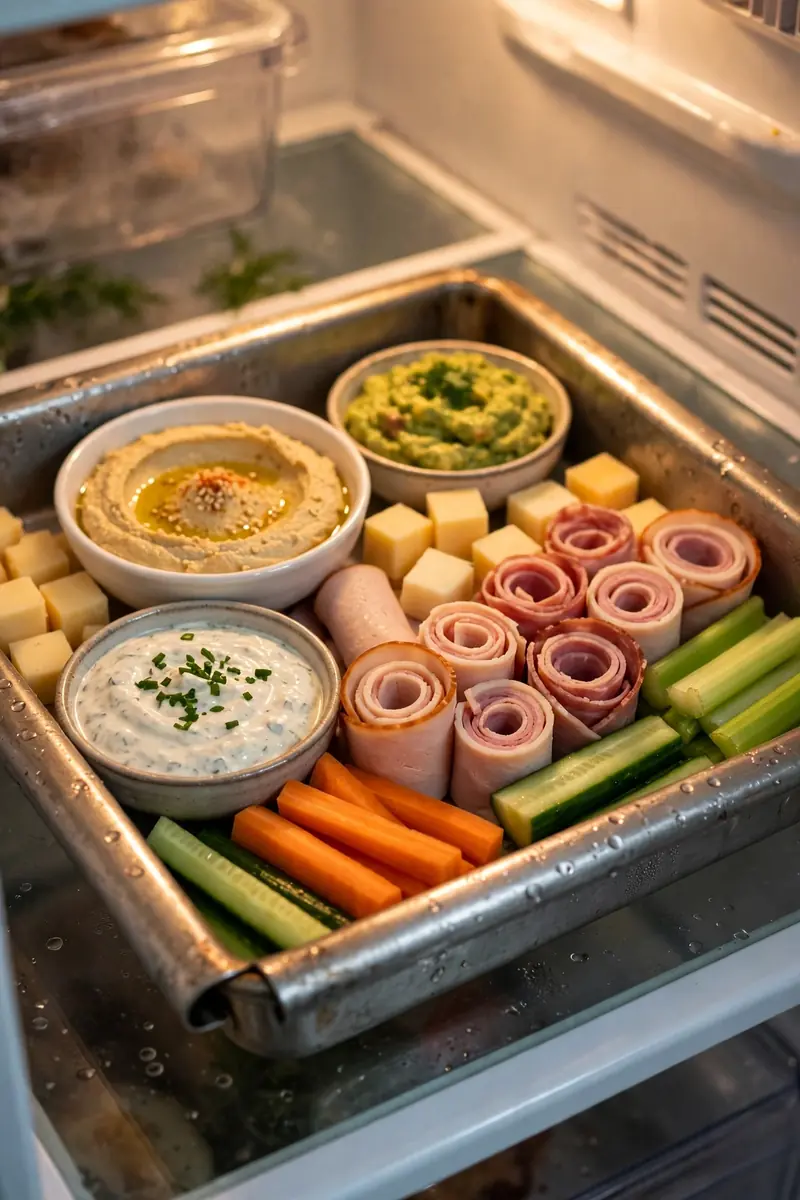
Party food needs a staging area. Claim the front half of a middle shelf as the appetizer landing pad: the cheese board components, the shrimp cocktail, the veggie tray, the dips. Everything that goes straight from fridge to table on party day parks here, grouped on one or two rimmed baking sheets.
The tray trick: Corral each party’s food on its own sheet pan. When guests arrive, you lift the whole tray out instead of ferrying twelve small containers. When the party ends, leftovers go back on the same tray and straight into Zone 6. One tray per event keeps the chaos contained.
Prep the trays the night before. Wrap each one tightly and stack them with the soonest party on top. A fridge that holds three sheet pans of ready food feels like a catering kitchen, and your party-day self will be grateful.
3. Zone 3: Raw Meat and Thawing, Always on the Bottom
Food safety has one non-negotiable rule: raw meat lives on the bottom shelf, and nothing ready to eat sits beneath it. Dedicate the bottom shelf, or a low bin, to the turkey, the roast, and the raw chicken for the party appetizers. If anything drips, it drips onto the shelf, not onto your salad.
Thaw on a rimmed tray, always: A frozen turkey releases surprising amounts of liquid as it thaws. Set it on a rimmed baking sheet or in a roasting pan before it goes in the fridge. The tray contains the mess and gives you a handle for lifting a slippery 15-pound bird.
Plan thaw times honestly: a whole turkey needs about 24 hours of fridge thawing per 4 to 5 pounds, so a 16-pound bird needs three to four full days. Write the start-thaw date on a sticky note on the fridge door. Starting late is how turkeys end up thawing in the sink at midnight.
4. Zone 4: Dairy and Butter Together
Butter, cream cheese, heavy cream, and sour cream are the backbone of holiday cooking, and they deserve a home base. Use the dairy compartment if your fridge has one, or claim a small bin on a middle shelf. Grouping them means you can see at a glance whether you have enough butter for the cookie batch before you start.
Count before you cook: Holiday recipes burn through dairy fast. Keep a running sticky note on the bin listing what is inside, like “butter 6 sticks, cream cheese 3 blocks,” and update it when you shop. Running out of butter mid-baking is a rite of passage nobody needs to repeat.
Keep eggs in their carton on a shelf, not in the door. The door is the warmest, most temperature-swingy spot in the fridge, and holiday baking needs reliable eggs. The carton protects them and carries the date.
5. Zone 5: Produce and Fresh Herbs in the Crispers
Holiday cooking uses more fresh produce than any normal week: salad greens, celery for stuffing, carrots for the veggie tray, fresh herbs for everything. Crisper drawers exist for exactly this, so use them properly: one drawer for vegetables, one for fruit, each set to the right humidity if your fridge allows it.
Herbs get the bouquet treatment: Stand parsley, cilantro, and dill upright in a jar with an inch of water, like flowers, and tent a produce bag over the top. They stay crisp for a week or more instead of wilting into a sad bundle by day three. The jar fits in the door or on a shelf.
Wash berries and grapes only right before serving. Washed-then-stored fruit molds faster, and holiday fruit is expensive. Line the fruit drawer with a dry paper towel to absorb condensation and extend everything by a day or two.
6. Zone 6: The Leftover Zone, One Clear Shelf
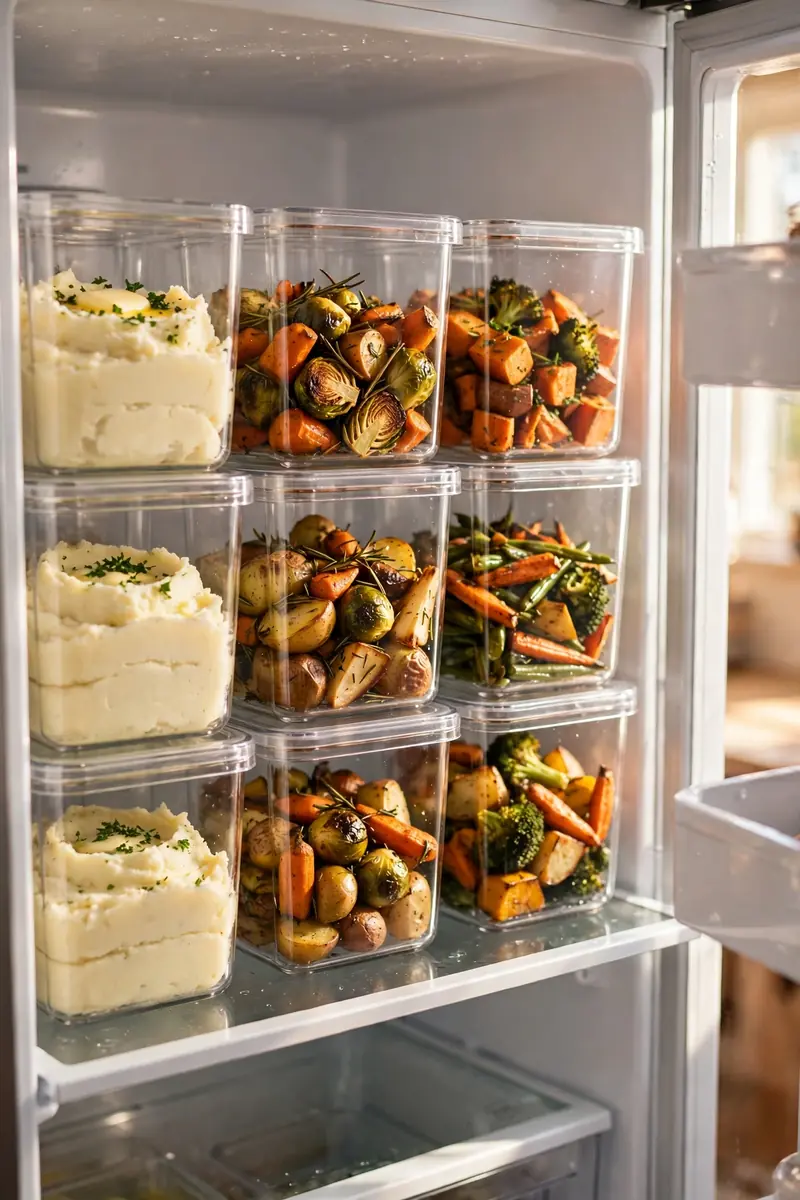
Leftovers are the whole point of holiday cooking, and they need a dedicated shelf or they scatter everywhere. Claim one full shelf, front and center, as the leftover zone. Every container of turkey, stuffing, mashed potatoes, and pie lands here, in clear containers, labeled with the dish and the date.
The FIFO rule: First in, first out. New leftovers go behind, older ones move forward. Leftovers are safe for 3 to 4 days in the fridge, so date every container with masking tape and a marker. The container with the oldest date gets eaten or frozen first, no debate.
Use square or rectangular containers, not round ones. They stack neatly and waste no shelf space, which matters when the leftover zone holds five dishes at once. For a bigger refresh of your everyday fridge system, our Fridge Organization Aesthetic Guide covers containers and layout that work year-round.
7. Zone 7: The Condiment Corral in the Door
The door is prime real estate that holiday cooking hijacks with specialty sauces: cranberry sauce, gravy starters, horseradish, cocktail sauce, the good mustard. Corral them in one door section using a small bin or a door rack organizer so they stop migrating across every shelf.
Audit before you shop: Holiday recipes call for condiments you already own half the time. Pull everything out, check dates, toss the expired ones, and write your shopping list from what is actually missing. Nobody needs three open jars of cranberry sauce.
Keep the everyday condiments you will not touch during the holidays, like ketchup and the daily mustard, pushed to the back of the door. The holiday sauces get the front. After the season, reverse it in two minutes.
8. Zone 8: The Defrost Landing Pad for Freezer Items
Half of holiday cooking starts in the freezer: the pie crusts, the cookie dough logs, the make-ahead casseroles. Give them a defrost landing pad, a low bin or a clear shelf section, where frozen items move to thaw 24 hours before you need them. Our Freezer Organization Ideas guide helps you find them fast on transfer day.
The 24-hour rule: Move tomorrow’s frozen item to the pad tonight. Most casseroles, doughs, and crusts thaw safely in the fridge in about a day. Set a phone reminder when you transfer; a casserole that thaws for three days is a casserole you throw away.
Keep the pad at the front of its shelf so transferred items stay visible. Out of sight means forgotten, and a forgotten thawed casserole is food waste with extra steps. When the pad is empty, the next transfer is due.
9. Zone 9: The Dessert and Sweet Tray Shelf
Desserts have special needs: they are tall, fragile, and must not absorb onion smells. Give them their own shelf, ideally an upper one away from the raw meat zone, and keep them covered. Pies, cakes, trifles, and cookie tins stack here in the order they will be served.
Cover everything: A pie left uncovered picks up every odor in the fridge. Use cake carriers, inverted sheet pans over plates, or at minimum tight plastic wrap. Tall trifles get the shelf with the most vertical clearance, so measure your tallest dessert dish before you assign the zone.
Slice-and-serve desserts like cheesecake portion better when chilled on a flat, stable shelf. Do not balance a springform pan on top of containers. Give desserts a flat, dedicated surface and they arrive at the table looking like they should.
10. Zone 10: Label Every Zone and Reset Nightly

Zones only work if everyone in the house respects them. Label each zone with painter’s tape and a marker: drinks, party food, thawing, leftovers. It takes five minutes, it peels off cleanly in January, and it ends the questions about where things go that undo every system.
The two-minute nightly reset: Every evening, spend two minutes returning strays to their zones, checking the leftover dates, and moving tomorrow’s thaw from the freezer to the pad. Two minutes a night keeps the ten-zone system alive through the whole season.
Do one mid-season purge in the week between Christmas and New Year’s. Toss the expired items, consolidate the half-containers, and wipe the shelves. The fridge that survives the holidays clean is the fridge that starts January as a system instead of a disaster.
The Reset Wrap-Up
Ten zones, one 30-minute setup, and your fridge becomes the most reliable member of your holiday team. Drinks up top, party food staged on trays, raw meat safely low, leftovers dated and visible, and every zone labeled so the whole household plays along.
The real win is not a pretty fridge. It is the turkey that thaws on time, the party platter that leaves the fridge in one lift, and the leftovers that get eaten instead of discovered in February. Zone it once, reset it nightly, and enjoy the season instead of managing the fridge.