Laundry Routine Reset: The 5-Day Laundry Schedule That Ends Laundry Pile-Up
Laundry Routine Reset: The 5-Day Laundry Schedule That Ends Laundry Pile-Up
Here’s the thing: laundry doesn’t pile up because there’s too much of it. It piles up because it gets done in one miserable marathon — a full Sunday drowned in sorting, washing, drying, and folding until you give up halfway and the clean basket becomes a wardrobe.
That’s not a laundry problem. That’s a batching problem. One giant laundry day means one giant failure point: miss the day, and the whole system collapses into chairs of shame and laundry-basket purgatory.
This is The 5-Day Laundry Cycle. Five days, one category a day, one load a day. Small enough to never skip, spread enough to never pile up. The weekend stays laundry-free.
- Monday — Sheets & Towels: bedding and bath towels, the bulky stuff.
- Tuesday — Darks: jeans, dark tees, dark socks, dark underwear.
- Wednesday — Colors: everything in between.
- Thursday — Whites: the fussy load that needs its own temperature anyway.
- Friday — Kids / Catch-Up: kids’ clothes, delicates bag, sports gear — and a built-in slot for anything that got missed.
Saturday and Sunday: machines off. Laundry is done by the weekend instead of on it.
The Sort-Once Method (Never Sort at the Machine Again)
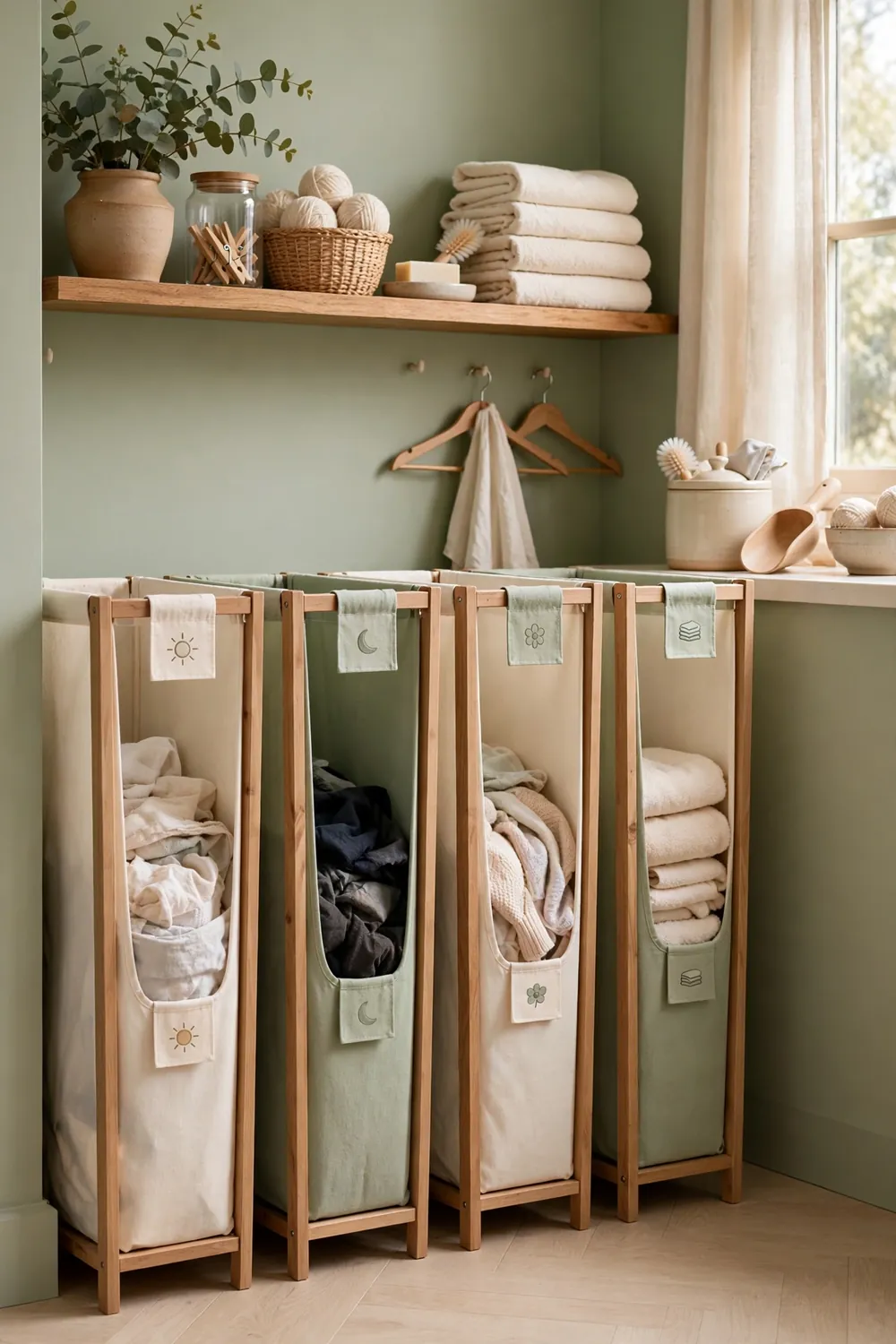
Sorting is the most hated step in laundry because it happens at the worst moment: standing over the open washer, tired, trying to remember what’s dark enough to count as dark. The fix is simple — sort once, at the moment clothes come off, not when they go in.
Set up 4 slim hampers or bins (a divided sorter works, or four baskets lined up in a closet):
- ☐ Bin 1 — Darks (navy, black, dark gray, dark jeans)
- ☐ Bin 2 — Colors (everything mid-tone and bright)
- ☐ Bin 3 — Whites & Lights (the fussier load, hot water)
- ☐ Bin 4 — Sheets & Towels (stripped bedding and used towels go here directly)
When a bin is full, that’s the day’s load — no standing at the washer deciding what counts as “dark.” The one question people ask: what about clothes worn once that aren’t really dirty? Keep a single hook or over-the-door rack for “wear again” items. The moment something lands in a bin, it’s laundry. No judgment, no sniff tests, no second wardrobe of almost-clean clothes.
One tweak for bulky households: add a fifth bin or bag for delicates/mesh bags. Wash it with whatever day fits — it takes the pressure off the “I forgot the delicates again” spiral.
If your laundry setup is tight, our Laundry Room Organization Small Space: 12 Ideas That Actually Work shows how to fit a full sort-and-fold system into even the smallest corner.
Build Your Fold Station (10 Minutes)
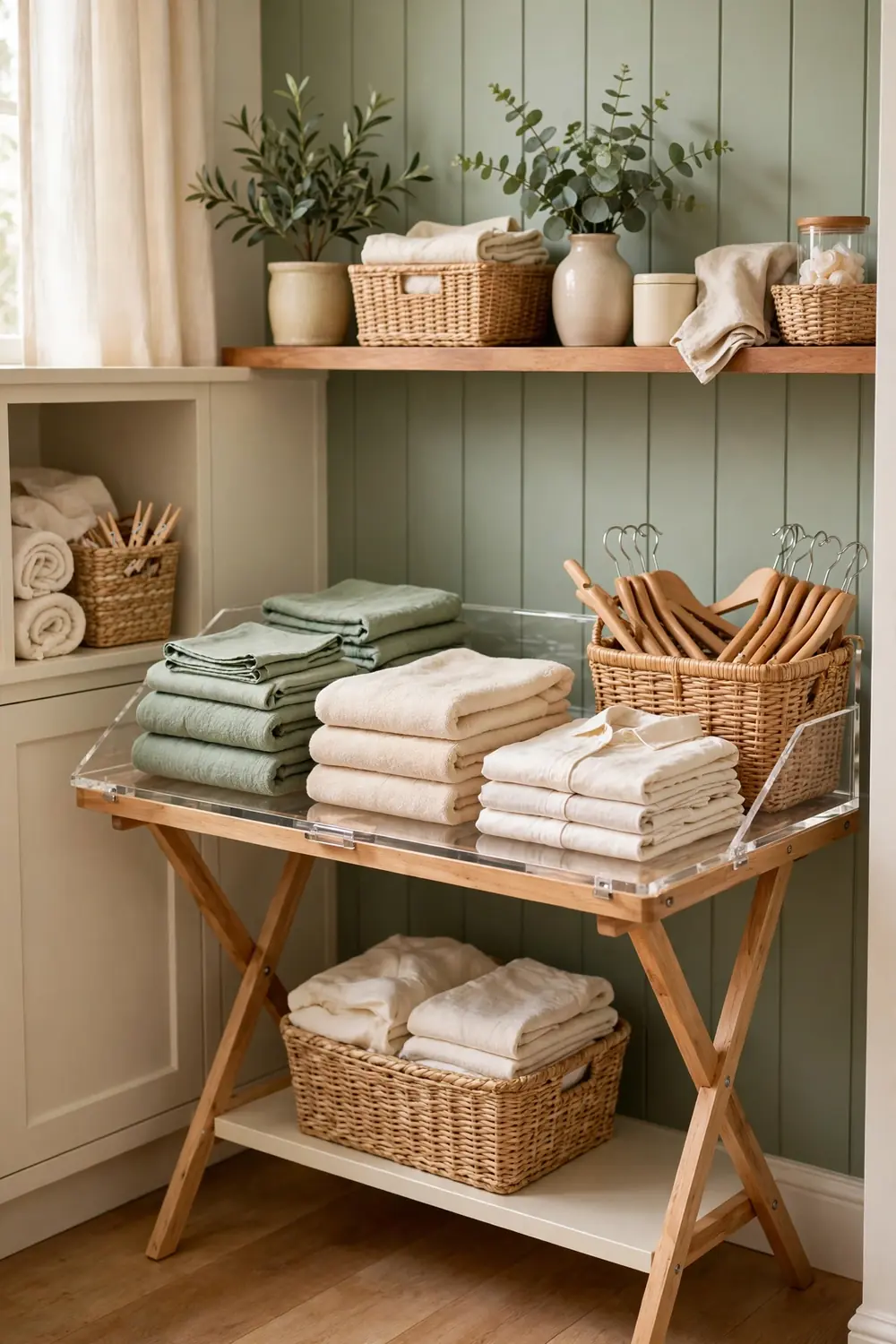
Folding fails because it happens on the bed, the couch, or a chair — surfaces where “just for a minute” becomes three days. The fold station is a dedicated flat surface that exists only for folding, set up once and never disassembled.
You need exactly this:
- ☐ One clear surface — a counter, a dresser top, a folding table, even a shelf in the laundry corner. It’s always clear, always ready.
- ☐ A “today’s load” basket — the dry load lands here, never on the bed.
- ☐ A small row of hangers — for the 4–5 things that wrinkle if folded (blouses, dresses).
- ☐ A donate bag hanging nearby — anything that doesn’t fit or you don’t wear anymore goes straight in, not back in a drawer.
The rule that makes it work: clothes get folded within 10 minutes of the dryer finishing. Not “tonight,” not “before bed” — 10 minutes. Warm clothes fold faster, they wrinkle less, and a full load folds in 6–8 minutes when you’re not dreading it. Set a timer the first week if the habit isn’t there yet.
Hang-first sorting while you fold: as you fold, split into piles — one per family member, one for the linen closet, one for the room the clothes actually live in. Put-away then takes one trip per pile, not 30 trips back and forth. If you can’t finish put-away today, the basket still looks intentional instead of like laundry chaos.
The Nightly 5-Minute Laundry Reset
The 5-day schedule runs itself, but it needs a tiny daily nudge — one thing moved forward before bed so tomorrow morning starts with momentum. Five minutes, every night, no exceptions:
- ☐ Move the current load forward: dryer load → fold basket (fold tomorrow morning if late); washer load → dryer. Ten seconds of carrying.
- ☐ Start tomorrow’s load: tomorrow’s category goes in the washer tonight (don’t start it if your machines are loud at night — just load it, start it in the morning).
- ☐ Restock the fold basket: empty it if there’s anything left in it. A full basket is a psychological block; an empty one is an invitation.
- ☐ Check the lint and supplies: lint trap cleared, detergent still there for tomorrow, a dryer sheet or wool balls in reach.
- ☐ Hang the “wear again” rack: reset it — anything that lived there all week goes in a bin.
This is the same philosophy as our Weekly Reset Routine: The 30-Minute Sunday Checklist — small nightly moves that make the weekly system run on autopilot. Laundry never reaches crisis mode because the machine is always mid-cycle.
Renter-Friendly Version (Shared Machines, No Modifications)
Renters get the short end of every laundry system — shared machines, coin or app payment, laundry rooms two floors down. The 5-day schedule still works; you just adapt the logistics.
- ☐ Batch the trip, not the load: carry tomorrow’s category down in the nightly reset. You do one trip per day, not three. A slim rolling cart beats a carry basket if there’s an elevator involved.
- ☐ Claim the dead hours: shared machines free up mid-morning (9–11) and after dinner (8–10). The nightly reset means your load is ready to start the moment a machine opens.
- ☐ Mesh-bag everything: a shared washer is where socks and delicates go to die. One big mesh bag per category — nothing lost, nothing mysterious.
- ☐ Dryer sheets + a phone timer: shared dryers get abandoned. Set a timer, come back, fold at the fold station immediately. Leaving a load in a shared machine for hours is how laundry day dies.
- ☐ Prepay buffer: keep the app funded or coins ready before Monday. Payment friction is the number-one reason renter laundry gets skipped.
No hampers screwed to walls, no permanent shelving — bins, a folding table, and a rolling cart are all move-out-day friendly.
What NOT to Do (The 4 Laundry Mistakes)
- Don’t save it all for the weekend. Marathon laundry day is the reason the pile exists. One load a day is less total work than eight loads on Sunday — it’s just distributed so you actually do it.
- Don’t sort at the machine. Every minute of standing-there-deciding is friction. Sort once at the hamper, then washing is just: bin → washer → done.
- Don’t let clean laundry sit in the dryer. A load that sits for 6 hours needs re-fluffing, re-sorting, and now smells musty. Fold within 10 minutes of dry. The dryer timer is the most ignored alarm in the house.
- Don’t mix put-away with folding. Folding is one job; delivering clothes to 3 different rooms is another. Fold at the station, sort into piles by owner, and do one delivery trip. Combining them is how folded laundry lives on the couch.
And if laundry overflow is really a clutter problem in disguise — too many clothes, not too little laundry time — our Declutter Before the Holidays: 10 Areas to Reset in October tackles the wardrobe and closet side of it.
FAQ
How many loads of laundry should I do per week?
For a typical family, this schedule is 5 loads a week — one per weekday, one category each. That covers a full household including bedding and towels. Singles or couples often only need 3–4 days; just drop the days whose bins aren’t full and keep the rhythm.
What day should I wash sheets and towels?
Monday — it anchors the week. Sheets and towels are the bulkiest load, so doing them first means the machines and your energy are fresh. Strip the beds Sunday night, and Monday morning the load is already in the washer.
How do I keep up with laundry if I work full-time?
The nightly 5-minute reset is the whole trick: load tomorrow’s category before bed, start it while you’re getting ready in the morning, and move it to the dryer before you leave. One load takes 2 minutes of your actual time per stage — the machines do the rest.
Should I wash clothes inside out?
Yes for anything with prints, dark denim, or delicate finishes — it reduces fading and wear dramatically. It’s the one sort-once tweak worth adding: flip those items inside out as they go into the hamper, so the machine step needs no extra thought.