Natural Cleaning Recipes: 10 DIY Solutions That Actually Work
Store-bought cleaners are expensive, full of harsh chemicals, and honestly — most of them aren’t even necessary. These 10 natural cleaning recipes use simple ingredients you probably already have, and they genuinely work.
No fluff, no “wellness” hype. Just solutions that clean.
What You’ll Need (The Basics)
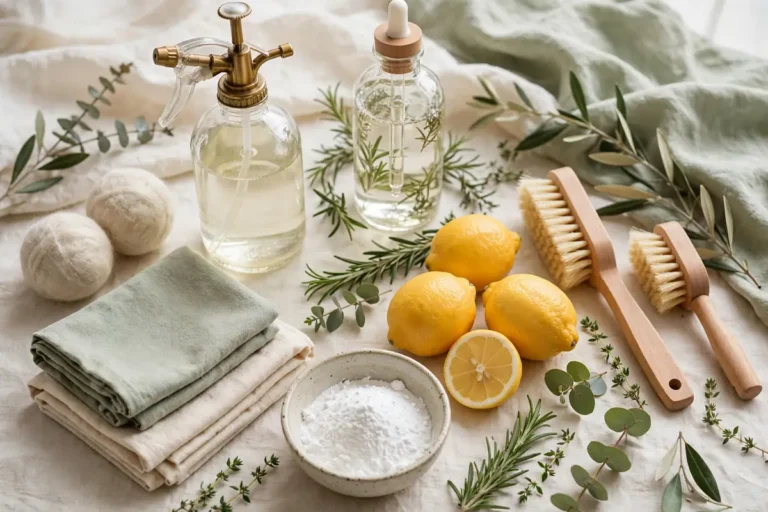
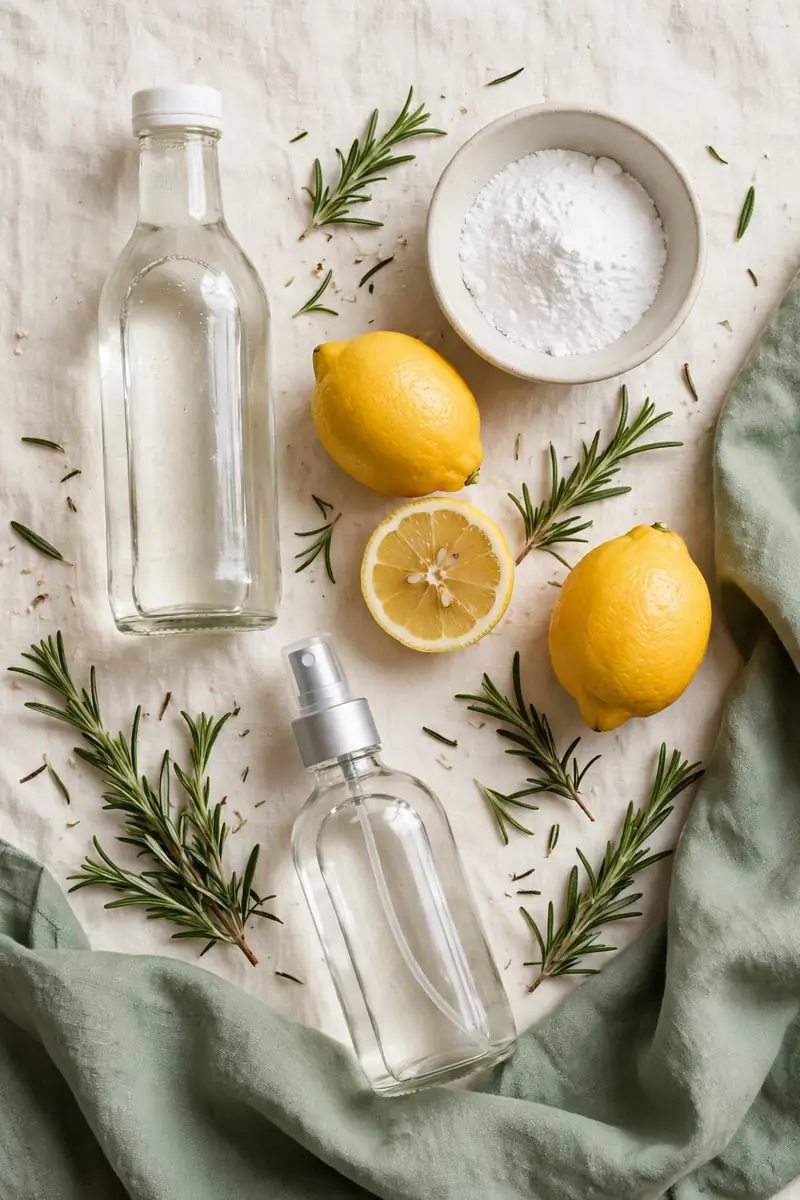
Before we start, stock these five staples. They cover 90% of natural cleaning:
- White vinegar (5% acidity) — cuts grease, dissolves mineral deposits
- Baking soda — gentle abrasive, deodorizer
- Fresh lemons — natural bleach alternative, degreaser
- Castile soap (like Dr. Bronner’s) — plant-based all-purpose cleaner base
- Rubbing alcohol or vodka — streak-free shine, disinfectant booster
Total cost: Under $15 for months of cleaning supplies.
1. All-Purpose Cleaner
The one spray you’ll reach for daily.
- 1 cup water
- 1 cup white vinegar
- 1 tablespoon Castile soap
- 15 drops lemon essential oil (optional)
Mix in a spray bottle. Shake gently before each use. Works on counters, sinks, stovetops, and bathroom surfaces.
Skip on: Natural stone (granite, marble) — vinegar can etch it. Use recipe #2 for stone.
2. Stone-Safe Daily Cleaner
For granite, marble, and quartz:
- 2 cups water
- 1/4 cup rubbing alcohol
- 5 drops dish soap (not Castile — it can film on stone)
Spray and wipe. No vinegar, no damage.
3. Streak-Free Glass Cleaner
Better than the blue stuff, honestly.
- 2 cups water
- 1/2 cup white vinegar
- 1/4 cup rubbing alcohol
- 1 tablespoon cornstarch (the secret ingredient!)
Shake well. Spray on mirrors and windows, wipe with a microfiber cloth or newspaper. The cornstarch prevents streaking.
4. Bathroom Scrub Paste
For tubs, sinks, and tile grout:
- 1/2 cup baking soda
- Enough Castile soap to make a paste (about 2 tablespoons)
- 10 drops tea tree essential oil (natural antibacterial)
Apply with a sponge, scrub, rinse. Cuts through soap scum like nothing else.
5. Toilet Bowl Cleaner
- 1/2 cup baking soda
- 1 cup white vinegar
- 10 drops tea tree or lemon oil
Sprinkle baking soda in the bowl, pour vinegar over it, let it fizz for 10 minutes, scrub, flush. Done.
Giving the whole bathroom a refresh? Pair these recipes with our 15-minute bathroom reset.
6. Floor Cleaner (All Hard Floors)
- 1 gallon warm water
- 1/2 cup white vinegar
- 1 teaspoon Castile soap
- 10 drops lemon or orange essential oil
Mop as usual. Skip the vinegar on hardwood — use just warm water + Castile soap for wood floors.
7. Microwave Steam Clean
The easiest “recipe” here:
- 1 cup water
- 2 tablespoons white vinegar
- Half a lemon, sliced
Microwave on high for 5 minutes. Let it sit (door closed) for 2 more minutes. Wipe everything clean — the steam loosens all the gunk.
8. Stainless Steel Polish
- White vinegar in a spray bottle
- A few drops of olive oil on a microfiber cloth
Spray vinegar, wipe with the grain, then buff with the oiled cloth. Fingerprints gone, beautiful shine.
9. Air Freshener Spray (No Chemicals)
- 1 cup water
- 2 tablespoons vodka or rubbing alcohol (helps scent disperse)
- 20 drops essential oil (lavender + lemon is lovely)
Shake and spray. Unlike plug-ins, this doesn’t coat your lungs in mystery chemicals.
10. Laundry Scent Booster
Skip the chemical-laden scent beads:
- 1 cup Epsom salt
- 20 drops essential oil (your choice)
Mix, store in a jar. Add 2 tablespoons to your wash. Clothes smell amazing, zero residue.
Safety Notes (Important!)
- NEVER mix vinegar and bleach — creates toxic chlorine gas. (You’re going natural, so you shouldn’t have bleach anyway.)
- NEVER mix vinegar and hydrogen peroxide in the same bottle — creates peracetic acid. Use them separately (one after the other is fine).
- Label every bottle. What looks like water might not be water.
- Keep essential oils away from pets — some (tea tree, citrus) are toxic to cats and dogs.
Natural Cleaning with Pets in the Home
Going natural is great — but some natural ingredients aren’t safe for furry family members. Here’s what to know:
- Essential oils and pets: Tea tree, citrus, pine, and eucalyptus oils can be toxic to cats and dogs. If you have pets, either skip essential oils or use pet-safe options (lavender and chamomile are generally safer) — and always let rooms air out before pets return.
- Vinegar and baking soda: Safe around pets once dry. Just keep pets out of the room while you’re actively cleaning.
- Castile soap: Plant-based and pet-safe for surface cleaning. Don’t use it directly on pets, though.
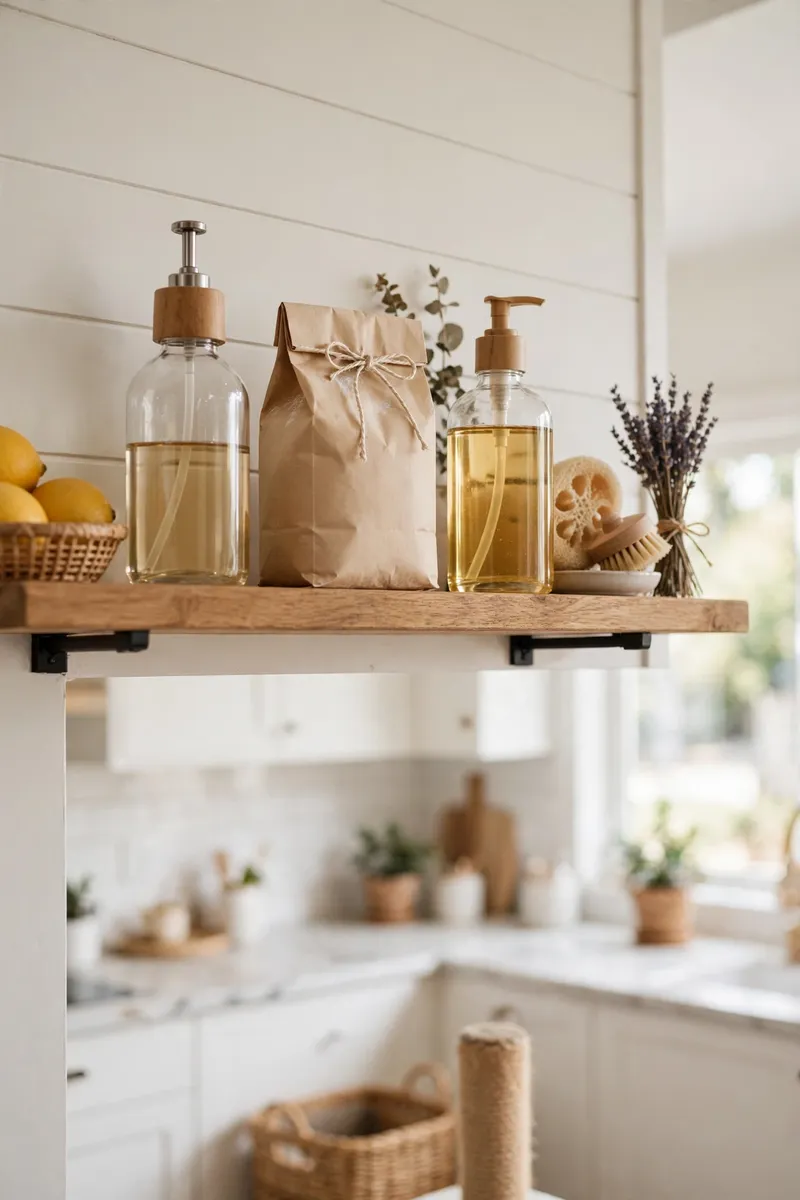
- Storage matters: Even natural ingredients should be stored out of paw reach. A high shelf or a latched under-sink cabinet works — see our under-sink organization ideas for pet-proofing that cabinet.
Rule of thumb: If you wouldn’t want your pet licking it wet, keep them away until it’s dry.
How to Store Your DIY Cleaners
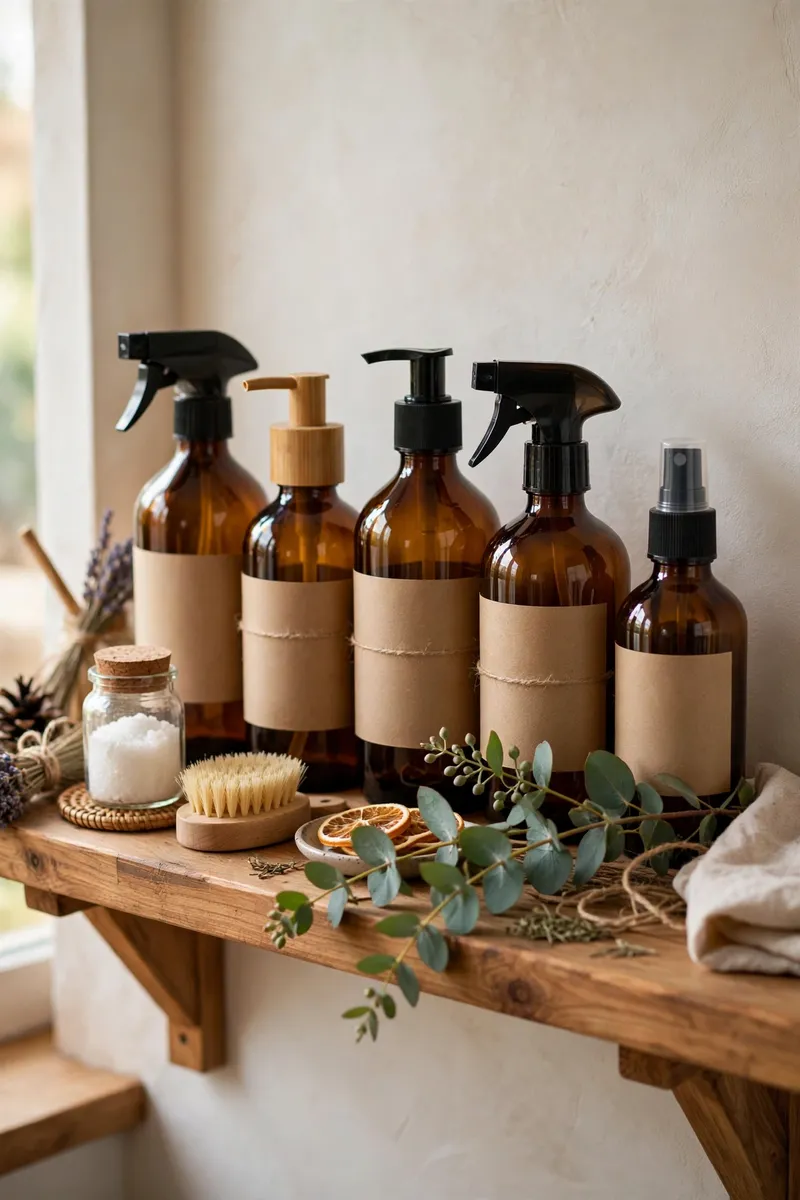
Homemade cleaners last longer and work better when stored right:
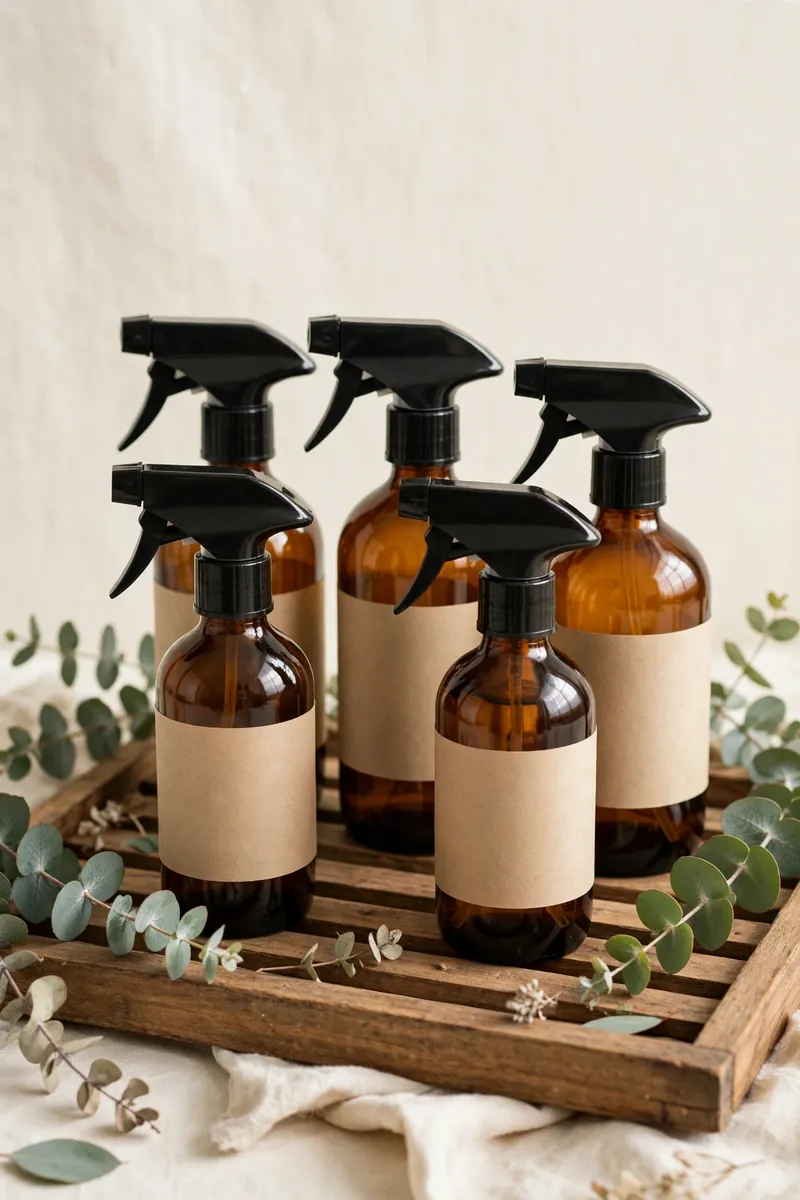
- Dark bottles for light-sensitive mixes: Anything with essential oils or hydrogen peroxide goes in amber or cobalt bottles — light breaks them down.
- Label everything: Name + date made + ingredients. What looks like water might be vinegar — and what looks like vinegar might be peroxide. A label maker or masking tape both work.
- Know the shelf life: Vinegar and baking soda mixes last indefinitely. Anything with fresh lemon juice: use within a week. Essential oil blends: 1-2 months, stored cool and dark.
- Never reuse chemical bottles: Old bleach or ammonia bottles can contaminate your natural mixes. Start with fresh spray bottles (under $2 each).
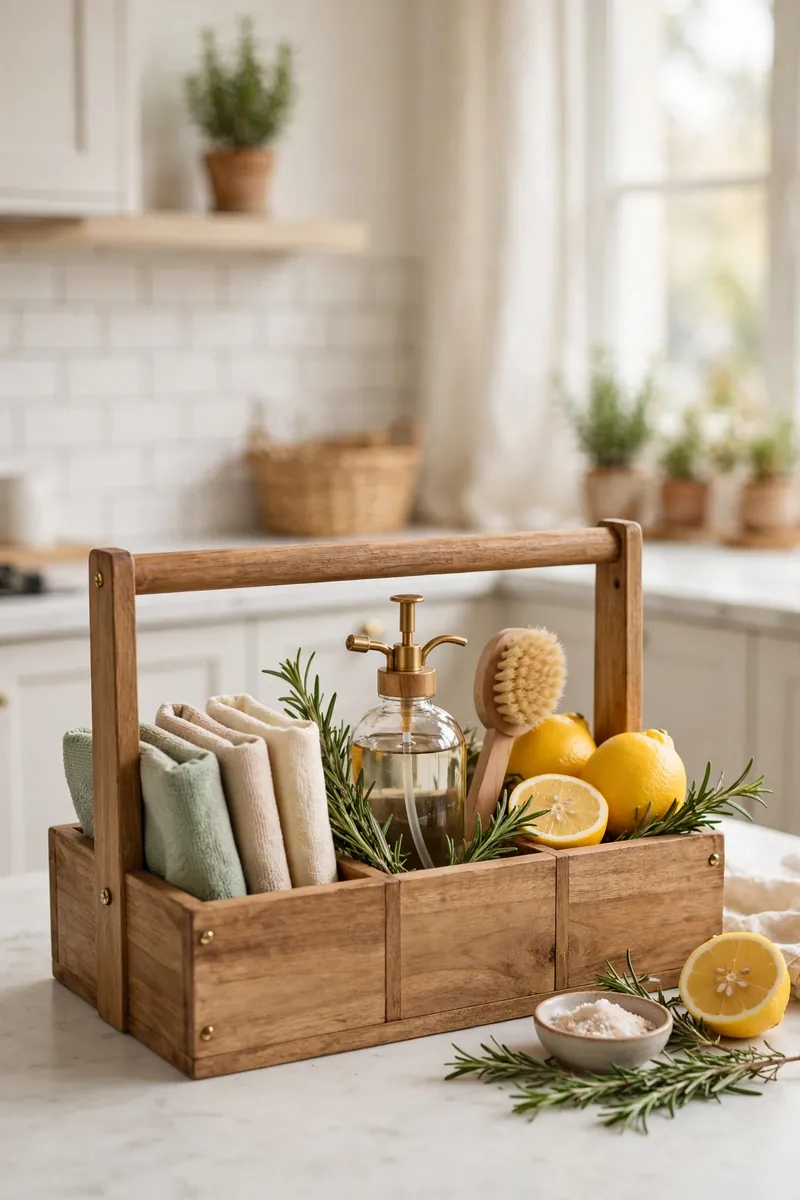
- One caddy, one spot: Keep daily cleaners in a single portable caddy so you’re not hunting under every sink.
Good storage turns DIY cleaning from a hobby into a habit — everything you need, exactly where you expect it.
Frequently Asked Questions
Do natural cleaning recipes really disinfect?
Vinegar kills many common bacteria, and tea tree oil has proven antibacterial properties. For true disinfection (raw meat surfaces, illness), use hydrogen peroxide (3%) sprayed separately — it’s a recognized disinfectant.
How long do DIY cleaners last?
Vinegar and baking soda-based cleaners last indefinitely. Anything with fresh lemon juice: use within a week. Essential oil blends: 1-2 months.
Will vinegar damage my surfaces?
Vinegar is acidic, so avoid it on natural stone (marble, granite), cast iron, aluminum, and hardwood floors. Everywhere else, it’s safe.
Start with the all-purpose cleaner and glass cleaner this week. You’ll be shocked how quickly the chemical bottles disappear from under your sink — and how much money stays in your pocket. When you’re ready to replace every chemical cleaner in the house, here are non-toxic cleaning swaps for every room.