
New Year Freezer Reset: 10 Steps to End the Frozen Avalanche
The freezer is the easiest place in the kitchen to lose track of food, and by January it shows. Mystery bags with no label, half used boxes pushed to the back, and frozen meals nobody remembers making pile up until the drawer barely closes. A new year freezer reset clears the mystery bags, groups food by meal type, and labels every container, so dinner starts from a freezer you can actually see into.
The ten steps below work in order, from emptying the freezer completely to a small weekly habit that keeps it organized. None of them need new containers or a big budget. Start with a cooler and a few bags, because the reset moves faster when the food you keep has somewhere cold to wait.
1. Empty the Freezer Completely
Take everything out of the freezer: every bag, box, and container, down to the last ice cube tray. Lay it all on the counter where you can see it, and put the food worth keeping into a cooler with ice packs while you work. Pull out the baskets, dividers, and shelves, so the walls and floor of the freezer are fully clear. An empty freezer is the only way to see what you really own, and it usually shows far more food than anyone in the house remembers buying. If you want a full kitchen reset first, a new year kitchen reset covers the whole room the same way.
2. Toss the Mystery Bags and Expired Food
Be honest about what is actually still good to eat. Toss anything with no label and no date, anything freezer burned beyond saving, and any meal that has been in there so long nobody remembers cooking it. Check the dates on shop bought items and let go of the ones past their best before date. Bag the waste and take it out right away, so the freezer never holds food nobody dares to eat. A freezer with only food you recognize is easier to cook from than a drawer full of frozen guesses.

3. Defrost and Wipe Every Surface
Before anything goes back, clean the freezer properly. Switch it off or set it to defrost, and let the frost melt with the door open and towels on the floor to catch the water. Wipe every wall, shelf, and drawer with warm water and a little washing up liquid, then dry it all before switching the freezer back on. Clean the seal around the door too, since a dirty seal lets warm air in and builds frost faster. A clean, frost free freezer runs better, and it makes the whole reset feel fresh the moment you open the door.
4. Group Food by Meal Type
A freezer only works when food is grouped by how you cook. Put breakfast items together, lunch items together, and dinner ingredients together, so planning a meal means opening one zone, not digging through the whole drawer. Keep the raw meat in its own zone at the bottom, away from ready to eat food. Use one basket per meal type if the freezer is deep, or one shelf per type if it is upright. When food is grouped by meal type, dinner planning takes minutes, and nothing hides at the back until it goes bad.
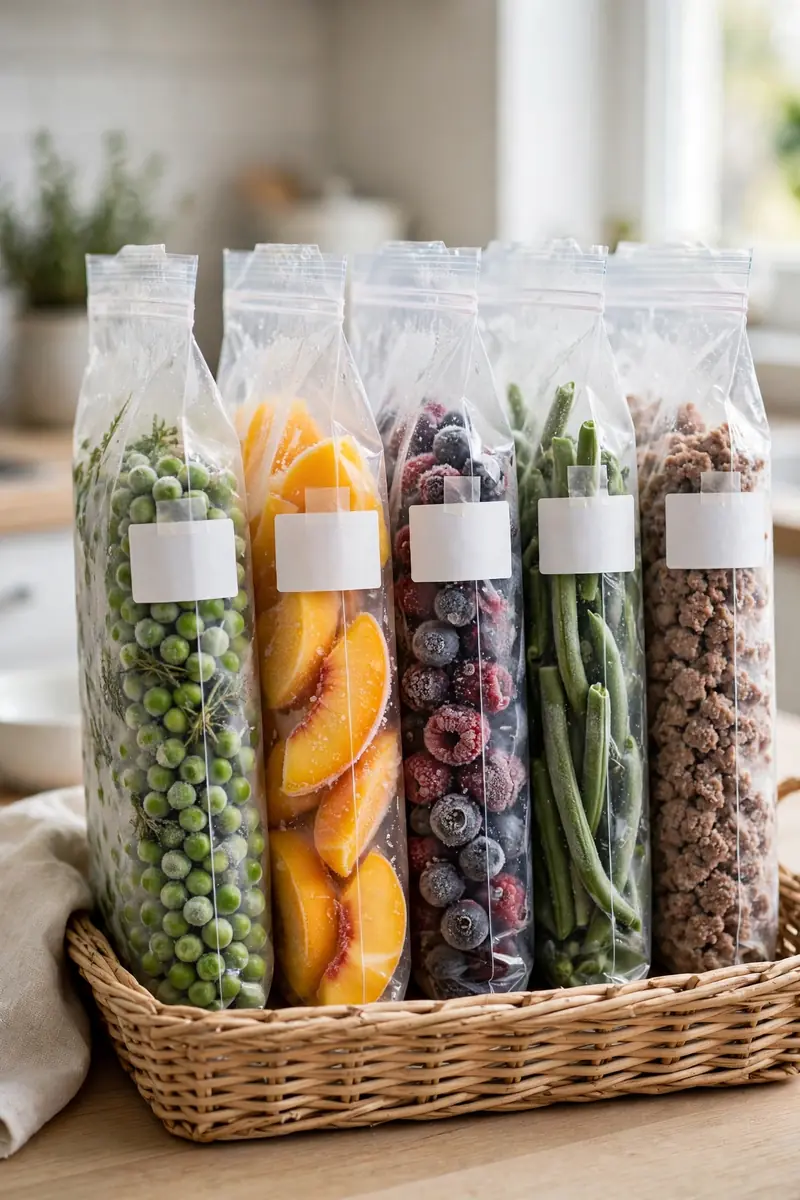
5. Label Every Bag With a Date
Frozen food without a label is a guess, so label everything before it goes back in. Write what it is and the date it was frozen on every bag and container, using freezer tape and a marker that will not smudge in the cold. Add the number of portions too, so you know whether a bag feeds two people or six. Keep the label facing out, so you can read it without pulling the bag out. A labeled freezer means you always know what is inside, and you stop cooking the same chicken twice because you forgot the first bag. For the shelves beside the freezer, a new year pantry reset keeps dry food just as organized.
6. Freeze Flat and Stack Neatly
Flat freezing saves more space than any container. Pour soups, sauces, and leftovers into freezer bags, press out the air, and lay them flat to freeze, then stack them upright like files in a basket. Flat bags stack neatly, thaw faster, and let you see every meal at a glance. Keep the bulky boxes for items that cannot freeze flat, and stand them upright in a row with the labels facing out. A freezer full of flat, labeled bags holds twice as much food, and it stays neat because every bag has a place.
7. Keep a Simple Freezer Inventory List
A short list on the freezer door saves more money than any organizer. Write down what is inside, grouped by meal type, and cross items off as you use them. Add new items to the list the day they go in, so the list always matches the freezer. Keep the list on a whiteboard or a sheet of paper held by a magnet, where everyone in the house can see it. An inventory list stops duplicate shopping, and it turns the freezer into a pantry you can plan from instead of a box you hope about.
8. Set a Use By Rule for Every Zone
Frozen food lasts longer than fresh food, but it does not last forever. Set a simple use by rule: cooked meals within three months, raw meat within six months, and vegetables within eight months. Write the rule on the inventory list, and check the oldest items first when you plan meals. Move anything near its limit to the front of its zone, so it gets used next. A use by rule keeps the freezer turning over, and it means nothing sits in there long enough to become a mystery bag again.
9. Put the Most Used Food at the Front
The food you reach for every week should be the easiest to grab. Put the everyday items, like frozen vegetables, bread, and the meals you cook most, at the front of each zone, and push the occasional items to the back. Keep the ice and the small extras in a basket at the top, so they never get buried. Leave a little empty space in each zone, so new food has somewhere to go without crushing what is already there. A freezer with the most used food at the front is faster to cook from, and it stays tidy because nothing needs digging out. For a weekly kitchen habit, a winter kitchen cleaning routine keeps the whole room on track.
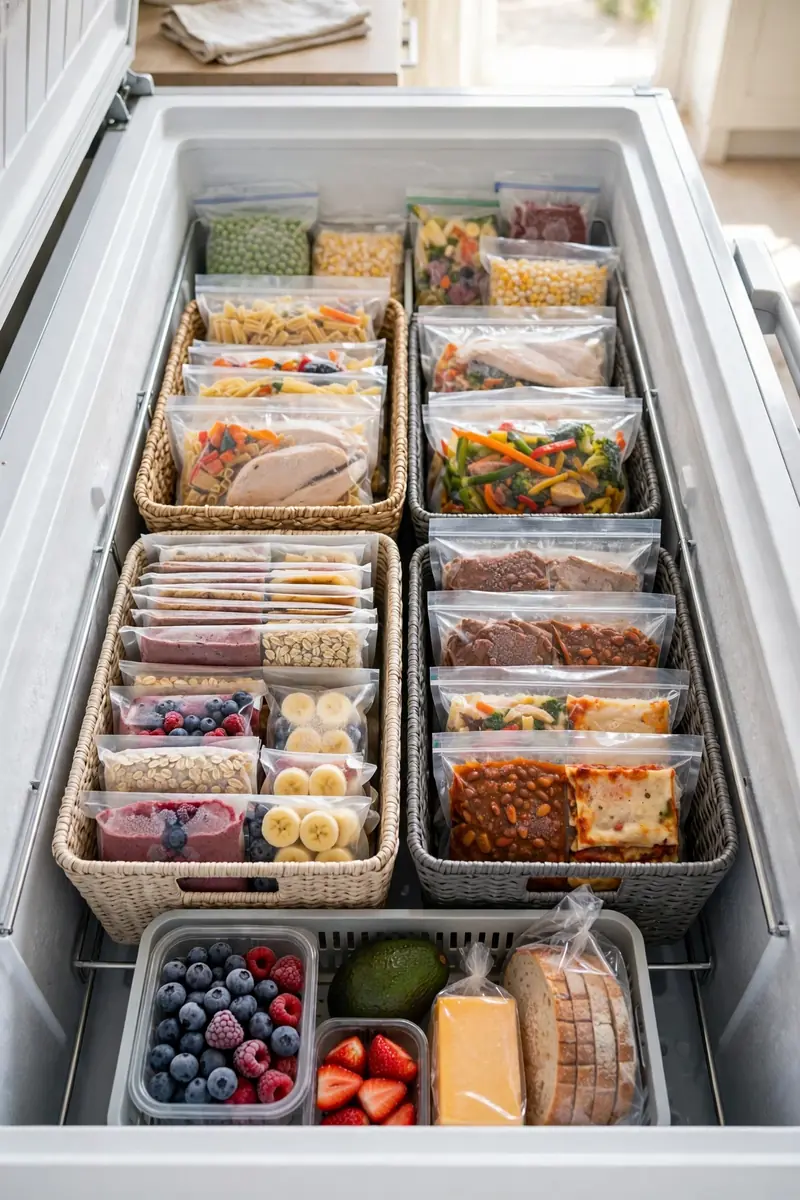
10. Do a Quick Weekly Freezer Check
A freezer reset only lasts with a small routine behind it. Set a quick weekly freezer check: look at the inventory list, pull anything near its use by date to the front, and wipe up any frost or spills. Do it on the same day every week, at the same time as planning the weekly shop, so it becomes part of an existing habit. Keep the check short enough to actually do, and do it every week through the winter. With this habit, the freezer stays organized even after a big shop, and dinner never starts with a dig through mystery bags again.
A Freezer You Can Actually Cook From
A new year freezer reset is not about buying new containers, it is about clearing the mystery bags, grouping food by meal type, and labeling every bag with a date. Flat stacked bags, a simple inventory list, a use by rule, and a quick weekly check turn a frozen pile into a pantry you can plan from. With a little space left in every zone, that tidy freezer lasts all year, and every dinner starts with food you can find in seconds.