New Year Garage Reset: 10 Steps to Win Back Space for the Car
The garage ends the year as the dumping ground of the house, and it shows. Holiday boxes lean against the car, tools are buried under bags of donations, and the floor has a winter layer of salt and grit. A new year garage reset clears the clutter, gives every tool a home, and wins back space for the car, so the garage works like a garage again instead of a storage unit you cannot walk through.
The ten steps below work in order, from a full declutter sweep to the small monthly habit that keeps the floor clear. None of them need new shelving or a big budget. Start with the clutter, because a clear floor changes how the whole garage feels the moment you open the door.
1. Start With a Full Declutter Sweep
Walk the garage with a box and a bag and collect everything that does not belong there: broken toys, old paint cans, dead batteries, and the bags that never made it to donation. Open every bin and check every shelf, pulling out the things you kept just in case and never touched. Bag donations and recycling straight away and put them by the door, so they leave the house instead of drifting back. A full declutter sweep is the foundation of the whole reset, and it usually frees more space than any shelf could. If a full home declutter feels too big to start, a declutter challenge 30 days 30 minutes breaks it into small daily wins.
2. Clear the Floor Completely
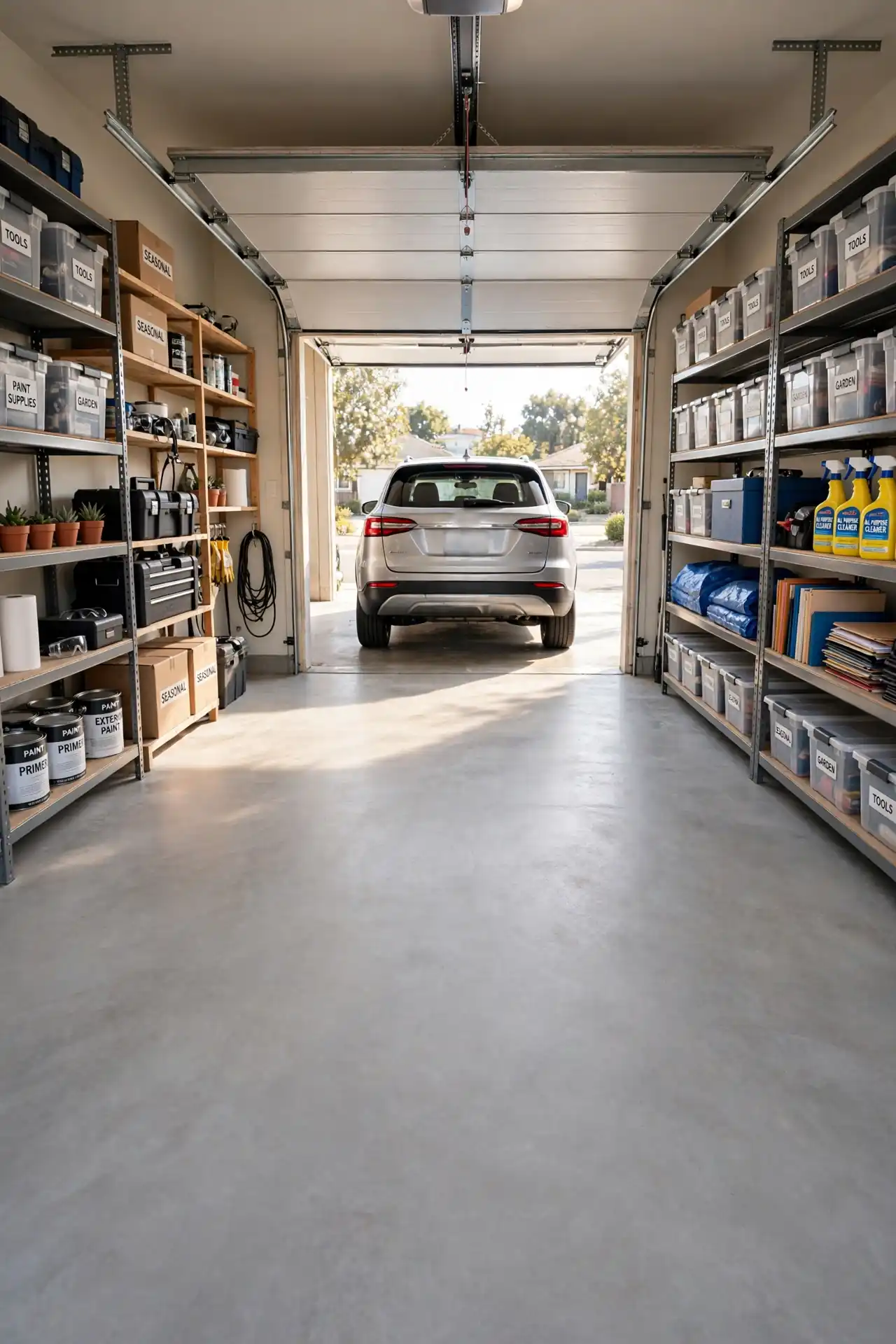
With the clutter gone, clear the garage floor down to bare concrete: boxes off the floor, bikes moved outside, every tool and bag lifted away. Sweep up the salt, grit, and leaves, then mop the floor so it looks fresh again. Check for oil stains and scrub the worst spots, and look for cracks that need filling before winter gets worse. A clear floor makes the whole garage feel bigger and safer, and it makes finding anything take seconds instead of a ten minute hunt. For more room by room ideas, a new year home reset guide covers the whole house in the same order.
3. Sort Tools Into Keep, Donate, and Toss
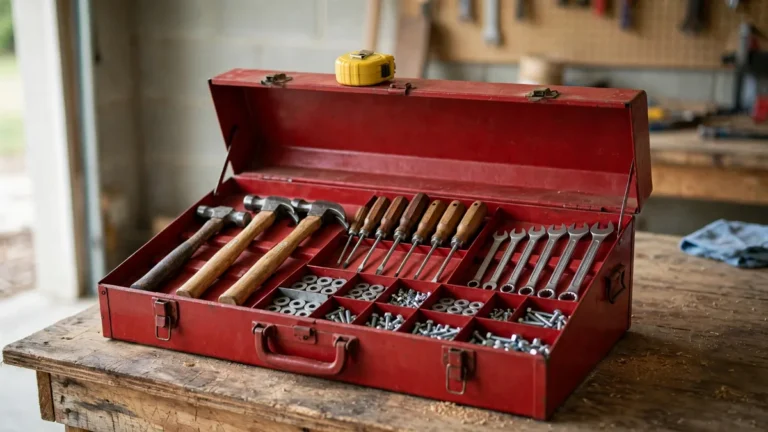
Tools multiply quietly, so sort them properly. Make three piles: keep, donate, and toss. Keep the tools you actually use, donate the duplicates and the ones in good shape that someone else needs, and toss anything broken or rusted beyond use. Check power tools for working batteries and frayed cords, and recycle the dead ones safely. A tool collection with only three choices stops the pile from growing back, because every new tool has a place to go the day it arrives.
4. Create Zones for Tools, Sports, and Storage
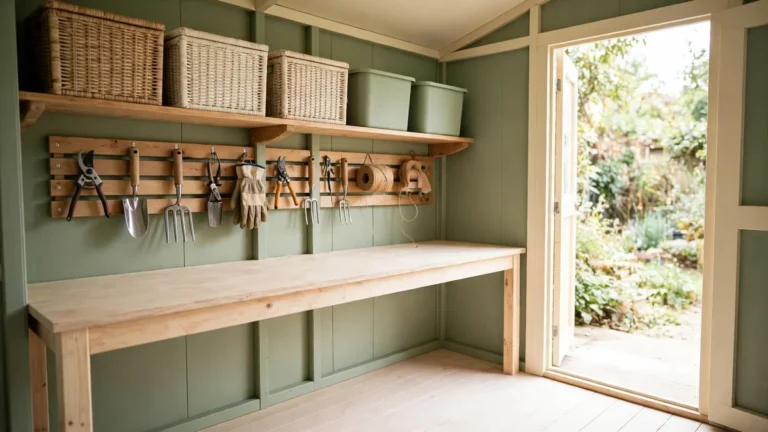
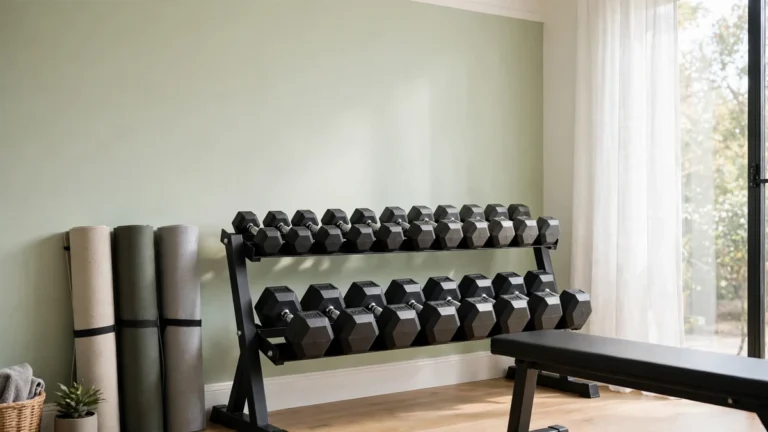
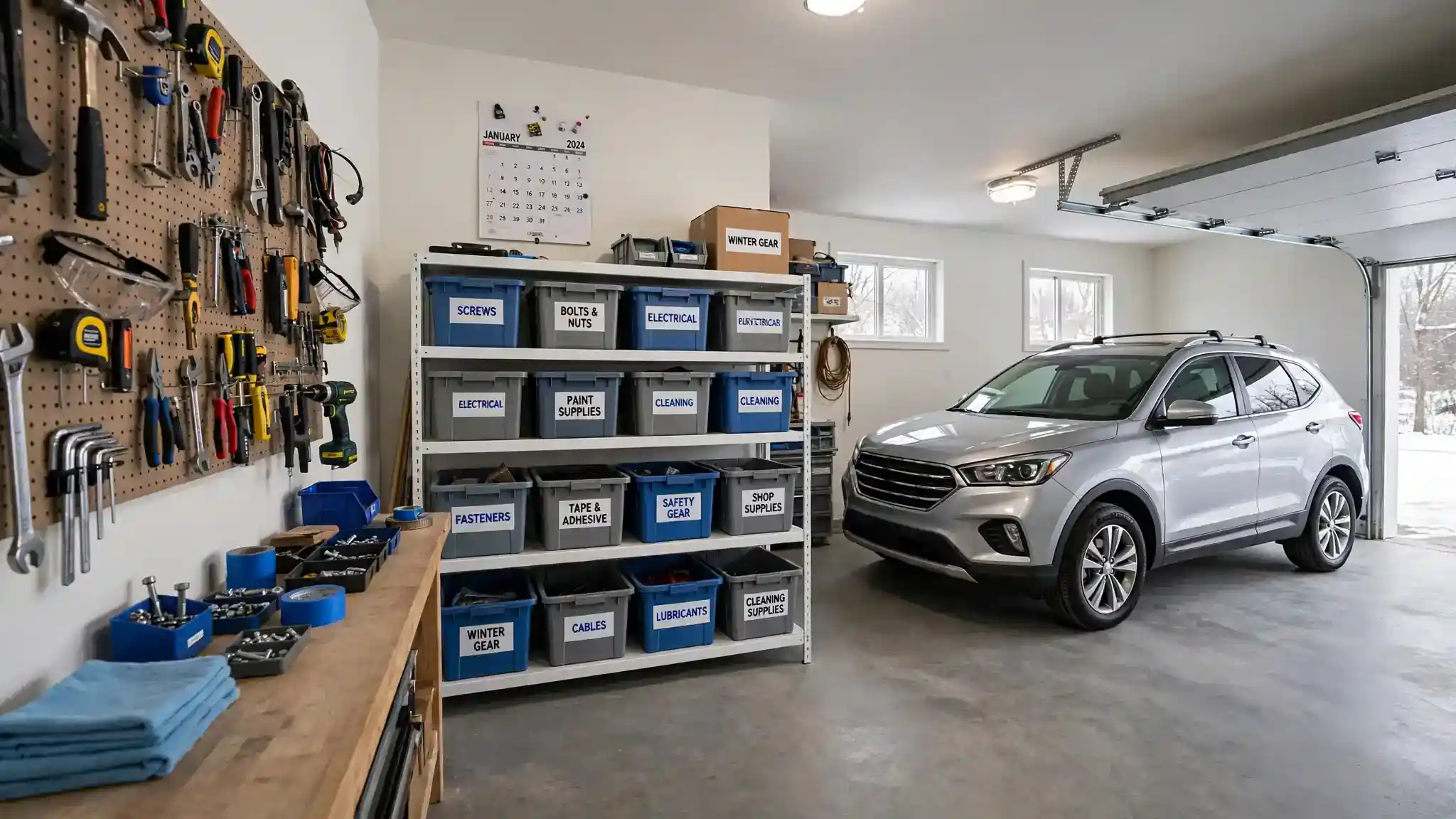
A garage works best when every zone has one job, so divide the space into three zones. The tools zone is a workbench or pegboard on one wall, kept clear for the tools you reach for most. The sports zone is a rack or hooks for bikes, balls, and outdoor gear, so nothing lands on the floor. The storage zone is shelves and labelled bins on the far wall for seasonal items and household extras. Keep the zones small and strict, because a garage with clear zones stays organized far longer than one where everything lands wherever it fits.
5. Hang Bikes and Bulky Gear on the Wall
Bikes and bulky gear eat floor space, so get them on the wall. Hang bikes on sturdy wall hooks or a ceiling rack, with helmets on a peg beside them. Hang ladders flat against the wall, and put garden tools on hooks so the handles stay off the floor. Keep the gear you use most at arm height and the seasonal gear higher up. A wall full of hanging gear frees the floor for the car, and it makes grabbing a bike for a ride take seconds instead of a dig through a pile.

6. Label Every Bin and Box
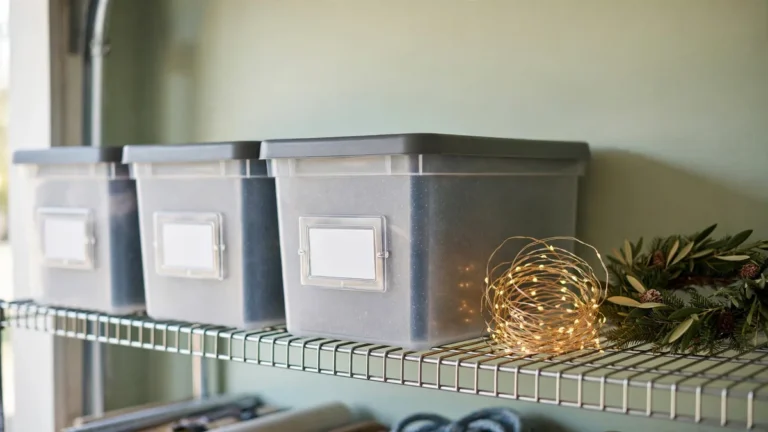
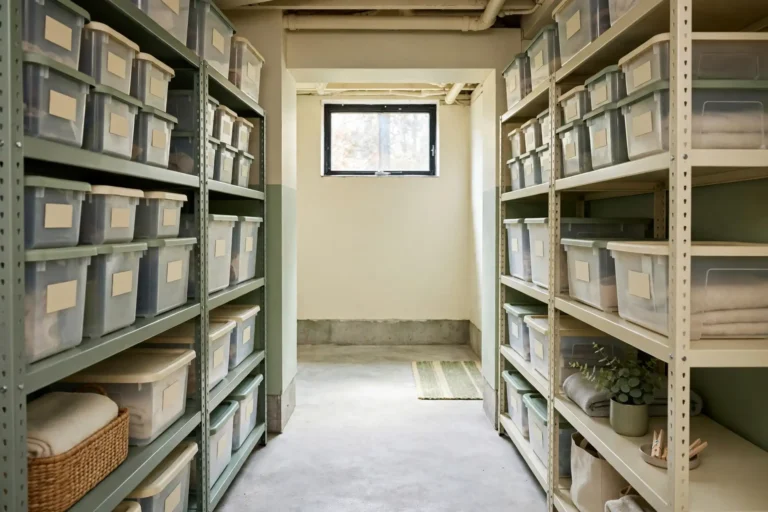
Bins only work when you know what is inside them, so label every one. Use clear bins where you can, and put a big readable label on each one: holiday lights, camping gear, winter clothes, car supplies. Group the bins by zone on the shelves, with the most used bins at waist height. Keep a simple list on the wall or in a notebook of what lives where, so anyone in the house can find things without asking. Labelled bins turn a wall of mystery boxes into storage you can actually use.
7. Set Up a Small Workbench That Stays Clear
Every garage needs a work surface, so set up a small workbench and keep it clear. Choose a sturdy bench or a folding table against the wall, with a pegboard above it for the tools you use most. Keep only the current project on the bench, and put everything else back in its zone when the job is done. Add a small light over the bench so evening repairs are easy. A clear workbench makes fixing things faster, and it stops the bench from becoming another dumping ground.
8. Sweep and Check the Garage Door
The garage door takes a beating all winter, so check it now. Sweep the tracks and wipe the seals, then test the door to make sure it opens and closes smoothly. Lubricate the hinges and rollers with a light spray, and check the weather seal at the bottom for gaps that let in cold air. Replace any worn seal, and test the safety sensor so the door stops if something is in the way. A smooth door and a tight seal keep the garage warmer, drier, and safer all year.
9. Store the Car Supplies in One Spot
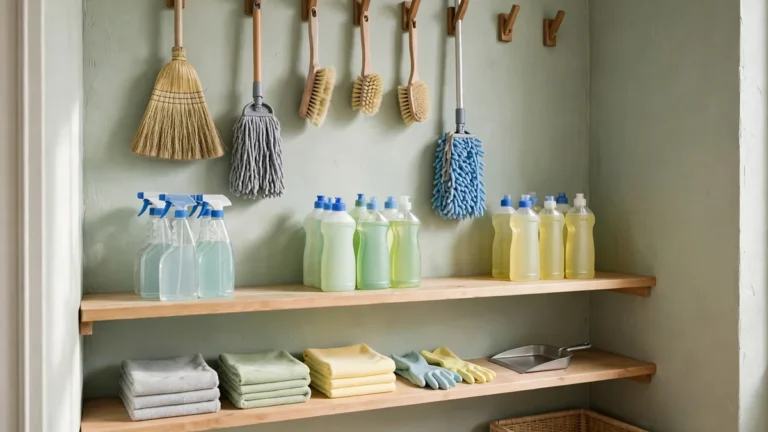
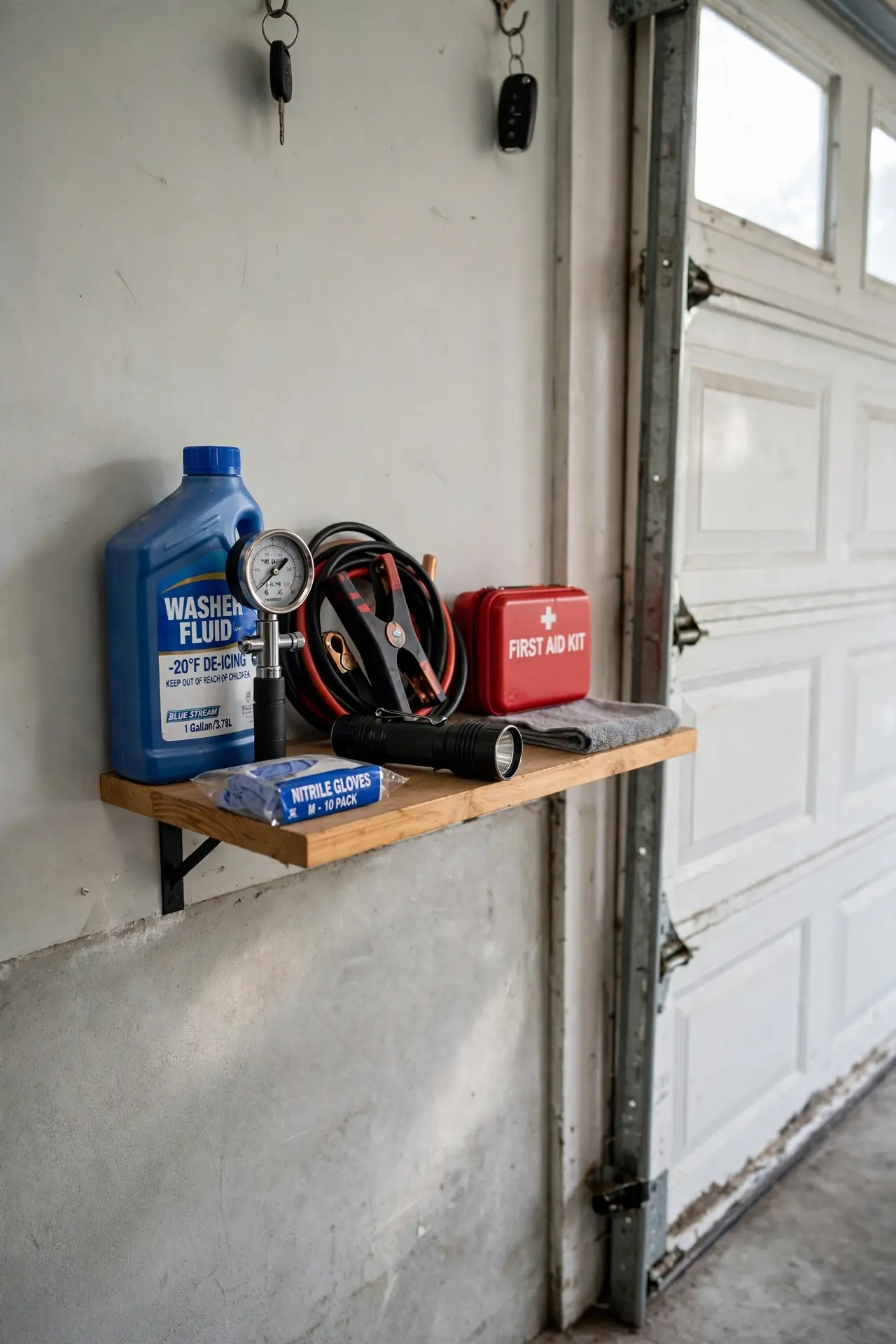
Car supplies scattered through the garage are supplies you can never find, so gather them in one spot. Keep a small shelf or bin near the door with washer fluid, a tire gauge, jump cables, a flashlight, and a first aid kit. Store the ice scraper and the snow brush by the door in winter, and the car wash supplies on the same shelf. Check the expiry dates on anything perishable, and replace what is used up. One spot for car supplies means a flat tire or a dead battery is a quick fix, not a hunt through the whole garage.
10. Set a Monthly Garage Reset Habit
A reset only lasts with a small routine behind it. Set a monthly garage reset: sweep the floor on the first Saturday, return tools to their zones, and check that the bins are still labelled. Add a ten minute tidy each week to put stray items back where they belong and keep the car space clear. Write the habit down until it becomes automatic, and keep it short enough to actually do. With this habit, the garage stays clear all year, and next January the reset will be a quick refresh, not a full day of work. For a whole home plan, a winter cleaning routine keeps every room, including the garage, on the same schedule.
A Garage That Works Like a Garage
A new year garage reset is not about new shelving, it is about clearing what you do not need, giving every tool a zone, and keeping the floor clear for the car. A clear floor, labelled bins, hanging gear, and a small workbench turn a storage unit you cannot walk through into a garage that actually works. With a small monthly habit, that order lasts all year, and every time you open the door you will find the space ready for you.