
Winter Kitchen Reset: 10 Ideas for a Calmer Cooking Season
Winter changes how a kitchen works. Days get shorter, cooking gets heavier, and the counter that felt fine in summer suddenly holds a slow cooker, a soup pot, a baking tray, and a pile of mail. A winter kitchen reset is not about buying new containers or redoing the whole room. It is about clearing what slows you down, stocking what you actually cook with, and setting up a few stations that carry you through the cold months without daily friction.
Set aside one unhurried afternoon for this reset. Work through the ten ideas below in order, and by dinner time your kitchen will feel calmer, warmer, and ready for the season of soups, roasts, and slow weekend baking.
1. Start With a 30-Minute Winter Purge
Grab a box and walk the kitchen once with fresh eyes. Pull out anything that belongs to another season: the picnic basket, the smoothie blender you have not touched since August, the chipped mugs, and the gadgets you used once. Box up what leaves the kitchen and donate what you no longer need. If winter coats, scarves, and boots are piling up by the back door instead, give them a proper home with a winter mudroom organization reset so they stop migrating onto kitchen chairs. A purge first means every later step has room to work.
2. Clear the Counters Back to Daily Cooking Basics
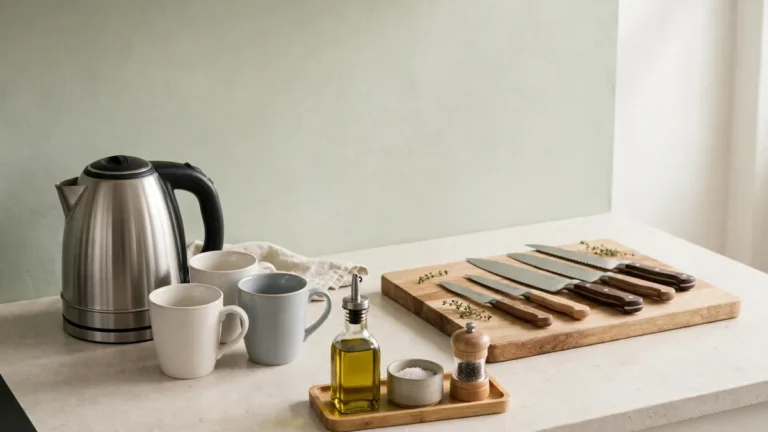
Winter cooking needs counter space more than summer cooking does, because pots are bigger and prep takes longer. Keep only the tools you reach for every day: a cutting board, your best knife, a wooden spoon, salt and pepper, and cooking oil. Move the bread maker, the waffle iron, and the extra appliances to a cabinet or a high shelf. Wipe the counters down and leave one stretch completely empty. That empty stretch becomes your landing zone for groceries, trays from the oven, and weeknight prep, and it is the fastest way to make the kitchen feel calm.

3. Set Up a Soup and Stew Station
Soups and stews are the backbone of winter cooking, so give them a dedicated spot. Group your stockpot, Dutch oven, ladle, and soup bowls together in one cabinet near the stove. Keep broth, canned tomatoes, dried lentils, and barley on one pantry shelf at eye level. When everything for a pot of soup lives in two places, a weeknight soup stops feeling like a project and starts feeling like the easy option.
4. Give the Fridge a Cold-Weather Reset
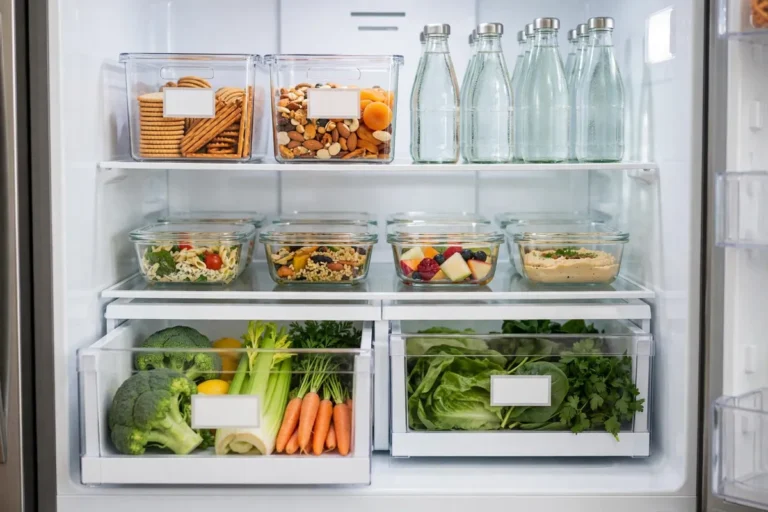
Winter fridges fill up differently: leftovers from big roasts, half a pot of soup, holiday condiments, and baking butter. Take everything out, wipe the shelves, and toss anything past its prime. Put a “use first” bin at the front for leftovers and opened items, and keep the week’s meal ingredients together on one shelf. For a deeper fridge routine, follow a holiday fridge organization plan to keep the busiest weeks of the season under control. Label soups and stews with masking tape and a date so nothing lingers past a week.
5. Stock a Winter Staples Pantry
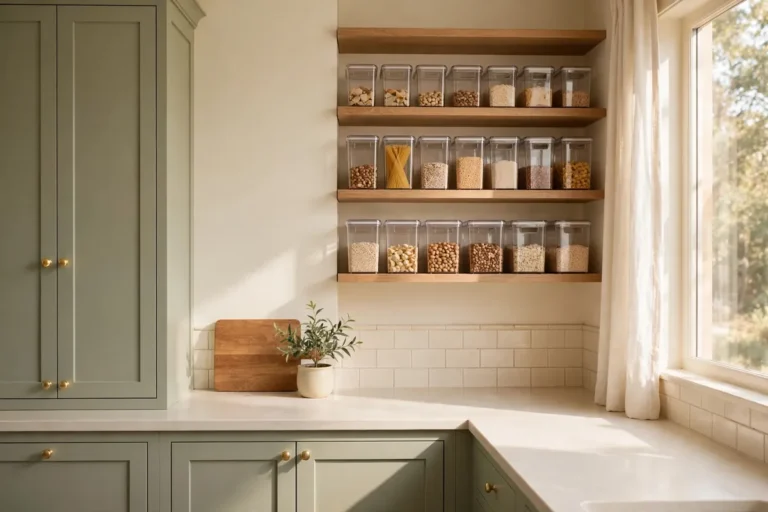
A stocked winter pantry turns a cold evening into a cooked dinner instead of a takeout order. Start with the base layers: rice, pasta, oats, canned beans, canned tomatoes, broth, and flour. Add flavor layers: dried herbs, spices, soy sauce, vinegar, honey, and a good cooking oil. Then add the winter extras: dried mushrooms, barley, split peas, cocoa powder, and baking chocolate. Decant grains and beans into clear labeled jars so you can see what needs restocking, and keep a short running list on the fridge for the next grocery trip.

6. Create a Baking Corner for Cold Weekends
Winter weekends invite baking: bread, cookies, cakes, and pies. Gather your baking tools into one corner or one cabinet: mixing bowls, measuring cups and spoons, a rolling pin, baking sheets, and parchment paper. Keep flour, sugar, baking powder, and vanilla in that same zone so you are not hunting across the kitchen mid-recipe. For holiday cookie swaps and gift baking, a holiday baking station organization setup keeps the whole counter from being taken over. A small tray for cooling racks and a cloth to cover rising dough round out the corner.
7. Make a Hot Drinks Station
A hot drinks station is a small luxury that pays off every cold morning. Pick one spot near the kettle or coffee maker and gather mugs, tea, coffee, cocoa, honey, and a cinnamon shaker there. Keep a small basket for tea bags and a folded tea towel so nothing drips across the counter. In the evening, the same station becomes the cocoa and herbal tea corner, and guests can help themselves without you playing host in the middle of cooking.
8. Warm Up the Lighting for Dark Evenings
Winter evenings start before dinner is ready, and harsh overhead light makes a kitchen feel cold and clinical. Add warmth where you work: switch the under-cabinet lights on while you cook, use a warm-toned bulb over the table, and keep a small lamp or warm fairy lights on a shelf for the darkest weeks. Clean the light fixtures and glass shades, since dust dims the light more than you notice. Good lighting does not just look cozy, it makes chopping, reading recipes, and setting the table easier when daylight is gone by five.

9. Plan a Weekly Winter Menu Board
Winter is the best season for a simple weekly menu. Pick a rhythm that repeats: soup night on Monday, a roast or tray bake midweek, pasta on Friday, and a slow-cooked meal on Sunday. Write the menu on a small whiteboard or notepad on the fridge, and build the grocery list from it. A menu board removes the daily “what should we eat” debate, cuts impulse grocery runs, and makes sure the pantry staples from step five actually get used. If the holidays are approaching, fold in a holiday kitchen prep organization checklist so big cooking days never catch you unprepared.
10. Build a 10-Minute Nightly Kitchen Reset
The reset only lasts if you close the kitchen each night. Set a ten-minute routine before bed: load or run the dishwasher, wipe the counters and stove, put leftovers into labeled containers, and set out the coffee or kettle for the morning. Return the cutting board, knife, and cooking tools to their spots so the morning starts clean. Ten minutes at night saves thirty minutes of hunting and scrubbing in the morning, and it means the kitchen greets you calm every single day of winter.
A Calmer Kitchen All Winter Long
A winter kitchen reset is not a one-day event, it is a set of small systems that keep working while the weather stays cold. Clear the counters, stock the pantry, warm the light, and close the kitchen each night. Do those four things and the season of heavy cooking and long dark evenings becomes the season your kitchen finally feels easy.